
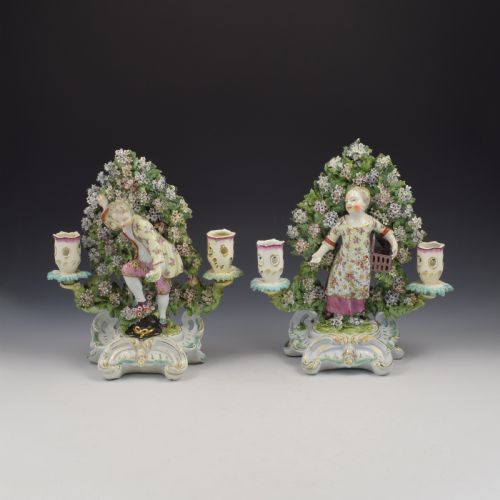


Floral Porcelain Candlestick Holder
These floral porcelain candlestick holder pieces bring painted blossoms and glazed ceramic into domestic interiors across eighteenth and nineteenth century styles.
Floral Porcelain Candlestick Holder
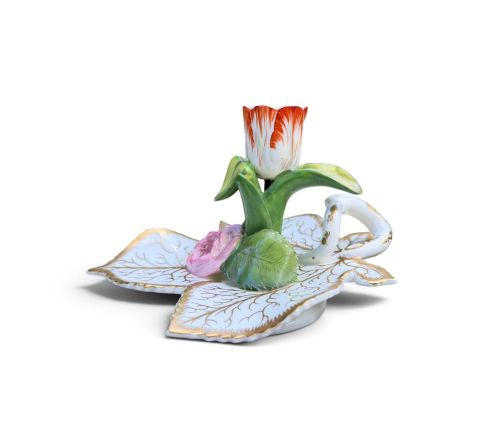
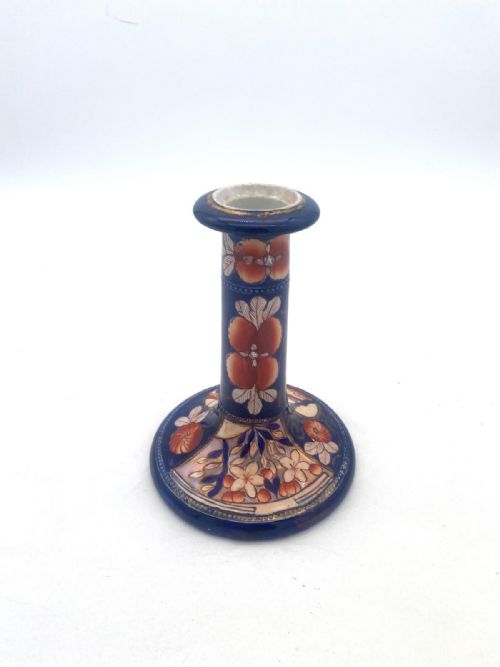
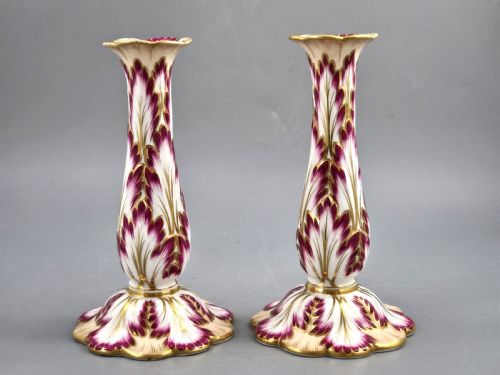
A floral porcelain candlestick holder unites ceramic sculpture with functional lighting, taking forms such as single chambersticks, paired figural sticks, and multi-arm candelabra. The selection spans English manufactories like Derby, Minton, and Spode alongside continental European makers including Meissen, Sitzendorf, and Dresden.
Most examples originate from the nineteenth century, encompassing Georgian, Regency, Victorian, and Edwardian periods, with earlier eighteenth-century figures also appearing. Forms range from simple foliage patterns and tulip chambersticks to elaborate bocage compositions featuring children, gardeners, and musicians framed by applied blossoms.
Materials and construction methods
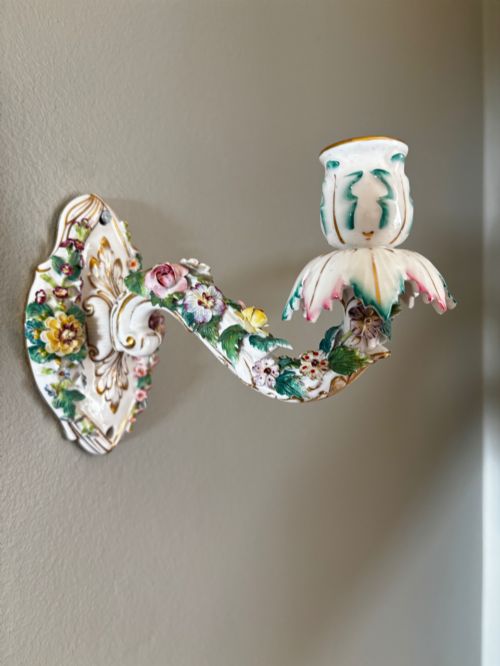
These objects rely on hard-paste and soft-paste porcelain shaped through moulding and hand-modelling, supplemented by detailed overglaze enamelling and gilding. Applied elements like flowers and foliage, often termed bocage, require individual manipulation by skilled modellers before firing.
Many items incorporate supplementary materials such as brass, gilt mounts, or ormolu to secure the ceramic components and provide structural stability for multi-arm candelabra and wall sconces.
Listings feature hard-paste porcelain, brass, gold leaf, and enamel across Georgian, Regency, and Victorian periods.
Assessing quality in ceramic lighting
Quality rests upon the crispness of the modelling in figural groups and the fine detail of applied floral work, where hand-formed petals display depth rather than flatness. Superior pieces maintain sharp painted enamel definition and precise gilding that has not rubbed away from high points.
The sophistication of the overall design, whether adhering to Rococo Revival curves or Regency restraint, distinguishes standard production wares from exceptional workshop output.
Masons Ironstone·Ridgway·Meissen·Derby Porcelain·Sitzendorf·Spode·Minton·Helena Wolfsohn·Dresden
The Floral Porcelain Candlestick Holder Glossary
- Bocage
- An arbour or background of applied leaves and flowers made from porcelain, frequently seen behind figures on eighteenth and nineteenth-century candlesticks. This leafy screen cushions the central figures.
- Chamberstick
- A short candlestick fitted with a saucer base and a finger loop for carrying a candle around a house. They were essential for lighting hallways before electric illumination.
- Candelabra
- A branched candlestick holding multiple candles on separate arms. These larger fixtures often sit on dining tables or mantelpieces.
- Hard-Paste Porcelain
- A dense, vitrified ceramic fired at high temperatures using kaolin and petuntse. It creates a durable body resistant to scratching.
- Ormolu
- Gilded bronze used for mounts and decorative accents on furniture and porcelain objects. It provides a bright metallic contrast to glazed ceramic surfaces.
Floral Porcelain Candlestick Holder: Frequently Asked Questions
How do I clean my floral porcelain candlestick holder?
Dust these delicate items gently with a soft brush, avoiding harsh chemical cleaners that can damage fragile enamel and gold leaf.
Keep them away from direct moisture and do not submerge pieces with applied bocage or metal mounts in water.
Were these holders used for daily lighting?
Chambersticks and single sticks served practical illumination needs in bedrooms and hallways during the Georgian and Victorian eras.
Larger candelabra functioned primarily as decorative table centrepieces during evening gatherings and formal dinners.
How can I tell English pieces from German ones?
English factories like Derby and Minton often employed softer floral modelling and distinct paste compositions typical of early nineteenth-century domestic production.
German makers such as Meissen and Sitzendorf frequently utilised intricate figural groups, complex bocage, and specific factory marks stamped or painted on the base.