
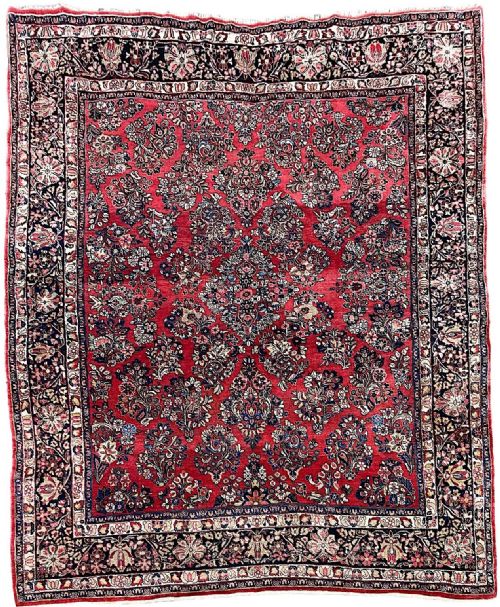


Floral Patterned Rug
A floral patterned rug brings botanical motifs and traditional weaving traditions into a room, offering durability and warmth underfoot.
Floral Patterned Rug
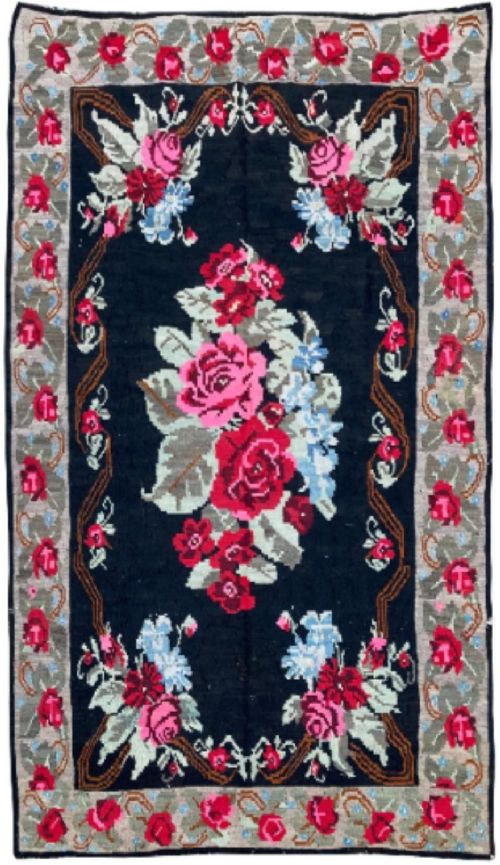
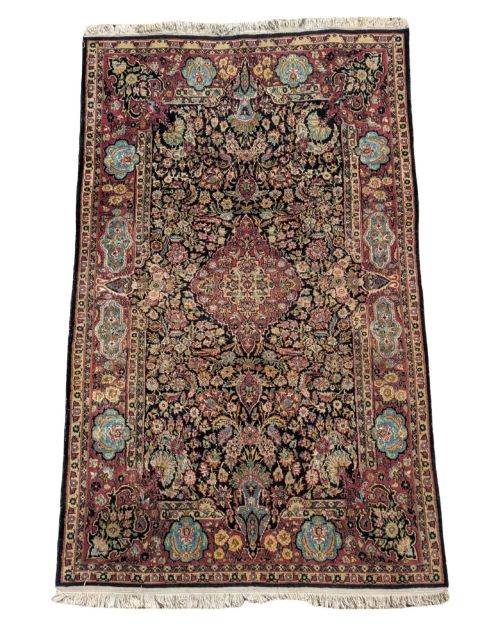
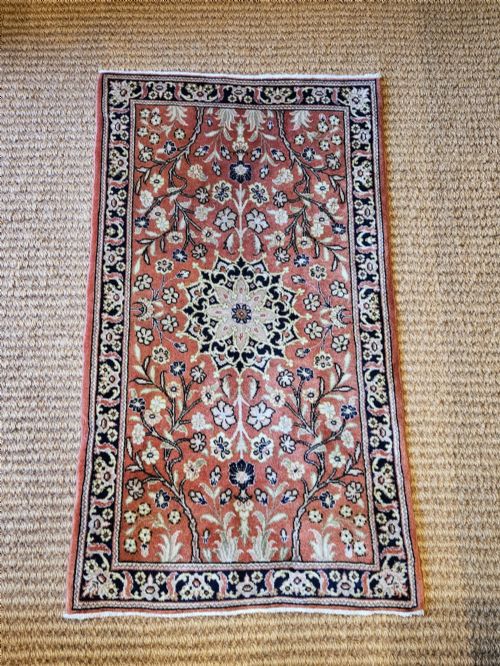
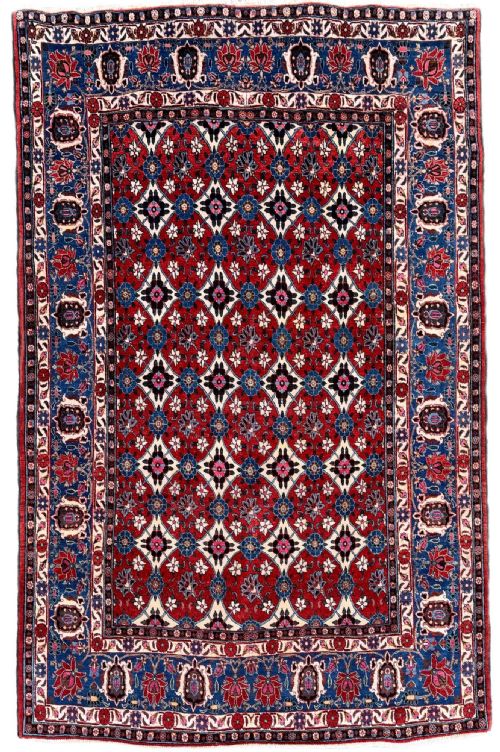
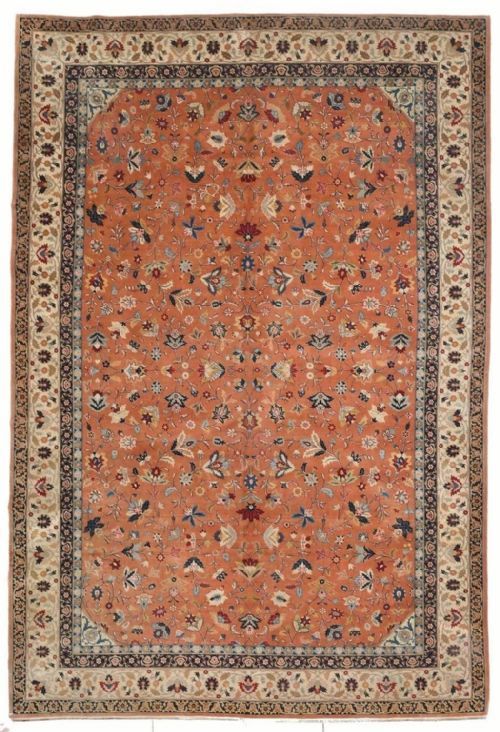
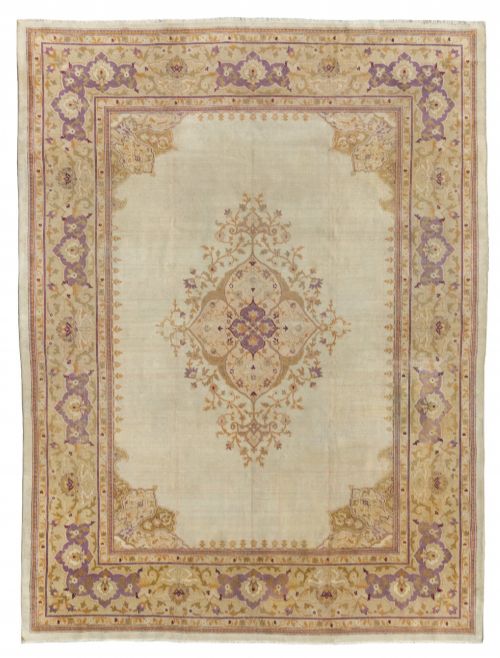
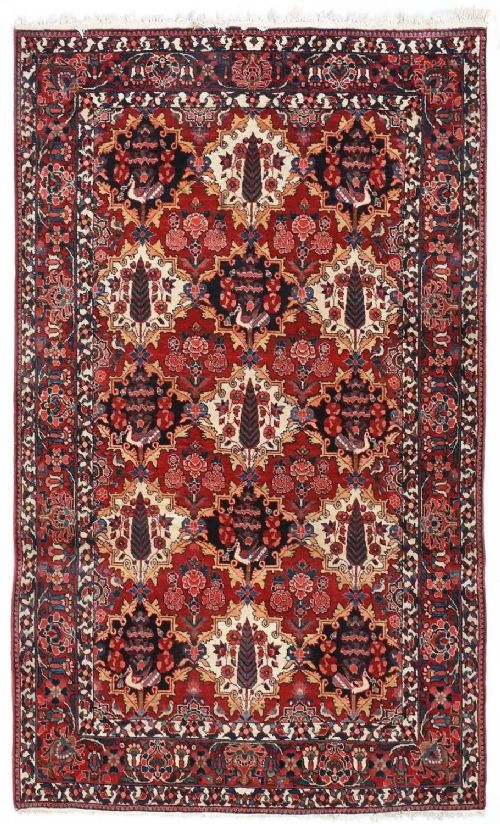
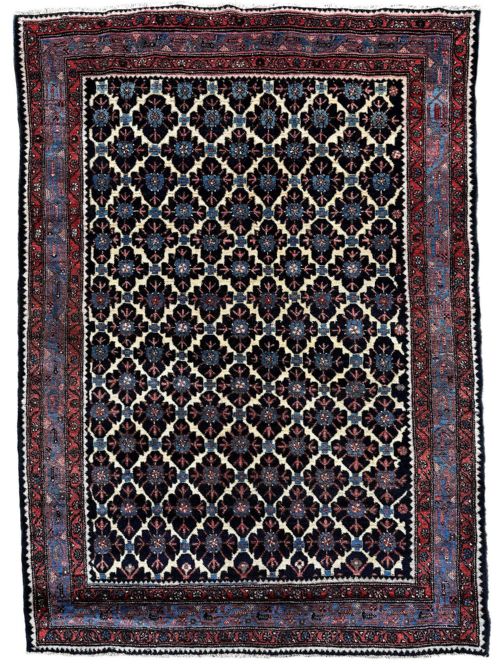
A floral patterned rug encompasses hand-woven floor coverings featuring botanical motifs, including medallion formats and all-over field designs. These pieces span from the eighteenth century through the early decades of the twentieth century, originating primarily from Persian, Caucasian, and Indian weaving centres.
The versions most frequently met on this page include room-sized carpets and smaller area rugs from regional traditions such as Tabriz, Mahal, Kashan, and Heriz. They utilise traditional layouts derived from classical workshop designs and nomadic traditions alike.
Materials and construction
These textiles rely predominantly on wool foundations and piles, occasionally incorporating cotton for structural warps and wefts, alongside silk or mercerised cotton highlights. Natural dyestuffs provide the colour palette, yielding rich tones that age gracefully across decades of use.
Weaving techniques involve hand-knotting or flat-weaving methods such as kilim construction, creating dense piles or durable tapestry surfaces. Chain stitch embroidery also appears on specific regional variations like Kashmir pieces.
Several carpets preserve the exact footprint of nomadic looms where tension varied slightly between morning and evening.
Distinctions in quality
Quality rests upon knot density, precision of line within the floral motifs, and the stability of the wool foundation. Finer pieces demonstrate intricate detail and secure binding along the edges and fringes.
The choice of materials affects longevity, with dense wool piles resisting wear better than fragile silk highlights. Condition and structural integrity ultimately determine the standing of an individual carpet.
The Floral Patterned Rug Glossary
- Kilim
- A flat-woven carpet or rug produced without a pile. These pieces rely on interlocking weft threads to form geometric and floral patterns.
- Medallion
- A central ornamental motif placed in the middle of the rug field. This design element often anchors the surrounding floral elements.
- Warp
- The vertical threads stretched tightly on the loom before weaving begins. The pile knots are tied around these foundational cords.
- Weft
- The horizontal threads passed through the warps to hold the knots in place. They determine the structural firmness of the textile.
- Pile
- The upright cut or loop ends of yarn that form the usable surface of the rug. Its density contributes significantly to the weight and durability of the piece.
Floral Patterned Rug: Frequently Asked Questions
How do I clean a floral patterned rug?
Vacuum gently without a rotating brush roll to prevent pulling the wool fibres or damaging the edges of the rug. Professional specialist cleaning is recommended for addressing deep dirt or spills.
Harsh chemical detergents and excessive water can bleed natural dyes and weaken the cotton or wool foundation threads. Protect the textile from direct sunlight to preserve the original colouration.
Where should I place these rugs?
These rugs suit high-traffic living areas, dining spaces, and bedrooms where warmth and texture are required. Smaller formats function well as hallway runners or accent pieces.
Use an appropriate underlay to prevent slipping and to reduce friction between the rug backing and the floorboards. This simple measure extends the working life of older textiles.
How do I identify regional styles?
Regional attribution depends on specific colour combinations, border arrangements, and the drawing style of the floral motifs. For instance, Heriz carpets often feature geometric medallion structures, while Kashan pieces display curved floral sprays.
Examining the weave structure and the materials used in the foundation offers further clues to the origin. Reference books and expert guidance help clarify subtle distinctions between workshops.
What causes wear in older rugs?
Uneven foot traffic, heavy furniture legs resting directly on the pile, and moth activity contribute to gradual degradation. Proper rotation ensures even exposure and wear patterns.
Dry conditions and lack of ventilation can embrittle natural fibres over extended periods. Regular inspection helps catch minor edge fraying before it spreads into the main field.