

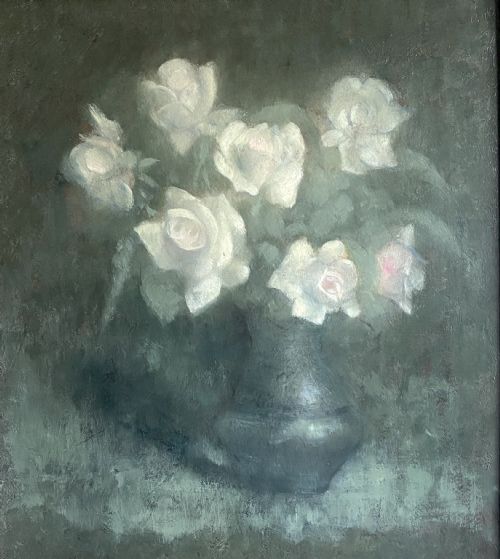


Floral Painting Board
These floral painting board pieces bring still life blooms and botanical scenes directly to your walls on sturdy wooden panels.
Floral Painting Board
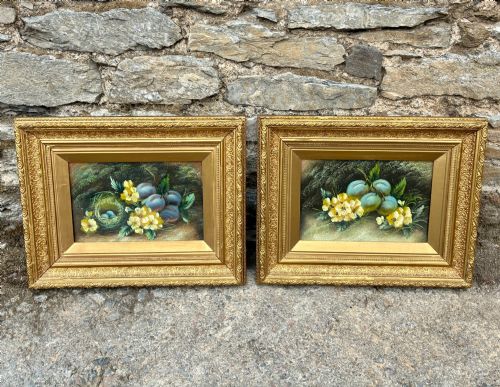
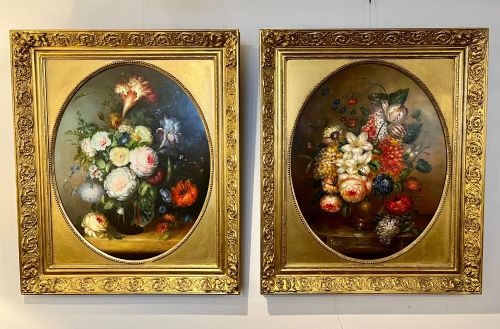
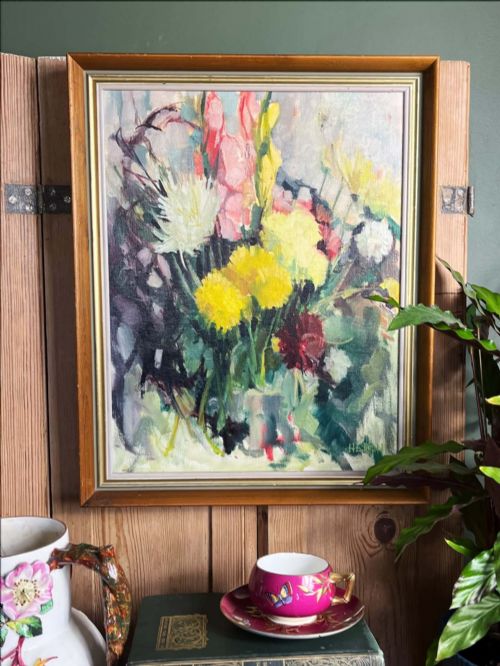
A floral painting board brings botanical subjects into interior spaces through oil paintings executed directly onto wooden panels, canvas boards, or leather screens. Buyers searching this phrase encounter works ranging from 19th-century Italian still life compositions to mid-century impressionist flower studies and decorative folding screens.
The objects span multiple eras, including Victorian, Art Nouveau, and mid-century modern periods, reflecting varied artistic interpretations of floral subjects. Common forms include framed oil on board paintings, folding screens, fire screens, and decorated stands featuring floral motifs.
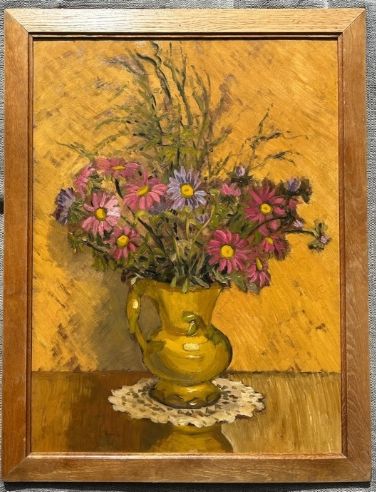
Origin points across the collection encompass British, French, Italian, and Dutch influences, showcasing both traditional academic styles and modernist approaches. Works often depict specific floral arrangements, such as yellow vases, chrysanthemums, and white roses, rendered in oil paint.
Materials and construction
Makers utilised oil paint applied to wooden boards or prepared surfaces, sometimes incorporating gilt leaf accents to enhance the decorative impact of the composition. Support materials include solid wood, leather panels, and toleware stands, providing firm foundations for the painted botanical scenes.
Techniques range from classical Dutch-style glazing and detailed academic rendering to the looser brushwork characteristic of mid-century impressionism and modernist French still life painting.
Floral Painting Board Retail Price Guide 2026
Typical asking prices for floral painting board among the pieces listed under this phrase on Sellingantiques today, from the lower quarter to the upper quarter. They describe what is for sale here now, not the wider market.
Listings feature oil paint, wood, gilt, gilt leaf, and leather as primary materials across multiple European schools.
Assessing quality in painted boards
Quality rests upon the skill of the brushwork and the precision with which the floral arrangement is rendered on the board surface. Finer examples display confident handling of light and shadow, particularly in the depiction of petals, foliage, and ceramic vessels.
The integrity of the underlying support material and the preservation of the original paint layer distinguish superior works from standard decorative pieces. Original framing and the depth of the oil medium contribute significantly to the visual presence of the piece.
Kenneth Cozens
The Floral Painting Board Glossary
- Oil on board
- A painting technique where oil paint is applied directly to a rigid wooden panel or board rather than stretched canvas. This medium provides a stable, durable surface favoured by artists for both detailed studies and rapid sketches.
- Still life
- An artwork depicting inanimate subject matter, typically commonplace objects such as flowers, fruit, or vases. In these pieces, floral arrangements serve as the central focus for exploring colour, form, and light.
- Toleware
- Metalware, usually iron or tin, that has been enamelled or japanned and hand-painted with decorative motifs. Pieces on this page feature floral decoration applied to stands and functional household items.
- Dummy board
- A painted figure or object cut out from wood to create a trompe l'oeil effect in an interior space. These pieces utilise shaped boards to represent three-dimensional subjects.
Floral Painting Board: Frequently Asked Questions
What periods do these floral boards cover?
The pieces span from the 19th century through the early 20th century, including Art Nouveau and 1920s modernist works, up to mid-century impressionism from the 1950s and 1960s.
This broad chronological range allows buyers to find works that complement both traditional period interiors and modern spaces.
How were these painted boards used historically?
Many function as framed wall art designed to bring botanical colour into domestic rooms, while others form part of folding screens or decorative toleware stands.
Fire screens and leather screens also served practical purposes in period homes while displaying detailed floral artistry.
Are all pieces painted in oil?
The majority of the wall art uses oil paint applied directly to wooden boards, capturing rich textures in depictions of flowers and vases.
Other items incorporate hand-painted leather or decorated metal surfaces to achieve similar botanical designs.
How do I identify Art Nouveau examples?
Art Nouveau pieces from around 1910 often feature stylised floral motifs, organic flowing lines, and softer natural colour palettes that reflect the design philosophy of the period.
Signatures or framing styles specific to the era can also help confirm the dating of these floral works.