



Floral Painted Bedside Light
These floral painted bedside light examples bring hand-painted motifs and traditional forms into domestic rooms.
Floral Painted Bedside Light
A floral painted bedside light takes the form of a table lamp, utilising porcelain, pottery, or metal bases adorned with painted flower motifs. Buyers seeking a floral painted bedside light will encounter pieces dating from the nineteenth century up through the nineteen-thirties, spanning periods such as Art Deco and Art Nouveau alongside regional traditions like Kashmiri and Chinese export styles.
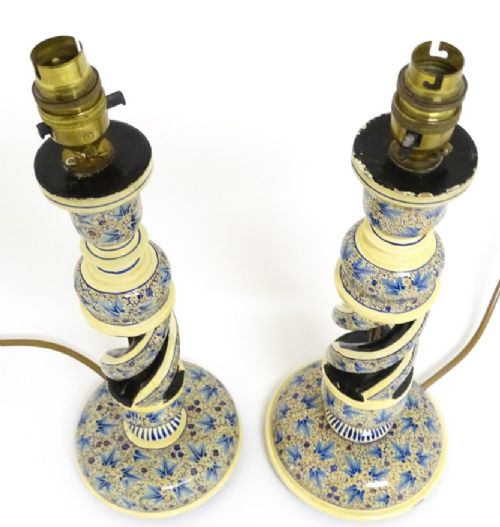
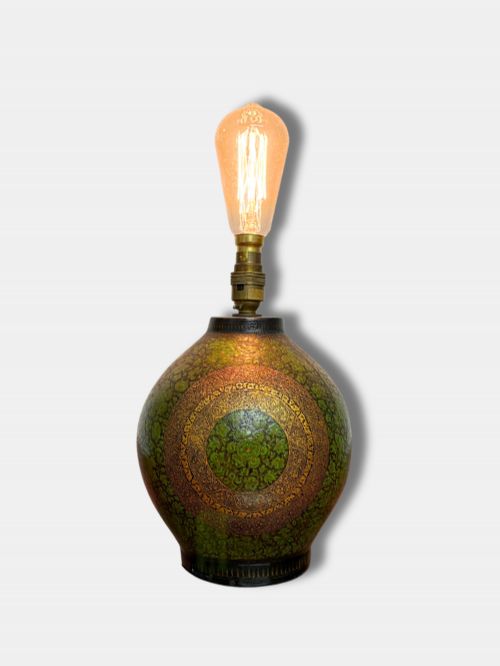
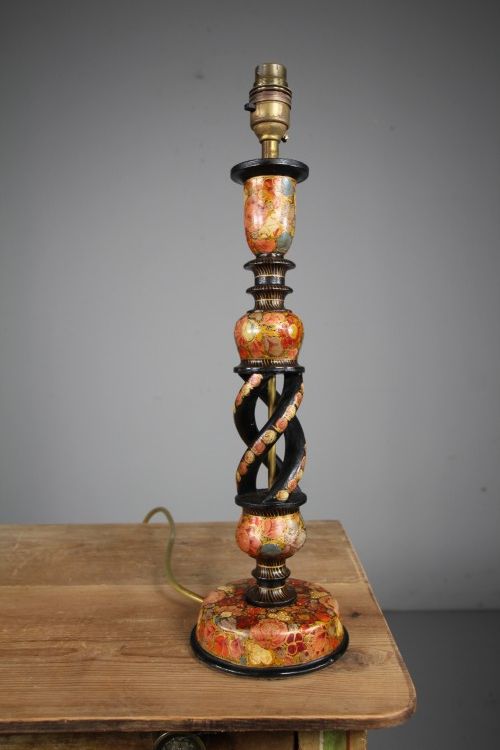
The selection on this page centres primarily on Kashmiri hand-painted table lamps and converted vases mounted in ormolu or brass. These range from tall antique specimens to petite nineteenth-century gilt bronze designs, providing varied heights and silhouettes suitable for bedroom placement.
How they were made
Makers utilised rigid substrates including wood, brass, porcelain, papier-mache, lacquer, and wrought iron to form the bodies of these lamps. Surfaces received hand-applied painted decoration, enamel, or gilt finishes, sometimes paired with frosted glass shades or fabric components.
Conversion from traditional vessels, such as Chinese baluster vases or Famille Rose and Famille Verte porcelain pieces, involved mounting the ceramic bodies onto metal bases like ormolu. Wiring and electrical fittings were subsequently integrated into these older containers, adapting them for domestic lighting.
Papier-mache proves surprisingly durable when turned into a lamp base, surviving a century of bedside reading without missing a single painted petal.
What varies in quality
The standard of painted detail distinguishes finer examples from simpler production, with delicate brushwork on porcelain or lacquer showing superior artisanal control. The integrity of the underlying material, whether cast gilt bronze, heavy porcelain, or carved wood, dictates the overall solidity of the piece.
The sophistication of the mounting hardware and the harmony between the decorative base and its converted elements affect the visual success of the lamp. Period integrity, such as authentic nineteenth-century ormolu mounts versus later adaptations, alters the character of the object.
The Floral Painted Bedside Light Glossary
- Ormolu
- Gilded bronze mounts applied to furniture, ceramics, or lighting fixtures. This technique was frequently utilised in French and revival pieces to add decorative metal borders.
- Famille Rose
- A Chinese porcelain palette dominated by opaque pink enamel, introduced in the eighteenth century. Pieces in this style were later adapted into table lamps.
- Baluster
- A form of column or vase featuring a bulbous lower portion tapering toward the top. This shape appears frequently among the porcelain lamp bases in the collection.
- Faience
- Tin-glazed earthenware decorated with painted colours before firing. It provides a bright surface for floral designs on twentieth-century lamp bodies.
- Papier-mache
- A composite material made of paper pulp or sheets reinforced with glue, moulded and painted. Kashmiri makers utilised this ground for intricate floral decoration.
Floral Painted Bedside Light: Frequently Asked Questions
How do I date an antique lamp?
Dating relies on examining the materials, manufacturing techniques, and mounting styles visible in the construction. Stylistic markers from periods like Art Deco or the nineteenth century provide a reliable chronological guide.
Changes in wiring and hardware also offer clues, though many older vessels were converted to electricity long after their original creation.
Can I use modern bedside bulbs?
Most converted lamps accept standard modern bulbs, provided the internal lampholder matches current fittings. Rewired examples ensure safe compatibility with contemporary electrical standards.
Consulting a qualified electrician is recommended when updating older or antique lighting for daily domestic use.
What is Kashmiri painted work?
Kashmiri pieces feature hand-painted floral and botanical motifs applied to materials such as wood or papier-mache. Artisans used rich colours and gilt highlights to create distinct decorative patterns.
These lamps often display regional craftsmanship that differs significantly from European porcelain or metalwork traditions.
Are converted vases stable?
Vessels mounted on heavy bronze, brass, or ormolu bases offer a secure foundation for table placement. The weight of the original porcelain or ceramic body contributes to the overall stability of the lamp.
Balanced proportions between the base and the lighting fixture ensure the piece remains steady on bedside tables.