

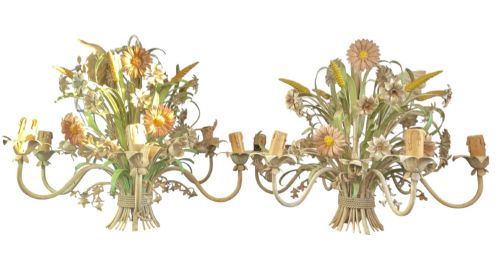


Floral Metal Sconces
These floral metal sconces bring organic form and light to a room, offering botanical charm shaped from iron, brass, and giltwood.
Floral Metal Sconces
When you search for floral metal sconces, you find wall lighting and mirrors shaped with botanical motifs across several decades. The selection leans heavily toward French pairs from the early twentieth century, particularly the nineteen-thirty period.
Forms range from wrought iron and painted toleware branches to giltwood frames and porcelain flower details. You encounter Florentine and French Rococo styles alongside Art Nouveau interpretations from the late nineteenth century.
Pairs dominate the offerings, providing balanced illumination for flanking mirrors or fireplaces. These wall lights combine structural metalwork with delicate floral elements derived from natural forms.
How they were made
Maker construction relies on shaped and forged metals, combining iron, brass, and gilt metal into structural wall mounts and branching arms. Artisans shaped sheet metal into toleware foliage and painted components to mimic natural flora.
Porcelain and glass elements frequently integrate with the metalwork, forming petals and candle cups that soften the rigid material. Giltwood and carved wooden frames occasionally provide the primary support for mirrored sconce combinations.
Floral Metal Sconces Retail Price Guide 2026
Typical asking prices for floral metal sconces among the pieces listed under this phrase on Sellingantiques today, from the lower quarter to the upper quarter. They describe what is for sale here now, not the wider market.
Green daisy wall lights bring an unexpected pop of garden flora straight onto the living room wall.
What varies in quality
Quality rests in the delicacy of the botanical modeling and the depth of the finish, whether painted, gilt, or patinated iron. Hand-shaped toleware and detailed porcelain flowers show superior craftsmanship compared to simpler pressed metal iterations.
The sophistication of the stylistic execution distinguishes the pieces, from restrained Florentine giltwood to elaborate Art Nouveau branching. Harmony between the metal armature and the floral components dictates the visual success of each pair.
The Floral Metal Sconces Glossary
- Toleware
- Painted or lacquered sheet metal items popular in domestic lighting and decorative wares. This technique allows for rich coloration on floral motifs.
- Giltwood
- Wood carved and covered with a thin layer of gold leaf or gilt finish. It appears frequently on Florentine and decorative wall frames.
- Wrought iron
- Iron beaten or bent into shape by hand while hot, offering strong structural lines for botanical stems. It provides a dark, robust contrast to painted petals.
- Art Nouveau
- A style of the late nineteenth and early twentieth centuries characterised by flowing, organic lines. Floral metal sconces from this era emphasise natural plant stems and asymmetrical curves.
Floral Metal Sconces: Frequently Asked Questions
How do I wire antique wall lights?
Most antique wall lights require professional rewiring to meet modern safety standards before installation in a home. Electricians can usually adapt older brass and iron arms safely.
Original lamp holders are often replaced or updated internally while preserving the visible exterior metal and floral components.
Where should I hang pair sconces?
Pairs of wall sconces work best flanking a fireplace, a large mirror, or a headboard in a bedroom. This placement creates symmetry and balanced illumination across the wall.
Height placement depends on eye level and surrounding furniture, typically positioning the light sources slightly above head height.
How do I clean painted metal sconces?
Dust painted metal and toleware gently with a dry microfibre cloth to protect the surface finish and delicate porcelain petals. Avoid liquid cleaners that might degrade aged paint or gilt.
Careful handling prevents accidental bending of wrought iron stems or loosening of attached glass and ceramic elements.
What defines Art Nouveau sconces?
Art Nouveau sconces feature flowing, plant-inspired lines that mimic natural growth rather than rigid symmetry. The style draws heavily on stems, buds, and organic asymmetry.
These pieces date toward the end of the nineteenth century and into the early nineteen hundreds.