




Floral Marquetry Storage Cabinet
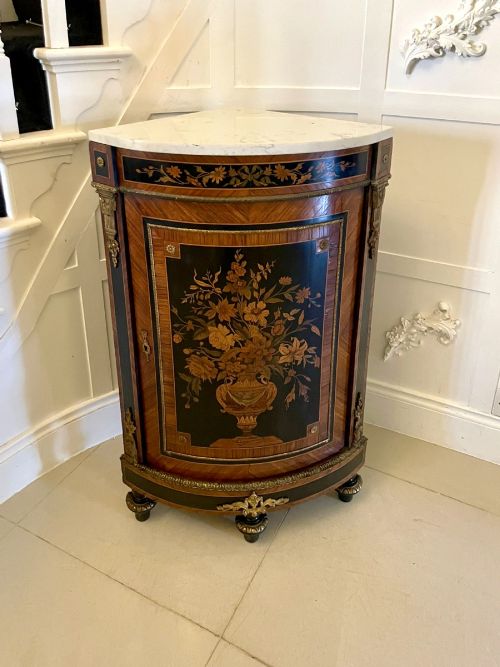
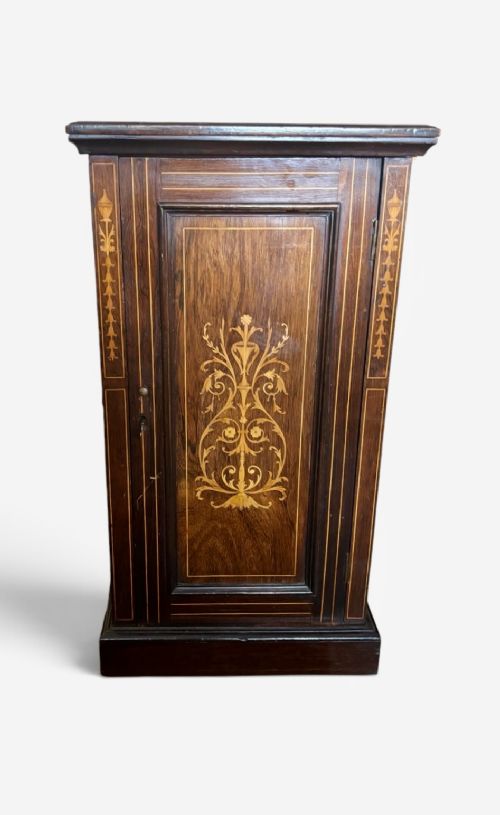
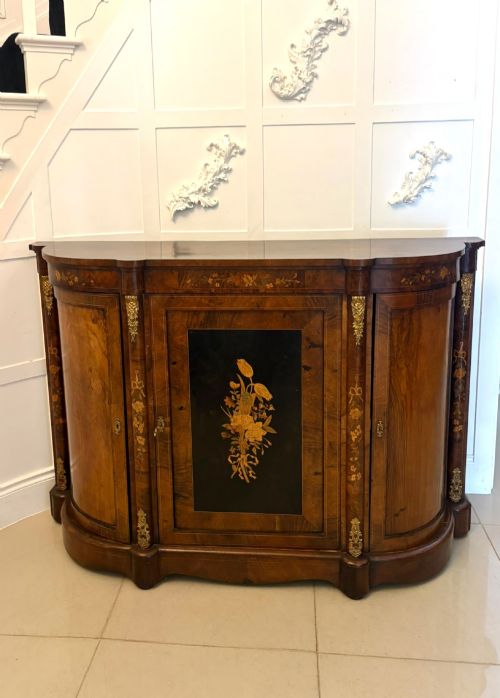
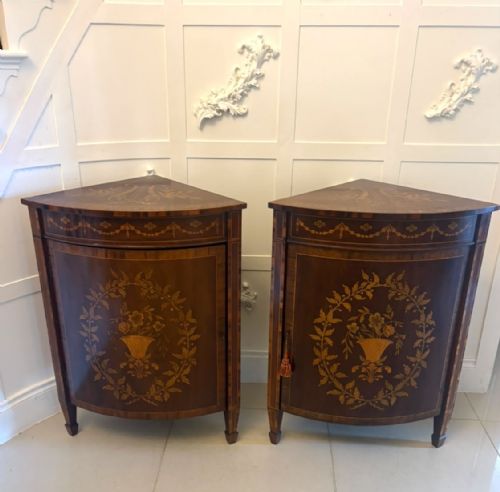
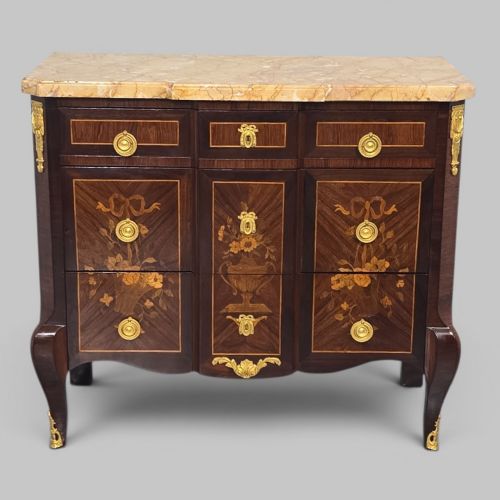
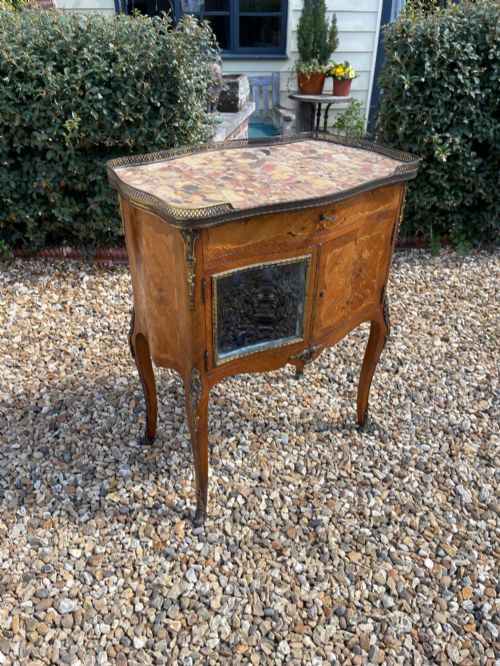
These floral marquetry storage cabinets bring botanical inlay and rich timber surfaces into a room, offering both display and concealed space.
Floral Marquetry Storage Cabinet
A floral marquetry storage cabinet combines decorative botanical wood inlay with practical compartments, appearing primarily in formats such as side cabinets, chests of drawers, corner cabinets, and credenzas. These pieces emerge across several periods, most notably the eighteenth and nineteenth centuries, alongside twentieth-century revivals.
Buyers encounter distinct regional interpretations, ranging from Dutch Baroque and eighteenth-century Dutch floor-standing and linen press designs in walnut to French Louis XVI style and Rococo revival commodes and sideboards in mahogany, kingwood, and satinwood. Victorian English variations also appear, often utilising rosewood, ebonised timber, and burr walnut.
The selection includes marble-topped console and commode formats, tallboys, and narrow cabinets, alongside corner units. Each piece relies on fitted internal shelving or drawer configurations behind inlaid doors.
Materials and inlay techniques
Craftsmen built carcass structures using primary timbers such as mahogany, walnut, rosewood, kingwood, and satinwood, frequently accented with fruitwood veneers for the marquetry itself. Marble tops, including Carrara varieties, appear on many French and continental commodes and sideboards.
Makers formed intricate floral motifs by cutting contrasting wood veneers and assembling them into pictorial panels before applying them to the cabinet surfaces. Secondary details often include cast brass and ormolu mounts, edgings, and handles that complement the timber tones.
Travelling cabinets from the early 19th century remind us that our ancestors insisted on bringing heavily inlaid floral art even when changing hotels.
Distinctions in construction and execution
The precision and complexity of the floral inlay separate standard execution from superior examples, where varied wood grains create naturalistic shading within the petals and leaves. The choice of foundational timber, such as burr walnut or figured mahogany, directly influences the visual depth of the piece.
Hardware integration and secondary materials also set pieces apart, particularly the weight and chasing of ormolu mounts and the thickness and veining of fitted marble tops. Cabinetwork stability, drawer linings, and the crispness of edge banding indicate the original workshop standard.
Edwards and Roberts·Paul Sormani
The Floral Marquetry Storage Cabinet Glossary
- Marquetry
- A decorative technique where small pieces of wood veneer are fitted together to form pictorial patterns, such as floral designs, on a cabinet surface.
- Credenza
- A low storage cabinet, often featuring doors and shelving, used for display and utility in formal rooms.
- Commode
- A low chest of drawers or cabinet on legs, popular in French furniture design and frequently fitted with a marble top.
- Ormolu
- Gilded bronze used for decorative mounts, handles, and feet on furniture.
- Vitrine
- A glass-fronted cabinet designed for displaying objects.
Floral Marquetry Storage Cabinet: Frequently Asked Questions
Where should I place a floral marquetry storage cabinet?
These cabinets suit living rooms, dining spaces, or hallways where their inlaid floral panels serve as a focal point. Freestanding and corner formats allow them to anchor empty wall space while providing functional storage.
Position them away from direct sunlight and heat sources to protect the delicate wood veneers and natural timbers from fading or drying out over time.
How do I care for the marble top?
Marble surfaces require simple dusting with a soft cloth and prompt wiping of any liquid spills to prevent staining. Avoid acidic cleaners that can etch the polished stone.
When necessary, clean the marble with mild, pH-neutral soap and water, drying the surface thoroughly afterward to maintain its finish.
How do I distinguish 18th century Dutch pieces from later French revivals?
Eighteenth-century Dutch examples typically feature rich walnut timbers with robust floral marquetry across linen presses, tallboys, and floor-standing corner cabinets. Their proportions tend to be sturdy and architectural.
French revival pieces from the nineteenth century often incorporate kingwood, mahogany, or ebonised surfaces paired with ormolu mounts, demi-lune shapes, and Carrara marble tops reflecting Louis styles.
Can I store heavy items inside these cabinets?
The internal shelving and drawer spaces suit everyday items like linen, tableware, or books, but the age of the joinery warrants reasonable weight distribution. Shelves are typically fixed or resting on simple supports rather than heavy-duty modern brackets.
Checking the stability of the internal supports ensures the cabinet safely accommodates your intended items without straining historical timber.