





Floral Inlay Glass Cabinet
These floral inlay glass cabinet pieces bring intricate botanical woodwork and glazed display space together, offering a refined focal point for any room.
Floral Inlay Glass Cabinet
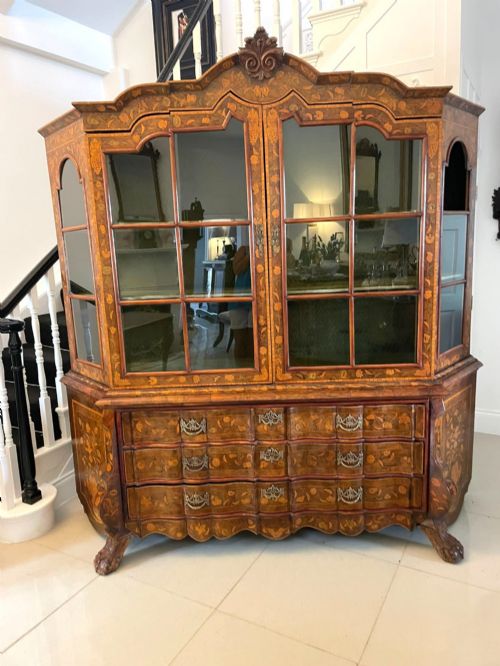
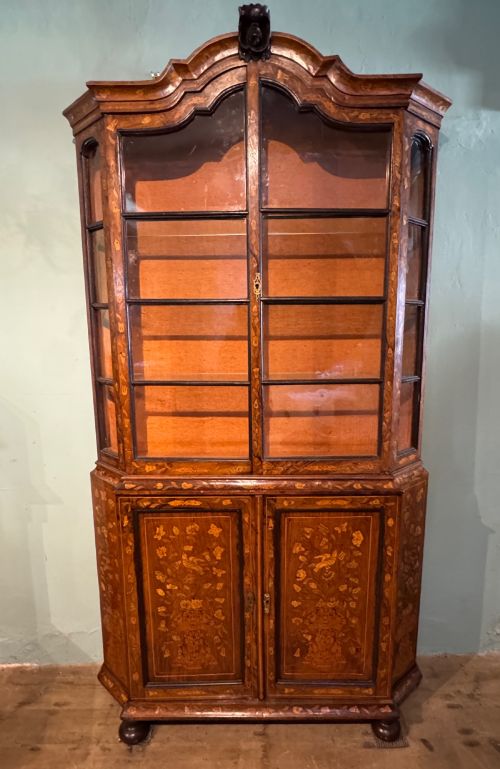
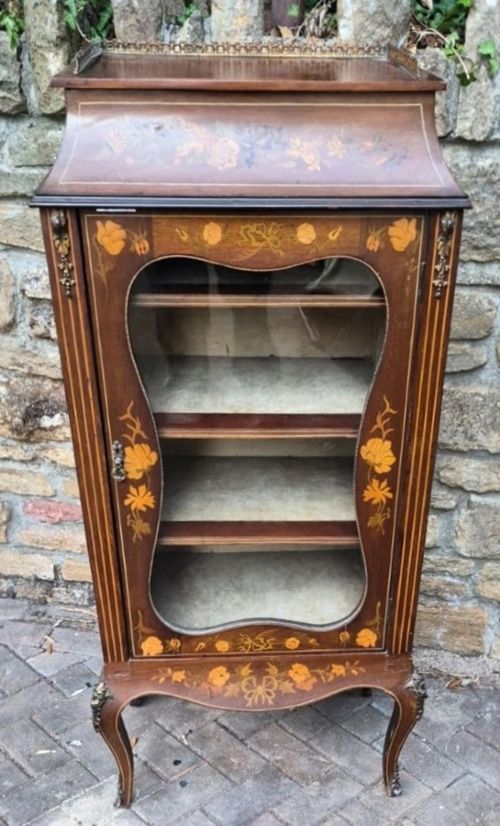
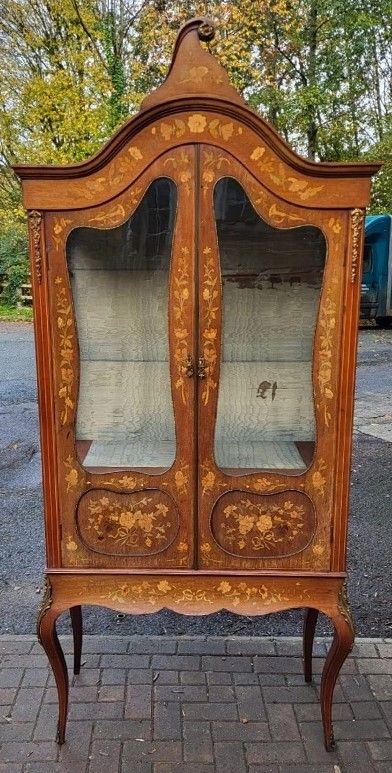
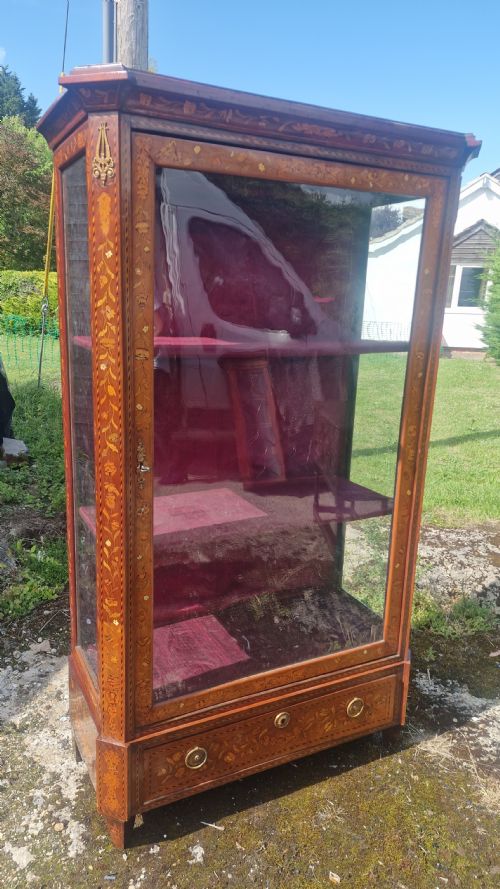
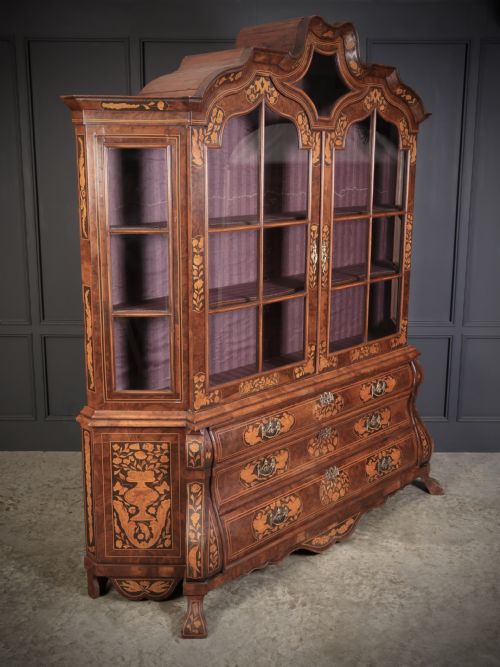
A floral inlay glass cabinet combines glazed display compartments with botanical marquetry, serving as both a functional storage piece and a decorative showcase. The pieces seen here span periods from the early nineteenth century through the Edwardian era, encompassing distinct regional interpretations.
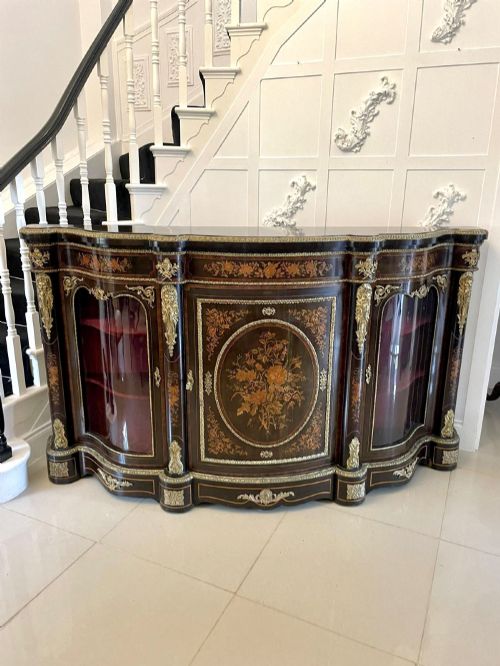
Most examples on this page date from the Victorian period, frequently taking the form of credenzas, pier cabinets, or freestanding display cabinets. Makers constructed these items primarily in walnut, mahogany, and ebonised woods, enriched with varied timber veneers.
Continental pieces, particularly those in the Dutch Baroque tradition, appear alongside English Sheraton Revival and Edwardian interpretations. Buyers encounter serpentine fronts, bombé shapes, and upright vitrines designed to exhibit prized porcelain and small objects.
Distinctions in craftsmanship and finish
The sophistication of the floral marquetry dictates much of the distinction between standard and exceptional pieces, with superior examples exhibiting precise shading, intricate petal details, and a wide variety of natural wood tints. The choice of underlying timber also plays a role, as heavily figured burr walnut and fine satinwood elevate the visual depth of the cabinet.
Structural complexity, such as serpentine or bombé fronts paired with fire-gilt ormolu mounts, separates ambitious workshop output from simpler rectilinear forms. The integrity of the veneering, the smoothness of door operations, and the clarity of the original glass complete the assessment of overall standard.
Listings feature walnut, mahogany, satinwood, and fruitwood, spanning the Victorian, Edwardian, and Dutch Baroque periods.
The Floral Inlay Glass Cabinet Glossary
- Marquetry
- A decorative technique where small pieces of varied coloured wood veneer are fitted together to form pictorial floral or geometric patterns. This method covers the main body and doors of many cabinets on this page.
- Ormolu
- Gilded bronze mounts applied to furniture edges and mounts for decorative effect. These metallic accents frequently complement the floral wood inlay.
- Credenza
- A low cabinet, often featuring central glazed doors flanked by curved side cupboards, originating for dining rooms and drawing rooms. Victorian iterations often incorporate extensive floral marquetry.
- Pier cabinet
- A narrow upright display cabinet designed to fit wall spaces between windows. These tall, single-door pieces showcase vertical floral inlay panels.
- Vitrine
- A glass-fronted display cabinet intended primarily for the presentation of porcelain and curiosities. Many examples utilise light satinwood or mahogany frames.
Floral Inlay Glass Cabinet: Frequently Asked Questions
What rooms suit a floral inlay glass cabinet?
These cabinets work effectively in drawing rooms, dining spaces, and hallways where glazed doors protect items while keeping them visible.
Their decorative floral panels allow them to function as standalone statement furniture against neutral walls.
How do I care for antique veneer and marquetry?
Keep wooden cabinets away from direct sunlight and steady heat sources to prevent the natural veneers from drying or splitting.
Apply a microcrystalline wax periodically to nourish the polished timber surface without building up excessive residue.
What is the difference between an Edwardian and a Victorian cabinet?
Victorian examples frequently utilise burr walnut with dark ebonised framing, heavy ormolu mounts, and serpentine shapes.
Edwardian pieces tend to employ lighter satinwood and mahogany timber with refined Sheraton Revival painted or inlaid floral details.
How were these cabinets originally used?
Homeowners utilised these glazed enclosures to display valuable ceramics, glassware, and small ornaments away from household dust.
Lower enclosed cupboards beneath the glass provided concealed storage for linens or books.