

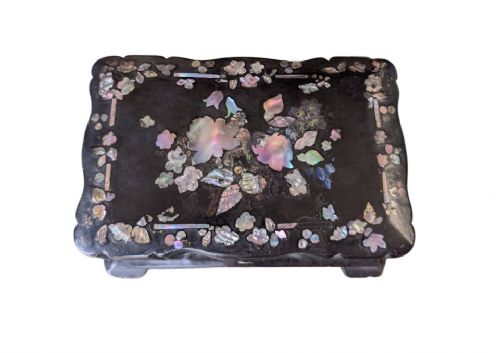
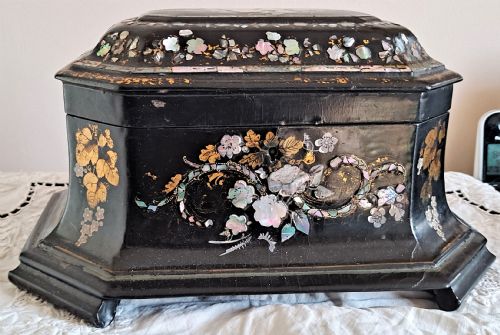


Floral Inlay Box
A floral inlay box brings botanical artistry to domestic storage, featuring delicate marquetry and contrasting woods that appeal to collectors of period decorative items.
Floral Inlay Box
A floral inlay box encompasses a diverse array of small lidded receptacles designed for holding tea, jewellery, stationery, and small trinkets. The selection draws primarily from Victorian, Edwardian, and Georgian periods, showcasing distinct regional traditions in woodworking and surface decoration.
Tea caddies, music boxes, and jewellery cabinets form the core of the items encountered. Makers utilised rich timbers such as rosewood, walnut, and harewood as grounds for intricate floral patterns composed of lighter contrasting woods and organic materials.
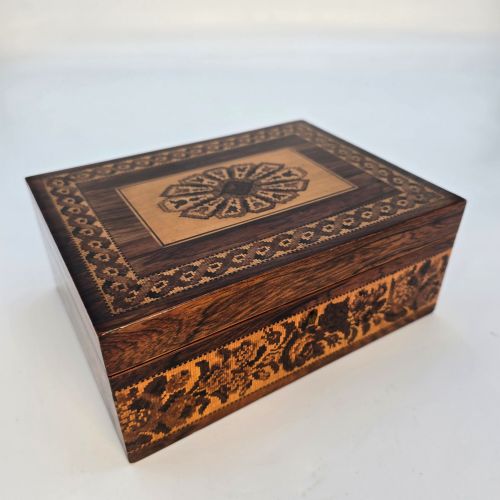
Continental examples, including German and Italian pieces, sit alongside English works such as Tunbridge Ware and Sheraton designs. Buyers frequently select these objects for their combination of functional storage and detailed decorative surfaces.
Materials and technique
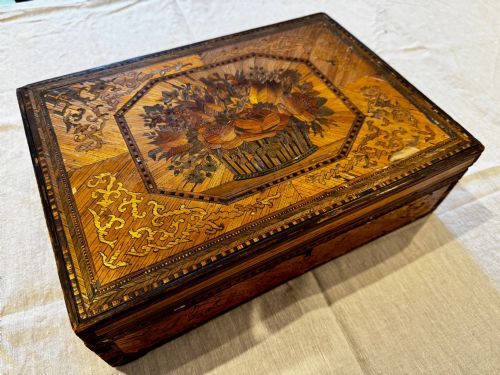
Craftsmen built the core carcases from dense timbers such as rosewood, walnut, and oak, applying finely sliced veneers to the exterior surfaces. Marquetry techniques involved cutting intricate floral motifs from boxwood, satinwood, and fruitwoods to fit flush within precise recesses.
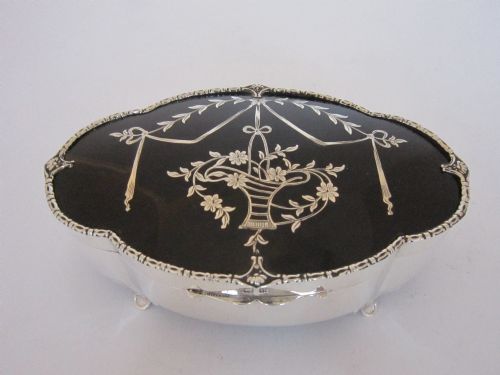
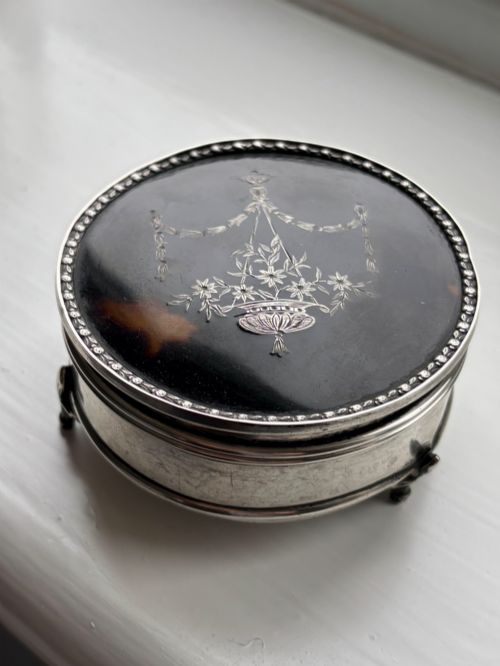
Surface embellishment frequently incorporated mother-of-pearl, brass, and tortoiseshell alongside timber veneers to create textural contrast. Specialist workshops also employed straw-work and hand-painted details to enhance the visual depth of floral panels.
Floral Inlay Box Retail Price Guide 2026
Typical asking prices for floral inlay box among the pieces listed under this phrase on Sellingantiques today, from the lower quarter to the upper quarter. They describe what is for sale here now, not the wider market.
One remarkably patient prisoner-of-war constructed an intricate workbox entirely from humble straw-work back in the year eighteen hundred.
Variations in quality
The refinement of the marquetry cutting determines the overall calibre of the piece, with superior examples displaying microscopic precision in the joints between flower petals and stems. The selection of contrasting timbers also dictates worth, as richly figured burr yew, harewood, and satinwood demand greater skill from the cabinetmaker.
Internal fitting and hardware signal the standard of construction, distinguishing mass-produced items from bespoke workshop commissions. Retained original linings, functioning locks, and mechanically sound musical movements elevate the standing of a box.
Edmund Nye·Ollivant & Botsford·Nicole Freres
The Floral Inlay Box Glossary
- Marquetry
- Decorative veneer work forming pictures or patterns on a wooden ground. Craftsmen assemble small pieces of wood, shell, or ivory to create detailed floral designs.
- Tunbridge Ware
- Form of decorative woodwork produced in Kent featuring microscopic mosaic patterns. Artisans glue thousands of tiny coloured wood blocks together to form geometric and floral scenes.
- Tea Caddy
- Container designed specifically for storing loose tea leaves securely. These boxes often feature internal lidded compartments and mixing bowls.
- Pietra Dura
- Inlay technique utilising cut and fitted polished coloured stones to create floral designs. Artisans set marble and semiprecious stones into a dark wood or ebonised base.
- Harewood
- Sycamore wood dyed a greenish-grey hue using chemical treatments. It served as a favoured background veneer for high-end Georgian cabinetmakers.
Floral Inlay Box: Frequently Asked Questions
What were floral inlay boxes used for originally?
These receptacles served practical domestic functions in period households, primarily housing valuable dry tea leaves, personal correspondence, or sewing implements.
Larger variants accommodated musical movements or acted as desktop cabinets for stationery and trinkets, combining utility with ornamental display in the parlour.
How do I care for a rosewood or walnut box?
Keep wooden boxes away from direct sunlight and radiators to prevent the delicate veneer from drying out and lifting from the carcase.
Apply a minimal amount of microcrystalline wax occasionally to nourish the timber surface without damaging the historic polish or inlaid elements.
How can I tell a Victorian box from a Georgian one?
Georgian pieces frequently display lighter satinwood or harewood grounds with restrained classical floral motifs and elegant proportions.
Victorian examples often utilise darker rosewood or walnut timbers paired with more profuse marquetry, mother-of-pearl highlights, and elaborate internal fittings.
Are musical movements in antique boxes usually original?
Many surviving musical boxes retain their original pinned cylinders and comb works, though some have undergone professional restoration over the decades.
Key-wound or comb-activated mechanisms require gentle handling and periodic expert maintenance to preserve their operational capability.