


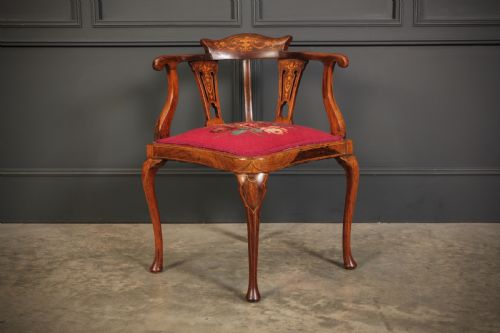

Floral Inlaid Armchairs
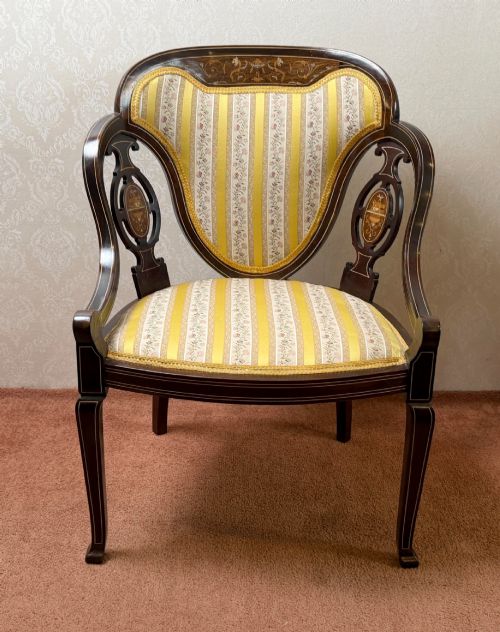
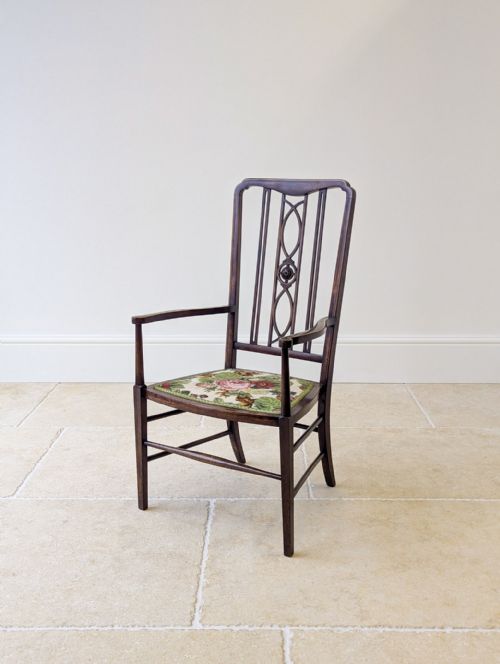
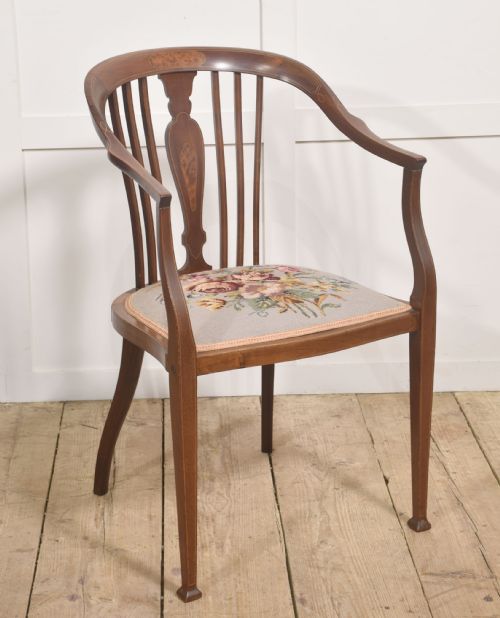
These floral inlaid armchairs are decorative seating pieces that combine timber frames with detailed marquetry, offering character and traditional craftsmanship for any interior.
Floral Inlaid Armchairs
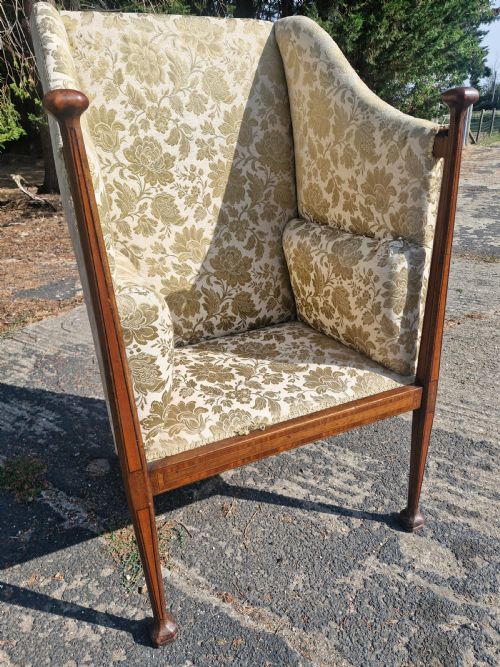
Makers utilised diverse construction methods suited to their respective periods, producing everything from robust high-backed carvers to delicate salon chairs. Upholstery options span traditional damask fabrics alongside frames supplied specifically for re-upholstery.
How they were made
Cabinetmakers constructed the structural frames of floral inlaid armchairs using dense timbers such as mahogany, walnut, and rosewood. These woods provided the necessary durability for load-bearing components like legs, arms, and backrests.
Decoration relied on precision marquetry and inlay techniques, inserting lighter woods like satinwood and fruitwood into the primary timber ground. Artisans cut floral and botanical motifs meticulously by hand to fit flush within the prepared recesses of the wood surface.
Upholstered elements frequently incorporated traditional textiles such as damask and woven fabrics fastened over padded internal stuffing. Brass details occasionally appeared as subtle decorative accents or functional hardware on specific periods.
Listings feature mahogany, walnut, and rosewood timbers paired with fruitwood and satinwood inlay across pieces spanning the 18th to early 20th centuries.
What varies in quality
The standard of a floral inlaid armchair depends heavily on the precision and complexity of the marquetry work. Finer examples display intricate, tightly fitted floral compositions utilising a rich palette of contrasting woods rather than simple surface decoration.
Structural integrity and timber selection separate ordinary pieces from superior ones. Well-proportioned frames utilising solid mahogany or walnut with harmonious grain patterns demonstrate greater cabinetmaking skill than rushed production items.
The historical coherence of the design also influences overall merit, where period-appropriate upholstery styles and faithful adherence to classical Sheraton or Art Nouveau proportions elevate the piece.
The Floral Inlaid Armchairs Glossary
- Marquetry
- A decorative technique where small pieces of wood veneer are assembled into pictorial or floral patterns. This veneer is then applied to the structural timber surface of the furniture.
- Sheraton style
- A neoclassical furniture design characterised by straight tapered legs, geometric shapes, and delicate inlay work. It emerged during the late 18th century and experienced revivals later.
- Occasional chair
- A lightweight, movable seating piece designed for specific, temporary use in a room rather than primary lounging. These chairs often prioritize decorative appearance over heavy domestic service.
- Damask upholstery
- A reversible, jacquard-patterned fabric traditionally woven from silk, wool, or linen. It provides a textured and formal surface finish suited to antique seating.
Floral Inlaid Armchairs: Frequently Asked Questions
How do I date these armchairs?
Dating relies on examining the timber species, construction joints, and stylistic markers such as inlay motifs. Edwardian pieces generally show lighter frames, whilst 18th-century examples feature denser timbers and heavier marquetry.
Secondary clues include the type of internal stuffing and upholstery remnants found beneath modern fabric layers.
Can I use them every day?
Most floral inlaid armchairs suit regular domestic use provided they receive careful treatment. Salon and occasional chairs were originally built for lighter duty than heavy library armchairs.
Checking the stability of the joints ensures the frame handles daily sitting without sustaining structural damage.
What is fruitwood inlay?
Fruitwood inlay involves using timber derived from fruit-bearing trees, such as pear or apple, chosen for its smooth texture and pale natural colour. Artisans cut this wood into delicate stems and petals.
The contrasting tones create vivid floral patterns against darker primary woods like mahogany.
Are these chairs restored?
Many antique armchairs undergo conservation work to preserve their structural strength and appearance over time. This can involve re-gluing loose joints or securing lifting sections of veneer.
Some pieces also retain their original woodwork while requiring new upholstery fabric for modern interiors.