



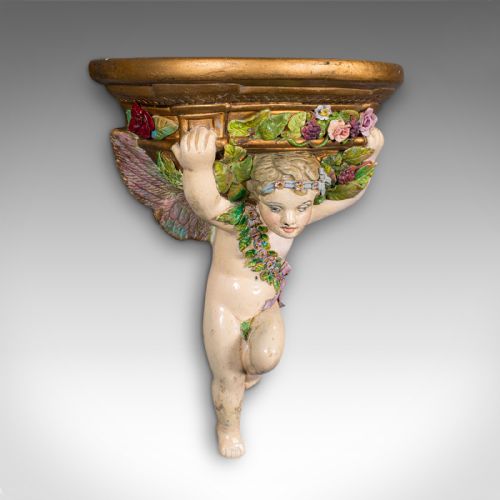


Floral Gilt Clock
A floral gilt clock brings together bright enamel decoration and metallic shine, catching the light on a mantelpiece just as it did in the nineteenth century.
Floral Gilt Clock
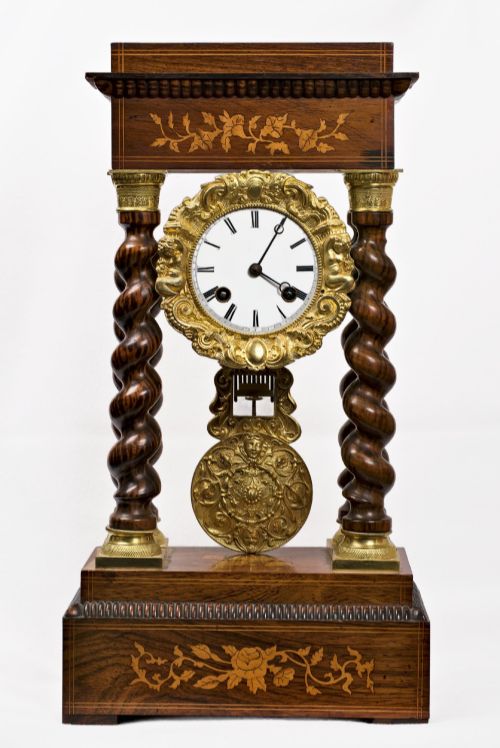
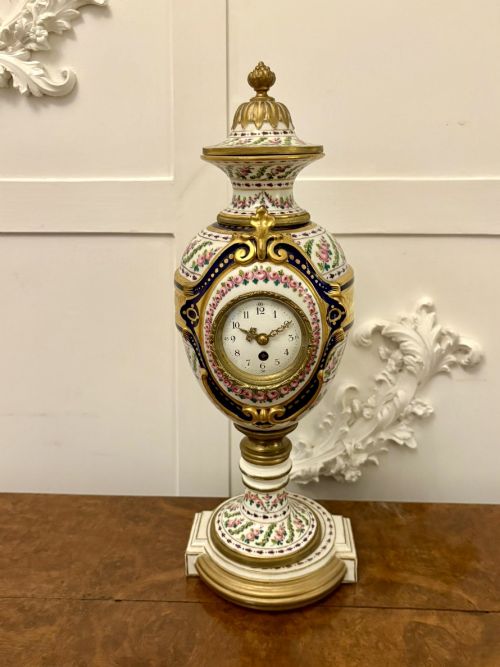
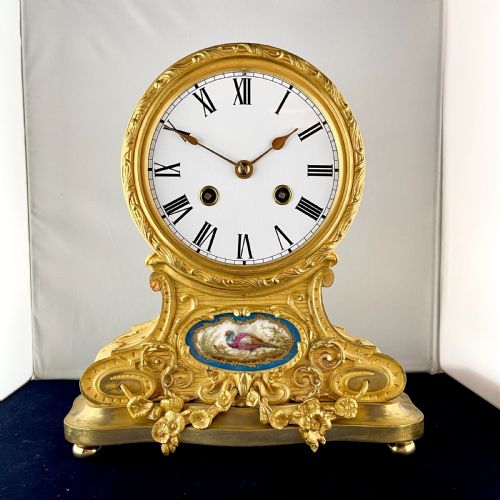
A floral gilt clock most commonly appears on this page as a nineteenth-century French mantle clock or garniture set. These decorative timepieces range from elaborate porcelain urn shapes and boudoir clocks to architectural portico designs.
The aesthetic leans heavily toward French Rococo revival and Louis XVI styles, though occasional Art Deco and Aesthetic Movement pieces provide alternative decorative schemes. Buyers meet everything from simple drumhead designs to complete clock sets flanked by matching porcelain urns.
How they were made
Craftsmen shaped cases from brass, ormolu, gilt bronze, and rosewood, often incorporating glass panels or wooden stands to elevate the mechanism. Metal casting provided the ornate scrolls and architectural columns typical of nineteenth-century French workshops.
Porcelain and enamel surfaces received delicate hand-painted floral decoration, fired to maintain vibrant colour across decades of use. Movement engineering ranged from standard timepieces to repeating carriage mechanisms and quarter-striking systems.
Floral Gilt Clock Retail Price Guide 2026
Typical asking prices for floral gilt clock among the pieces listed under this phrase on Sellingantiques today, from the lower quarter to the upper quarter. They describe what is for sale here now, not the wider market.
The selection spans the Victorian era through the early twentieth century, showing French Rococo revival and Art Deco styling.
What varies in quality
The distinction between standard decorative pieces and superior examples lies in the crispness of the gilt casting and the fineness of the hand-painted floral enamel. Richer patination on the bronze and ormolu mounts elevates the overall presence of the clock.
Interiors featuring signed movements by established makers command greater attention from collectors. The integration of matching side garnitures or intricate woodwork like inlaid rosewood further separates standard mantel pieces from exceptional ones.
Leroy and Fils·Perivale of England·Marti
The Floral Gilt Clock Glossary
- Ormolu
- Gilt bronze ornamentation applied to furniture and clock cases. This technique involves coating cast bronze in a finely ground gold-mercury amalgam before heating.
- Portico clock
- A striking architectural clock design shaped like a classical temple with columns supporting the upper entablature. These typically feature wooden cases in rosewood.
- Garniture set
- A matched group consisting of a central clock flanked by decorative side ornaments such as urns or vases. They provide symmetrical decoration for a mantelpiece.
- Champeve enamel
- A technique where troughs are dug into a metal surface, filled with enamel powder, and fired. The resulting design displays colourful floral patterns divided by thin metal lines.
- Cartel clock
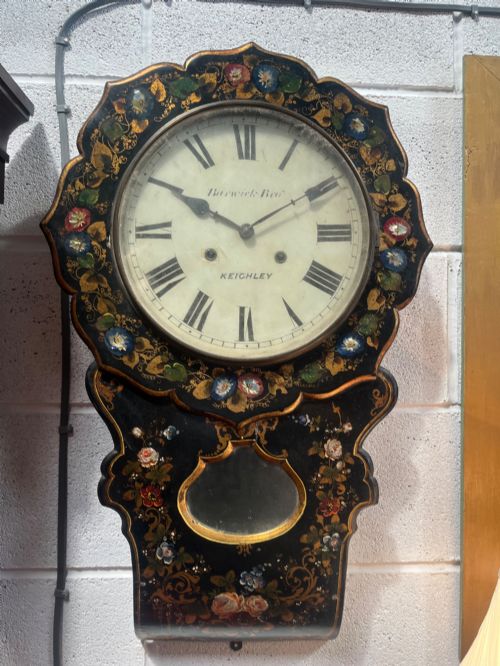
- A wall clock housed in an ornate scroll-moulded frame made of giltwood or metal. These decorative timepieces were designed to hang securely in domestic rooms.
Floral Gilt Clock: Frequently Asked Questions
Where do I place a mantel clock?
These decorative timepieces sit comfortably on a mantelpiece, sideboard, or deep console table where their gilt surfaces catch the light. Ensure the piece rests on a stable, level surface to keep the pendulum swinging evenly.
Keep them away from direct sunlight and damp areas to preserve the hand-painted porcelain and delicate enamel dials over time.
How do I wind these clocks?
Most mechanical pieces require a key inserted into the dial face to tension the internal springs or weights. Turn the key gently until you feel resistance, taking care not to overwind the mechanism.
If the clock includes a strike train, ensure the striking sequence runs down naturally without forcing the hands backward past the hour.
What is a clock garniture?
A garniture is a matching decorative set featuring a central timepiece flanked by two matching ornamental objects like porcelain urns. These sets were designed to create a balanced display across a fireplace opening.
They unify the room scheme by repeating the same floral motifs and gilt bronze mounts across all three matching pieces.
How do I identify a Victorian clock?
Victorian timepieces often display heavy cast metal mounts, porcelain dials with floral decoration, and deep wood tones like rosewood or ebonised finishes. Look for maker stamps or serial numbers stamped onto the backplate of the brass movement.
Stylistic cues lean toward revivalism, borrowing heavily from Rococo and Louis XVI decorative vocabulary popular during the nineteenth century.