


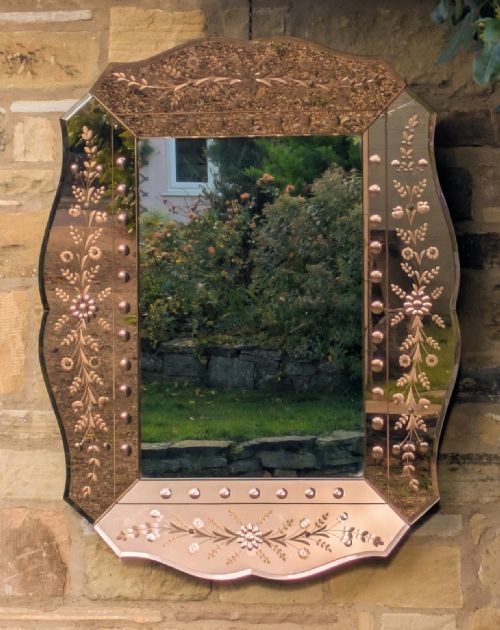


Floral Engraved Glass
Floral engraved glass brings delicate botanical motifs to tableware and mirrors, offering a refined decorative touch for the home.
Floral Engraved Glass
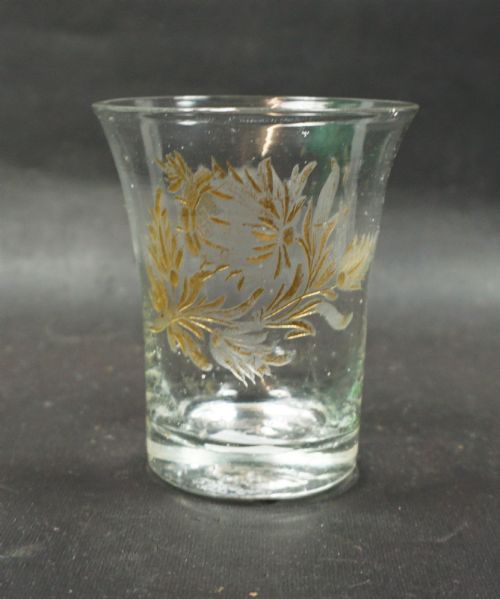
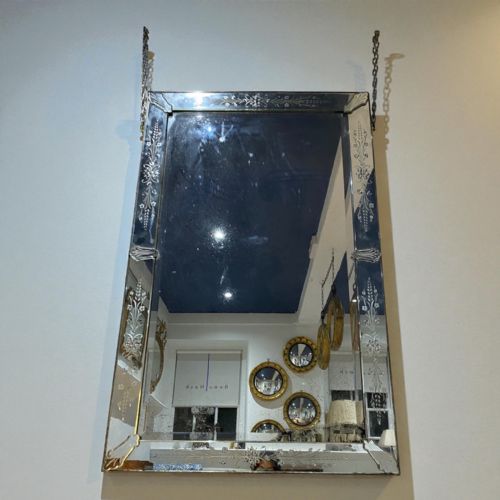
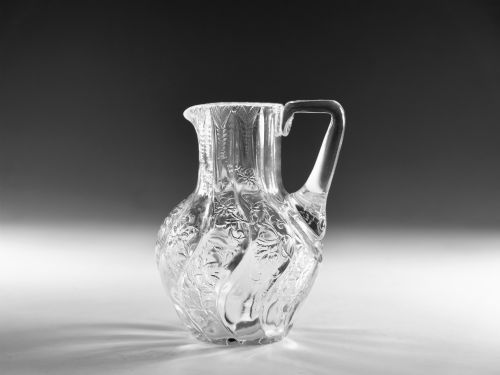
Floral engraved glass encompasses a variety of domestic items, from drinking vessels and decanters to wall mirrors and decorative jugs. When searching for floral engraved glass, buyers encounter pieces primarily from the Victorian and Edwardian eras, alongside later Art Nouveau and Art Deco examples.
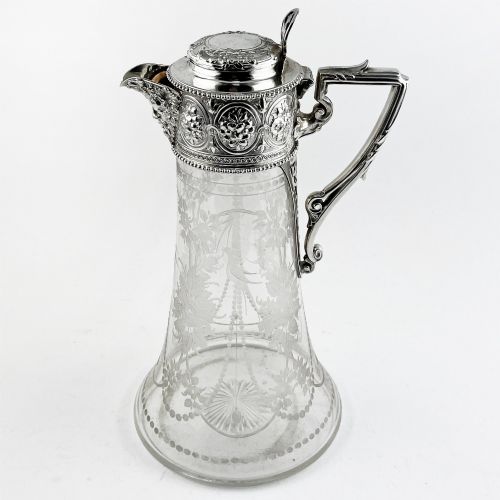
The objects take many forms, including claret jugs with sterling silver mounts, etched rummers, dessert wine glasses, and gilded vases. Clear glass and lead crystal form the foundation of these tableware items, while mirrors utilise silvered glass frames.
Originating largely from British and continental workshops, these items serve both functional and ornamental purposes in modern interiors. The selection leans heavily towards nineteenth-century production, particularly Victorian glassware featuring detailed botanical wheel-engravings and surface etching.
What varies in quality
The distinction between standard and superior pieces rests on the crispness of the engraving and the clarity of the underlying crystal or glass. Master cutters achieve fluid, deeply incised floral details that catch the light effectively, whereas lesser examples show shallow or rudimentary surface marks.
The integration of precious materials elevates certain items, such as solid silver mounts by known makers or substantial gold fittings paired with the glass body. Heavier lead crystal vessels demonstrate superior substance and ring when compared to lighter, plain glass alternatives.
Floral Engraved Glass Retail Price Guide 2026
Typical asking prices for floral engraved glass among the pieces listed under this phrase on Sellingantiques today, from the lower quarter to the upper quarter. They describe what is for sale here now, not the wider market.
Listings feature items spanning the Victorian, Edwardian, Art Nouveau, and Art Deco periods, utilising clear glass, lead crystal, and sterling silver.
Baccarat Vallee·Stevens and Williams·William Davenport
The Floral Engraved Glass Glossary
- Claret jug
- A pouring vessel designed specifically for serving red wine, frequently fitted with a silver or metal handle, collar, and hinged lid. These pieces often combine cut crystal bodies with elaborate botanical engraving.
- Rummer
- A large, sturdy type of drinking glass popular in the nineteenth century, typically featuring a short stem and a capacious bowl. They are frequently decorated with etched or engraved foliage.
- Ewer
- A large jug with a wide spout and a curved handle, used historically for water or wine rather than drinking directly from. In glass production, they provide a large canvas for floral wheel-engraving.
- Intaglio
- A design incised or engraved into a material so that the impression sinks below the surface. This technique is common in decorative glass and gemstone pendants.
- Lead crystal
- A high-clarity form of glass containing lead oxide, which increases the weight, refractive index, and workability for cutting and engraving.
Floral Engraved Glass: Frequently Asked Questions
How do I clean antique engraved glass?
Wash pieces by hand in warm, soapy water using a soft cloth, avoiding harsh abrasive scourers that can scratch the surface. Rinse thoroughly and dry with a lint-free towel to maintain the clarity of the crystal and silver components.
Take particular care with items featuring gold leaf or silvered mirror backs, as aggressive soaking or chemical cleaners can damage delicate metallic additions. Wooden or padded drying mats help prevent rim chips during handling.
How do I identify Victorian glass?
Victorian glass often displays characteristic heavy lead weight, deep wheel-cut floral patterns, and styles ranging from ornate Victorian etching to Art Nouveau curves. Examination of pontil marks on the base helps determine period manufacturing techniques.
Silver mounts, when present, frequently bear hallmarks that provide exact assay office years and maker marks. Comparing stylistic motifs with documented nineteenth-century design patterns aids in accurate dating.
What is the difference between etching and engraving?
Etching typically involves using acid or chemical agents to eat away the surface of the glass, creating a frosted, matt design. Engraving is a mechanical process where a lapidary wheel cuts directly into the glass material.
Engraved lines generally appear sharper and deeper than acid-etched decoration, though both techniques frequently appear combined on nineteenth-century tableware. Close inspection with a loupe reveals the microscopic differences in how the glass is displaced.