



Floral Dinnerware Set
These floral dinnerware set pieces bring botanical charm to the table through centuries of ceramic artistry.
Floral Dinnerware Set
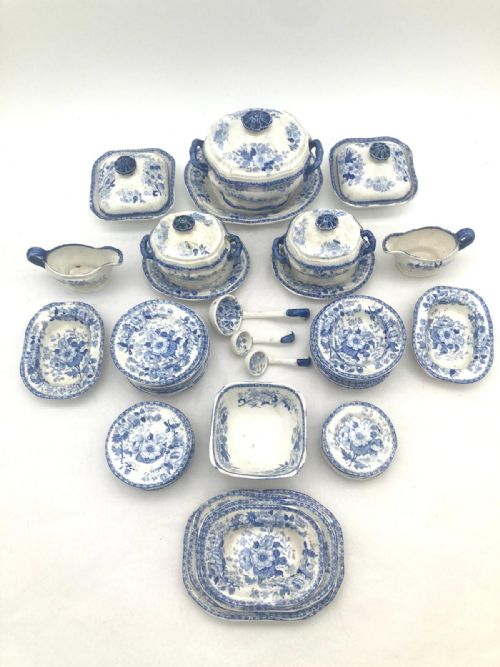
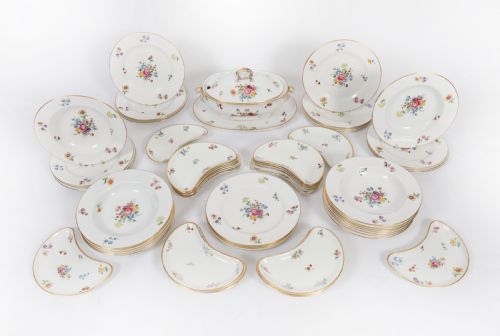
A floral dinnerware set comprises matching ceramic or porcelain vessels designed for serving meals, decorated with botanical and flower motifs. These services range from expansive sixty-piece collections down to smaller child's services and sets of six soup bowls or plates.
Most examples found here originate from the nineteenth century, including specific decades like the eighteen-twenties and eighteen-eighties, alongside Edwardian productions. Forms span complete dinner services, part services, individual plates, platters, and soup bowls.
Makers represented in these listings span notable English potteries and continental European manufacturers. Styles lean toward traditional English, Victorian, Victorian Imari, Georgian, and French provincial aesthetics.
How they were made
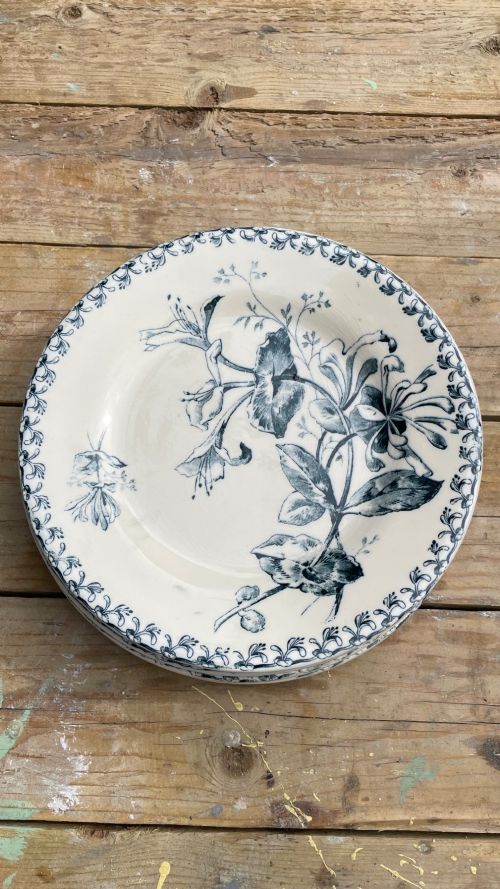
Ceramic bodies such as earthenware, ironstone, and porcelain form the foundation of these pieces, shaped into plates, bowls, and serving vessels. Transfer printing applied patterns like the blue and white sheet design or the London Bridge pattern onto the clay bodies.
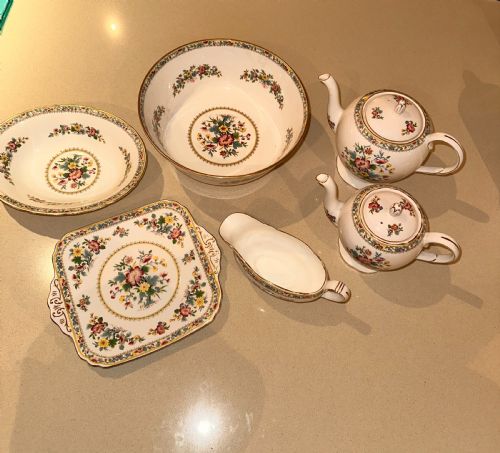
Hand-painting brought intricate floral details to life across many services, often enhanced with enamel colours. Artisans applied gold leaf and gilt accents to rim edges and decorative borders, while protective glazes sealed the finished surfaces.
Floral Dinnerware Set Retail Price Guide 2026
Typical asking prices for floral dinnerware set among the pieces listed under this phrase on Sellingantiques today, from the lower quarter to the upper quarter. They describe what is for sale here now, not the wider market.
Listings feature nineteenth-century, Edwardian, and twentieth-century items made from earthenware, porcelain, ironstone, and enamel.
What varies in quality
The refinement of the ceramic body and the precision of the form distinguish different tiers of production. Finer porcelains and ironstone services display crisper moulding and more durable structures than standard earthenware.
The artistic execution of the floral decoration dictates much of the distinction between pieces. Hand-painted botanical studies and detailed transfer prints demonstrate superior craftsmanship compared to simpler, coarser applications.
Minton·Copeland Spode·Booths·Coalport·Masons·Müller Volkstedt MV Co·Wedgwood·Elkin & Newbon
The Floral Dinnerware Set Glossary
- Ironstone
- A heavy, durable type of earthenware patented in the nineteenth century. It offered a resilient alternative to porcelain for everyday dining services.
- Transfer printing
- A decoration technique where an engraved copper plate transfers a design onto paper and then onto the ceramic surface. This method allowed for intricate and repeatable floral patterns.
- Porcelain
- A fine, translucent ceramic fired at high temperatures. It forms the base for delicate and prestigious nineteenth-century dining services.
- Gilt
- A thin layer of gold applied to the surface of ceramics. It typically highlights rims and handles on formal dinnerware.
- Imari
- A decorative style inspired by Japanese export wares featuring iron red, cobalt blue, and gold. Victorian iterations adapted these vibrant palettes for European dining tables.
Floral Dinnerware Set: Frequently Asked Questions
What is a floral dinnerware set?
A floral dinnerware set is a collection of ceramic or porcelain tableware decorated with flower motifs, ranging from full multi-piece dining services to smaller sets of plates and soup bowls.
These sets encompass nineteenth-century English and continental productions designed for practical dining and formal presentation.
How were these antique sets used?
Historically, these services catered to multi-course dining, with specific vessels dedicated to soups, main courses, and serving platters. Larger sets provided uniform table settings for hosting guests in period homes.
Smaller child's services and plate sets served both functional and decorative purposes within domestic settings.
How do I live with antique dinnerware?
Living with antique dinnerware involves balancing careful handling with daily enjoyment, often by hand-washing delicate pieces rather than using modern dishwashers. Many collectors choose to display plates on walls or use sturdy ironstone pieces for occasional dining.
Proper storage using felt separators between stacked plates helps protect the glaze and surface decorations over time.
How can I tell periods apart?
Periods are distinguished by ceramic bodies, weight, and decorative styles, such as the heavy ironstone characteristic of nineteenth-century services versus finer Edwardian porcelain bodies. Maker marks stamped or painted on the undersides provide definitive clues to the manufacturing era.
Design characteristics like transfer-printed blue and white patterns often point to specific decades in the eighteen-hundreds.