



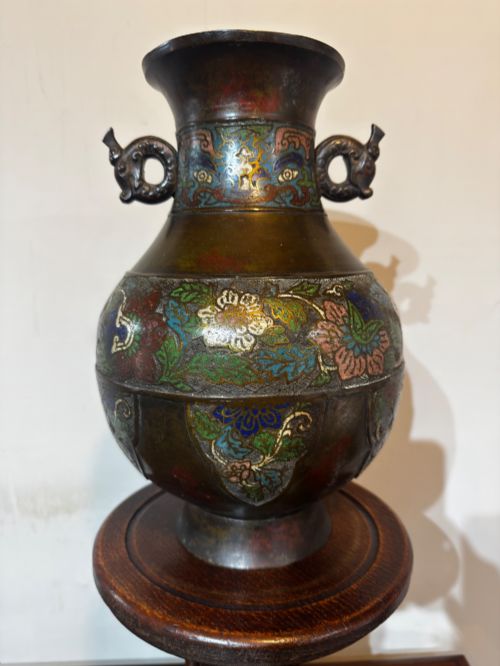


Floral Cloisonne Vessel
A floral cloisonne vessel brings vibrant enamels and intricate metal wirework into a room, offering both bold colour and meticulous craftsmanship.
Floral Cloisonne Vessel
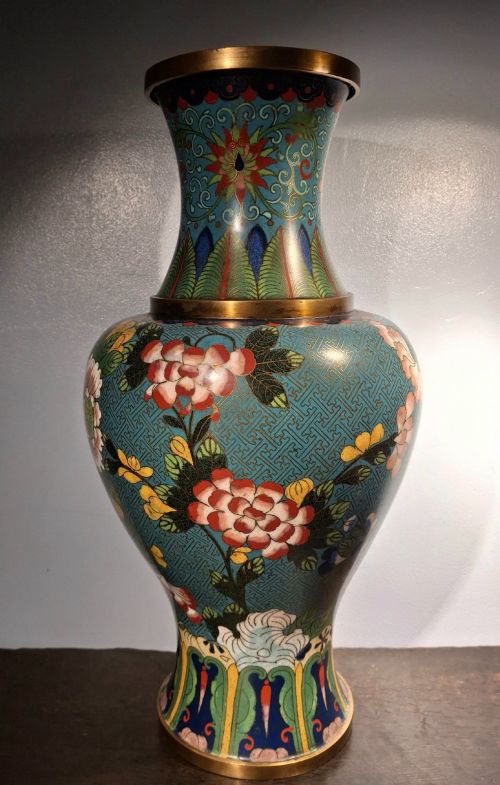
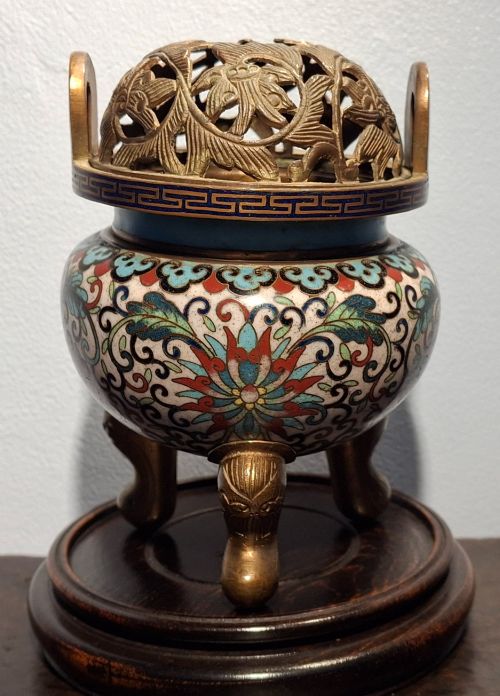
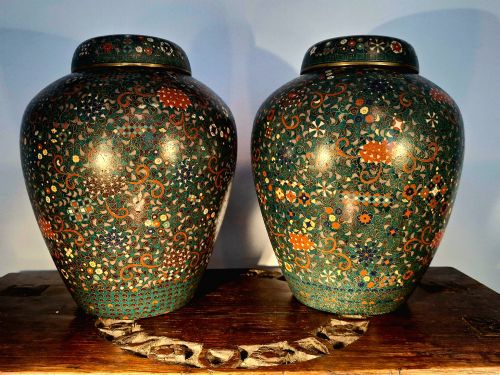
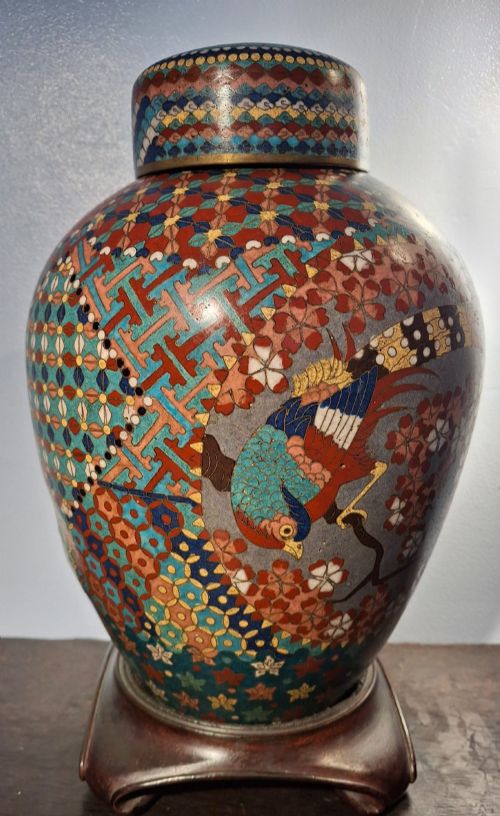
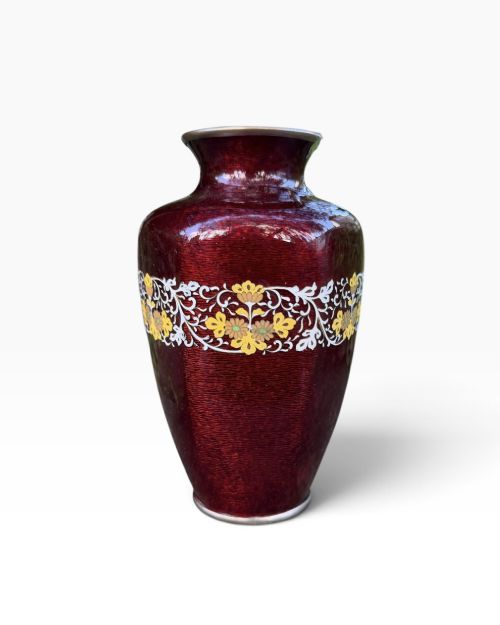
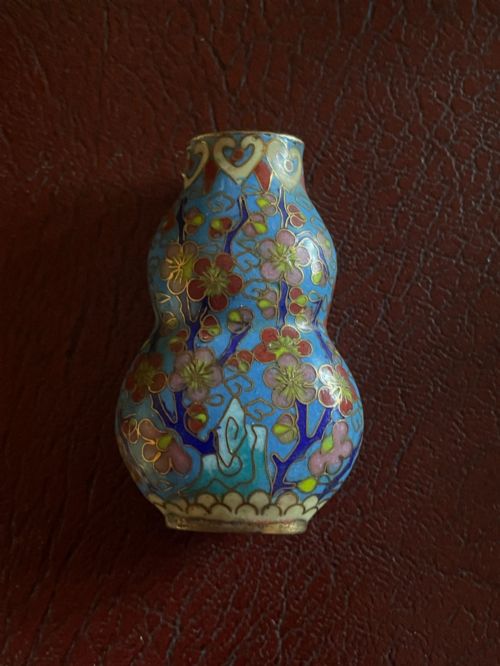
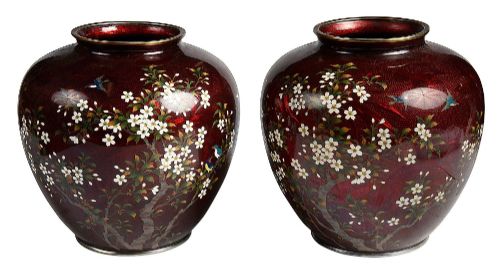
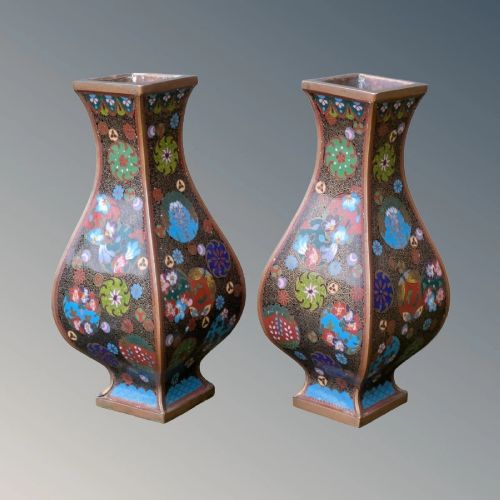
A floral cloisonne vessel represents a centuries-old tradition of metalworking and enamel decoration, taking forms such as vases, ginger jars, bowls, and incense burners. These pieces span multiple eras including the Qing Dynasty, Edo period, and Meiji period, reflecting distinct cultural aesthetics from China and Japan.
The most common examples encountered on this page are vases and lidded ginger jars produced across the nineteenth and early twentieth centuries. Artisans applied botanical motifs using fine metal wires to create cells that were subsequently filled with coloured enamel pastes.
Collectors will also discover less common forms like sake kettles, tea pots, jardinières, and table lamps alongside traditional vessels. Each piece demonstrates how makers adapted surface decoration to functional and decorative objects alike.
Materials and construction
The construction of a floral cloisonne vessel begins with a metal foundation, typically formed from copper, brass, or bronze. Artisans solder delicate flat metal wires onto this body to outline floral patterns and mosaic designs, creating individual compartments known as cloisons.
Makers fill these wire cells with powdered glass enamels before firing the piece in a kiln to fuse the vitreous colours. Subsequent grinding and polishing reveal the metal outlines and yield a smooth, lustrous surface ready for display.
Floral Cloisonne Vessel Retail Price Guide 2026
Typical asking prices for floral cloisonne vessel among the pieces listed under this phrase on Sellingantiques today, from the lower quarter to the upper quarter. They describe what is for sale here now, not the wider market.
Some nineteenth-century artisans hid tiny birds among mosaic flower fields, waiting quietly for observant buyers to spot them.
Assessing quality and execution
Quality in a floral cloisonne vessel rests upon the precision and thinness of the wirework defining the botanical motifs. Finer, more even wire lines demand greater skill from the maker and produce sharper definition within the floral patterns.
The density and depth of the enamel fillings also distinguish superior examples from simpler pieces. Even firing, minimal pitting on the surface, and harmonious colour transitions separate masterwork output from standard production.
Tamura Yukio
The Floral Cloisonne Vessel Glossary
- Cloisonne
- An enamelling technique where metal wires are soldered to a metal base to form compartments that hold coloured paste before firing.
- Champleve
- A technique where troughs or cells are carved directly into the metal surface to receive enamel, rather than using applied surface wires.
- Ginbari
- A Japanese enamelling method featuring a textured foil ground beneath translucent enamel, creating a shimmering patterned effect.
- Plique-a-jour
- An enamelling technique resembling stained glass where the enamel has no backing metal, allowing light to pass through the translucent colours.
- Edo Period
- A historical Japanese era spanning from the early seventeenth to the mid-nineteenth century, associated with traditional craftsmanship.
Floral Cloisonne Vessel: Frequently Asked Questions
How do I clean my cloisonne vessel?
Dust the surface gently with a soft, dry cloth to prevent accumulation within the wire channels. Avoid using harsh chemical cleaners, abrasives, or excessive water on antique enamel.
For stubborn marks, a damp cloth with mild soap can be used sparingly, followed immediately by thorough drying with a soft towel.
Were these vessels used or decorative?
Many forms began as functional items such as tea pots, incense burners, sake kettles, and stem cups for daily or ritual use. Over time, patrons prized them primarily as decorative objects due to their intricate enamel work.
Larger vessels and jardinières served mainly to display floral arrangements or enhance domestic interiors during the nineteenth and twentieth centuries.
How can I tell Chinese from Japanese pieces?
Chinese pieces often feature heavier bronze or brass foundations with bolder, symmetrical floral motifs and deep, opaque enamel colours. Japanese examples frequently employ thinner copper bases with naturalistic asymmetry, subtle shading, and refined wirework.
Examining the base metal and the style of the floral border usually clarifies the regional origin of the piece.
What is the difference between cloisonne and champleve?
Cloisonne relies on thin metal wires soldered to the surface of a vessel to create raised boundaries for the enamel pastes. This method produces crisp outlines and geometric or botanical patterns defined by the wire.
Champleve involves carving or recessing the design directly into a thick bronze or brass body to hold the enamel, resulting in deeper, heavier vessels with integrated metallic borders.