

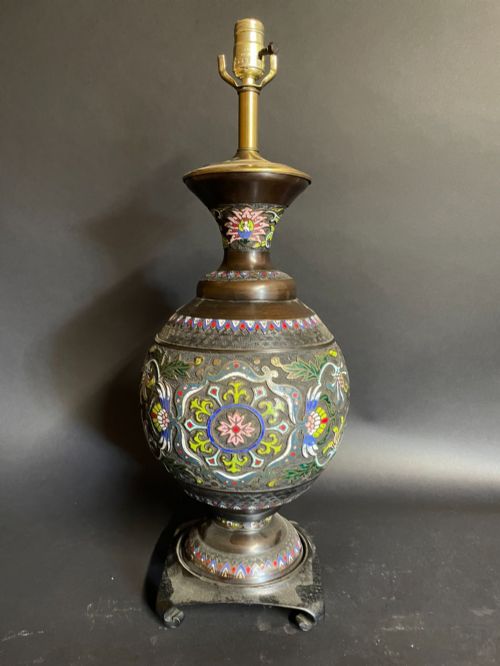


Floral Cloisonne Vase
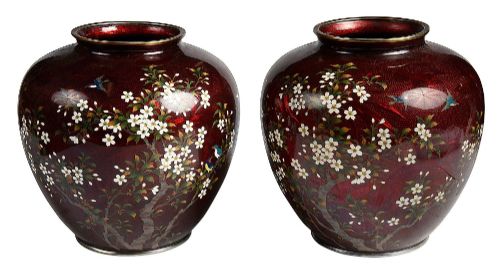
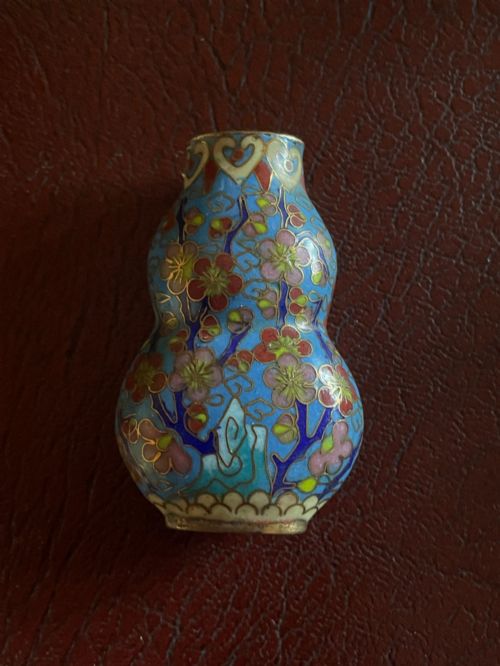
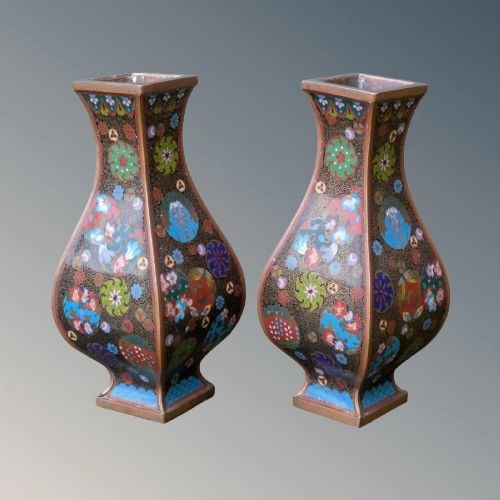
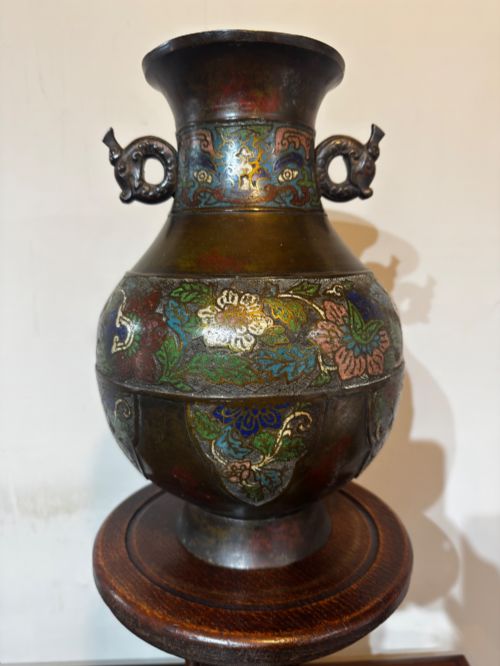
These floral cloisonne vase examples combine metalwork and coloured enamels, offering intricate botanical designs from diverse Asian traditions.
Floral Cloisonne Vase
A floral cloisonne vase displays metal wirework cells soldered onto a body, filled with coloured enamels to create botanical patterns. Buyers encounter items originating from Chinese and Japanese workshops spanning the nineteenth century through the mid twentieth century.
The inventory includes miniature vessels, large display pieces, pairs, ginger jars with lids, and examples adapted into table lamps. Japanese Meiji period creations and Chinese Qing period designs dominate the selection.
Vessels span straightforward cylindrical profiles to archaic bronze shapes and Ginbari translucent enamels. The decorative focus remains botanical, depicting flowers and birds across various periods.
Materials and construction techniques
Craftsmen soldered thin flat wires of copper, brass, bronze, or silver onto a metal body to form compartments for the enamel paste. Firing fused the vitreous enamels within the wire cells before grinding and polishing the surface smooth.
Advanced techniques incorporate Ginbari foil backgrounds beneath translucent enamel layers, alongside Basse-Taille work and champleve cutting. Gilt metal and bronze provide robust structural foundations for the intricate wire cloisonnes.
Listings feature items spanning the 1850s to the 1950s, incorporating copper, brass, bronze, and silver wire elements.
Standards of execution
Excellence rests upon the precision of the wirework and the flawless fusion of the enamel within each cell. Finer examples display microscopic wire gauges forming complex botanical scenes without pitting or surface irregularity.
Signatures from notable makers elevate a piece, while refined polishing and deliberate weight distribution indicate superior workshop standards. Lesser pieces show uneven enamel shrinkage and thicker, less disciplined wire outlines.
Ando Jubei·Tamura Yukio·Ando Jubei Company
The Floral Cloisonne Vase Glossary
- Cloisonne
- Enamelwork in which coloured pastes are applied within compartments formed by soldered wires on a metal base. This technique creates distinct cellular patterns across the vessel surface.
- Ginbari
- A Japanese enamelling technique featuring a textured metal foil background beneath translucent coloured enamel. This method produces a reflective, patterned depth behind floral motifs.
- Champleve
- An enamelling method where troughs or cells are carved directly into a thick metal base rather than built up with wires. The recessed areas receive enamel before firing and polishing.
- Basse-Taille
- A translucent enamelling technique over low relief metal engraving. Light passes through the coloured glass to reveal the carved floral design beneath.
- Meiji Period
- The era of Japanese history lasting from eighteen sixty eight to nineteen twelve. Pieces from this time demonstrate exceptional technical refinement in metal wirework.
Floral Cloisonne Vase: Frequently Asked Questions
How do I clean my vase?
Dust the surface gently with a soft dry cloth to prevent accumulation within the wire crevices. Avoid chemical cleaners or immersion in water, which can damage exposed metal and old seals.
For stubborn marks, use a slightly damp cloth followed immediately by thorough drying. Handle the piece carefully by the body rather than protruding rim elements.
Are these vases waterproof?
Most antique metal and enamel vessels are not guaranteed watertight due to age and construction methods. Moisture can seep beneath wire partitions or corrode internal copper and bronze substrates.
Display them as decorative objects rather than functional containers for fresh flowers and water. If used for displays, place a discreet inner liner inside the neck.
How do I date my piece?
Examine the base metal, wire thickness, and enamel palette to estimate the period of manufacture. Nineteenth century items often feature heavier copper foundations and simpler colour ranges.
Twentieth century examples frequently incorporate refined silver wires and stamped workshop marks. Stylistic shifts between Chinese Qing and Japanese Meiji aesthetics also indicate specific production eras.
Can I convert a vase into a lamp?
Historical conversions exist where vessels received electrical fittings through drilled bases or collar mounts. Purists generally prefer untouched pieces, but period alterations remain part of the decorative history.
Ensure any electrical work uses non destructive mounting methods to preserve the integrity of the metal body. Consult a qualified electrician familiar with antique fixtures.