

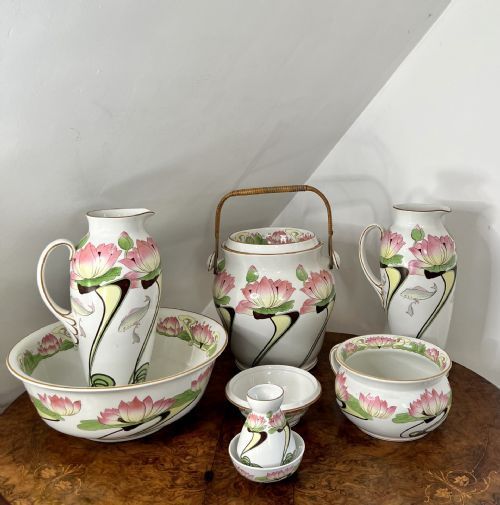


Floral Ceramic Wash Basin
These floral ceramic wash basin examples bring authentic 19th century and Edwardian utility into modern spaces through vibrant hand-painted blooms and ironstone bodies.

Floral Ceramic Wash Basin
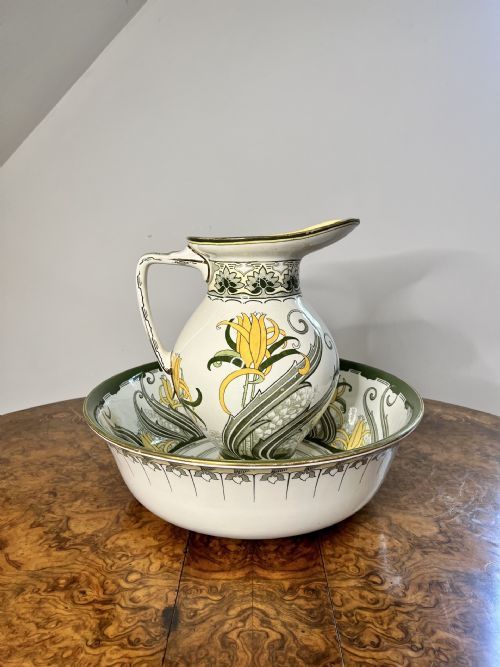
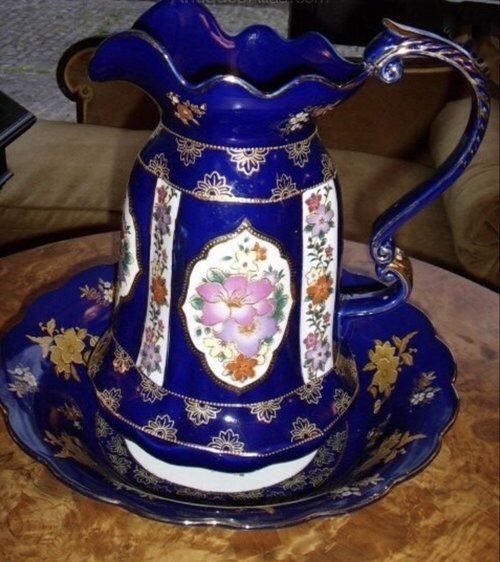
A floral ceramic wash basin is a traditional vessel designed for daily personal hygiene, most commonly found here as part of a matching jug and bowl set or washstand set. These pieces date across the Victorian, Edwardian, and Art Nouveau periods, showcasing durable earthenware, glazed ceramic, and robust ironstone.
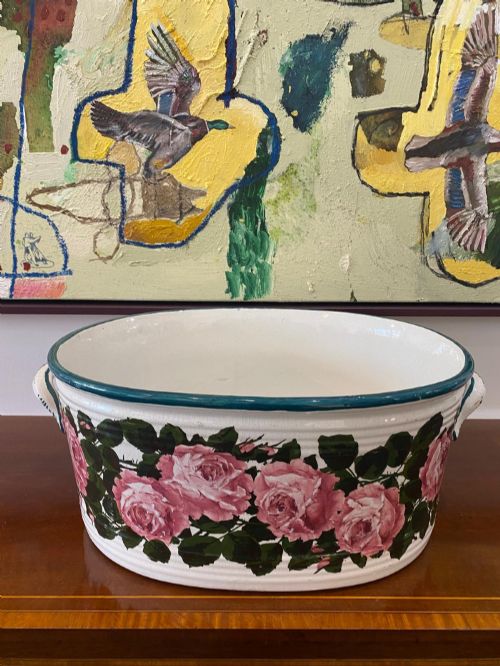
The most likely version to meet on this page is a Victorian or Edwardian floral ceramic wash basin featuring botanical motifs rendered in blue and white, multi-coloured glazes, or spongeware. Forms range from full bedroom bathroom sets to miniature variations and large footbaths, reflecting the diverse sanitary requirements of past households.
Materials and production methods
Makers shaped these vessels primarily from heavy earthenware and ironstone, applying a protective glaze to ensure the ceramic could hold water safely during daily toilet use. Firing techniques evolved through the nineteenth and early twentieth centuries, allowing potters to achieve both utilitarian strength and smooth surfaces ready for decoration.
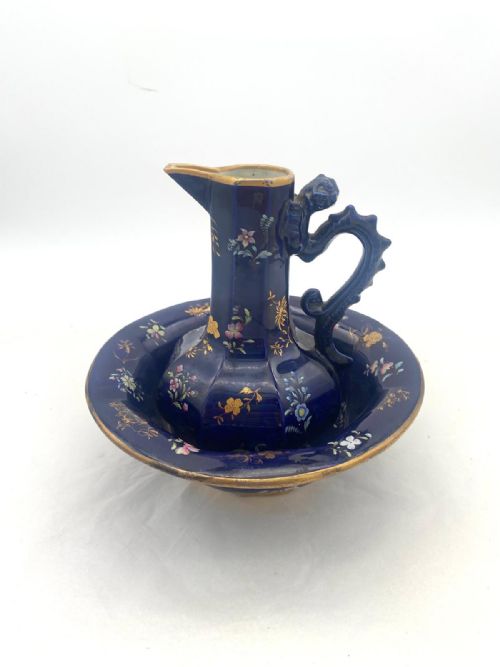
Decoration relied on hand-painted floral patterns, transfer printing, and occasional touches of gold leaf, enamel, or gilt highlights. Potters applied pigments beneath or over the glaze before a final kiln firing fixed the vibrant blue and polychrome flower designs permanently onto the ceramic body.
Listings feature floral ceramic wash basin examples spanning the 19th century, Victorian era, Edwardian period, and Art Nouveau styles.
Assessing quality and craftsmanship
Quality in a floral ceramic wash basin rests on the crispness of the transfer print or the painterly skill behind the floral design, alongside the overall weight and proportion of the earthenware body. Superior examples display rich colour saturation, balanced proportions, and sophisticated styling characteristic of leading potteries.
The presence of supplementary decorative elements, such as intricate octagonal moulding, gilt accents, or complete multi-piece washstand sets, elevates certain items above standard utilitarian wares. Consistency in the glaze finish and the preservation of delicate enamel or gold leaf details further distinguish finer historical pieces.
Doulton Burslem·Masons Ironstone·Mann Co·Mark Jones Sons·Copeland·Wemyss
The Floral Ceramic Wash Basin Glossary
- Ironstone
- A heavy, durable type of earthenware patented in the nineteenth century that resists chipping and provides a strong base for decorative glazes. It proved ideal for daily bathroom wares requiring both strength and refinement.
- Spongeware
- A pottery decoration technique where colour is applied to the ceramic body using a sponge or stamped fabric, creating mottled, textured patterns often seen in nineteenth-century bowls.
- Footbath
- A large, deep ceramic vessel designed specifically for soaking feet, featuring sturdy handles and generous proportions distinct from standard wash basins.
- Glaze
- A glassy coating fused to the ceramic surface through heat, making the porous earthenware body waterproof and sealing in the underlying floral decoration.
Floral Ceramic Wash Basin: Frequently Asked Questions
How were wash basins used?
These basins served as the primary washing vessels in bedrooms before indoor plumbing became standard, holding water fetched from ewers for morning ablutions. They formed the central component of washstand sets alongside matching water jugs and soap dishes.
In daily use, the basin sat on a wooden washstand, allowing individuals to wash their hands and face without visiting a communal bathroom. Their generous proportions ensured water stayed contained during use.
How do I date a ceramic wash basin?
Dating relies on stylistic markers, pottery marks stamped on the base, and the specific ceramic body used, such as heavy ironstone or lighter Edwardian earthenware. Victorian pieces often feature heavier moulding and transfer-printed florals, while Art Nouveau examples show characteristic flowing botanical lines.
Examining the glaze type and colour palette also helps narrow the production era. Makers often altered their backstamps across decades, providing a reliable guide to the period of manufacture.
Are these basins still waterproof?
Most glazed ceramic and ironstone basins remain entirely waterproof and functional for modern display or gentle practical use. The original fired glaze protects the porous earthenware body from moisture penetration.
However, collectors typically treat antique basins with care to preserve delicate overglaze enamels or gold leaf details. Thermal shock should be avoided by using lukewarm rather than boiling water.
What is the difference between a footbath and a basin?
Footbaths are significantly larger, deeper, and often oval or octagonal in shape, designed specifically for soaking the feet rather than general washing. They frequently feature sturdy side handles to aid in carrying the heavy vessel when filled with water.
Standard wash basins are rounder and shallower, proportioned to fit neatly within the ring of a wooden washstand. Their smaller capacity matches the requirements of facial and hand washing.