
Floral Carved Wood Table
A floral carved wood table brings tactile depth and rich natural motifs into a room, spanning styles from Victorian revival to Anglo-Indian craftsmanship.
Floral Carved Wood Table
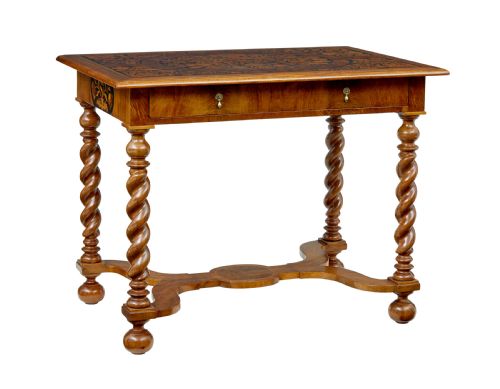
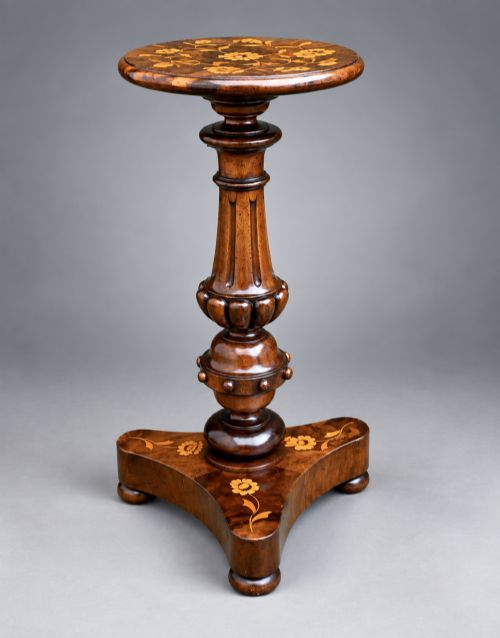
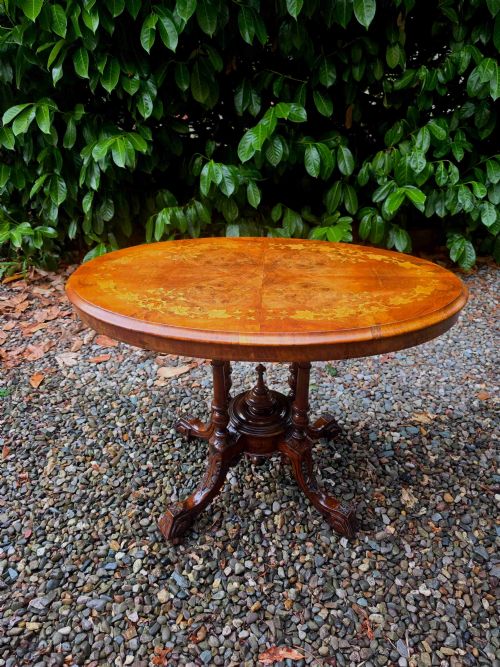
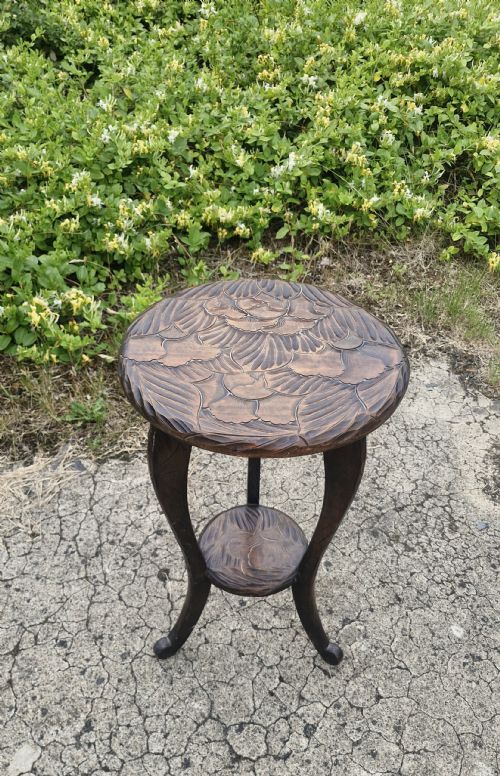
When you search for a floral carved wood table, you encounter diverse forms ranging from compact occasional tables and plant stands to expansive centre tables. The selection draws heavily on nineteenth-century pieces alongside items from the early twentieth century, reflecting global trade and diverse regional workshops.
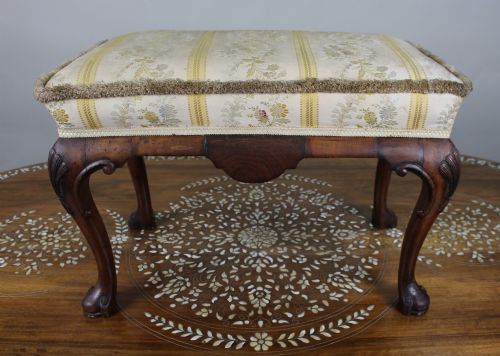
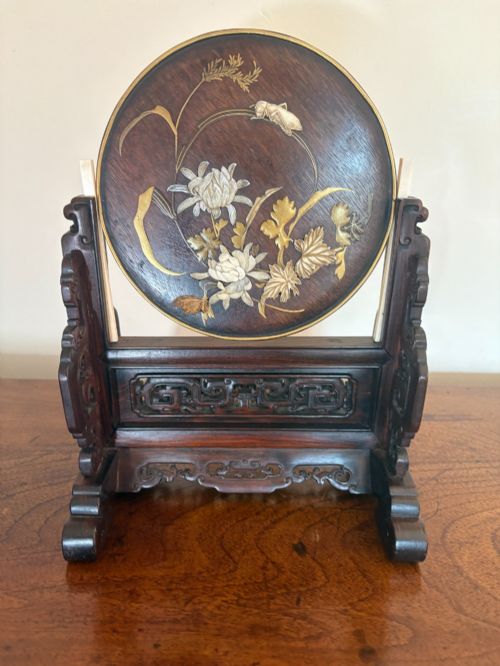
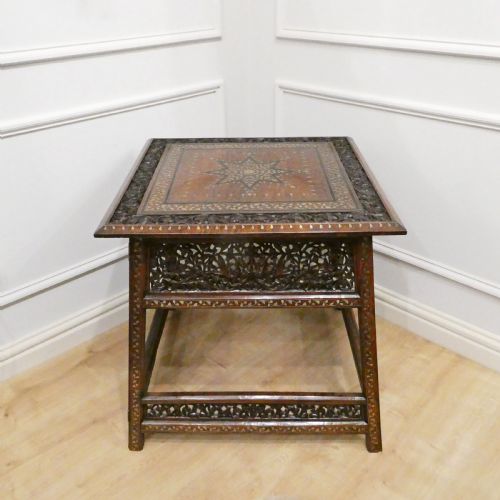
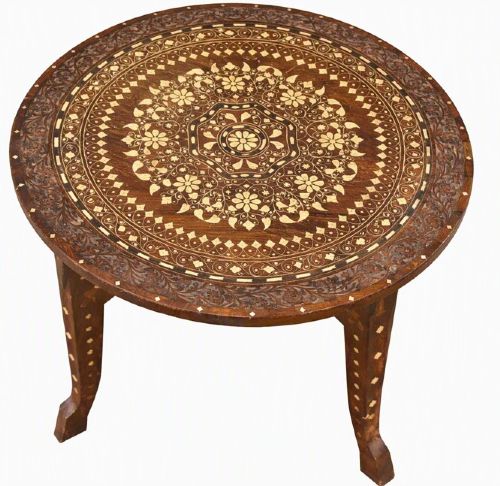
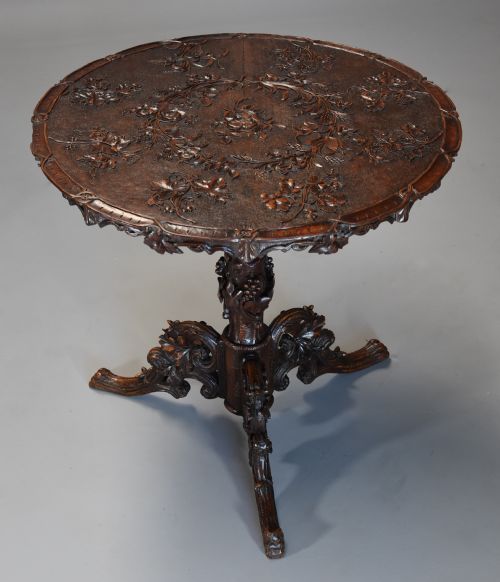
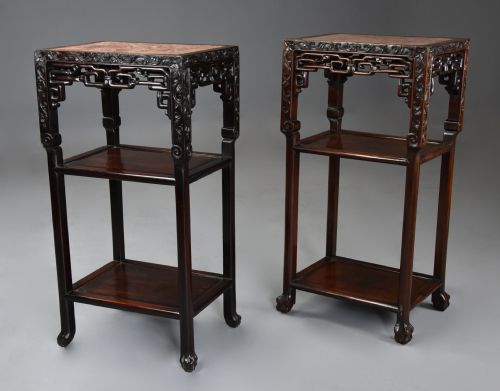
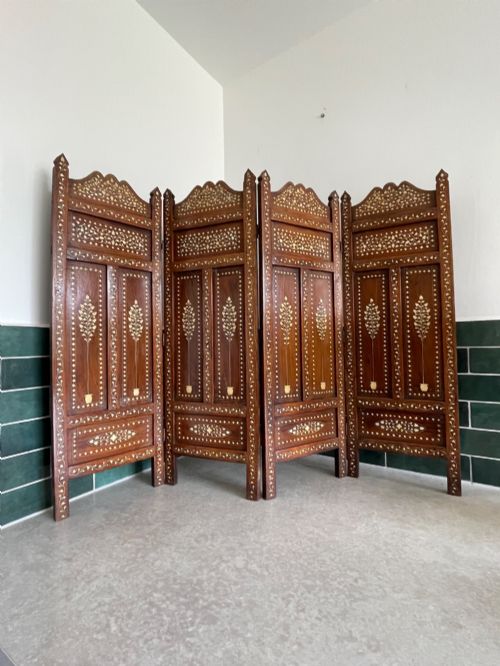
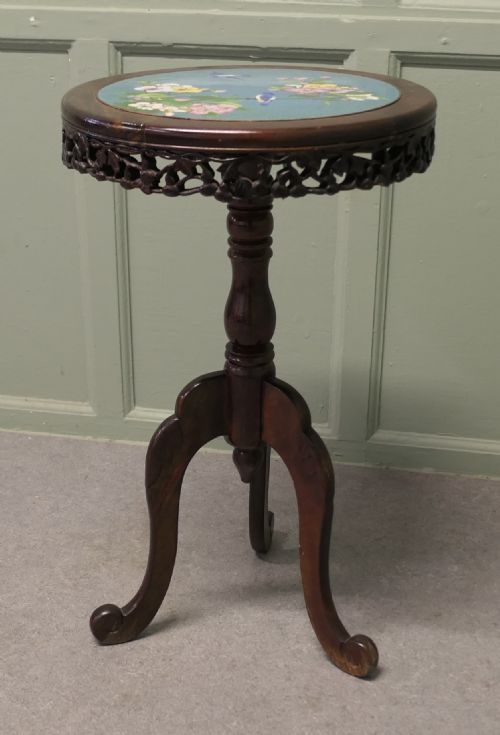
You meet various expressions of this craft, including Anglo-Indian brass and bone inlaid pieces, intricately carved Black Forest linden wood, and Chinese hardwood low coffee tables. These items function as versatile focal points, serving as display surfaces for plants or decorative objects.
The aesthetic vocabulary encompasses European revival styles alongside Eastern craftsmanship, featuring deep relief carving and floral ornamentation. These tables suit domestic spaces seeking historic character and detailed surface ornamentation.
How They Were Made
Makers utilised dense timbers such as walnut, mahogany, teak, rosewood, and padauk as structural foundations for intricate relief work. Artisans employed hand-carving chisels to render botanical motifs directly into the solid wood surfaces.
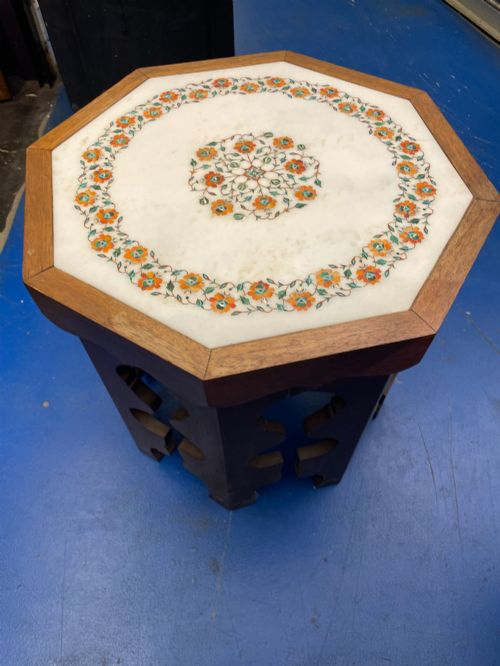
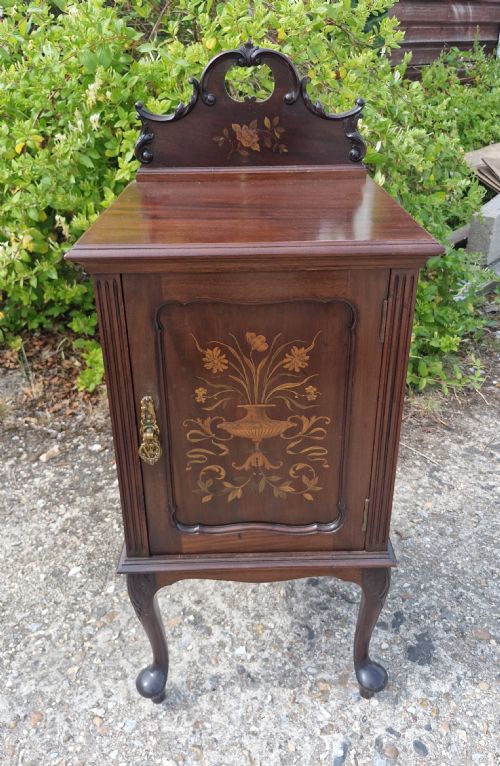
Many examples incorporate contrasting materials, embedding bone, brass wire, or white metal into the timber ground, alongside marble inserts and marquetry panels. Surface finishes range from polished French polish to lacquered and painted treatments.
What Varies in Quality
The depth and crispness of the botanical carving distinguish everyday production from exceptional craftsmanship, where undercut petals and foliage display dimensional realism. The choice of timber grain and the precision of inlaid bone or brass elements further separate standard items from finer workshop output.
Structural integrity relies on the seasoning of the hardwood and the stability of joints under shifting atmospheric conditions. The harmony between the structural form and the scale of the carved ornamentation determines the overall success of the piece.
Liberty & Co
The Floral Carved Wood Table Glossary
- Occasional table
- A small, movable table designed for a specific, transient use rather than a fixed position in a room. These pieces appear frequently in nineteenth-century and early twentieth-century domestic interiors.
- Centre table
- A freestanding table meant to be viewed from all sides, traditionally placed in the middle of a room. They often feature elaborate top designs and substantial pedestals.
- Marquetry
- The art of applying pieces of veneer to a structure to form decorative patterns and pictorial designs. Craftsmen use various tinted woods to achieve naturalistic floral scenes.
- Hoshiarpur
- A region in northern India renowned for intricate woodwork involving dense carving and inlay work. Tables from this tradition typically combine floral motifs with geometric borders in dark hardwood.
- Padauk
- A heavy, durable tropical hardwood prized for its rich reddish-brown colour and stability. It provides an ideal dense ground for deep relief carving.
Floral Carved Wood Table: Frequently Asked Questions
Where should I place a centre table?
A centre table requires a position where it can be appreciated from multiple angles, typically in the middle of a principal room or a spacious hallway. Because these pieces are finished on all sides, they act as anchor points for the surrounding space.
Ensure there is adequate clearance around the perimeter for movement. Placing a decorative object or lamp on top completes the arrangement without obscuring the carved details.
How do I care for inlaid wood surfaces?
Inlaid surfaces require consistent indoor humidity levels to prevent the timber from expanding or contracting, which can cause bone or brass inlays to loosen. Dust the surface regularly with a soft, dry cloth to protect the grain and the delicate joints.
A light application of appropriate furniture wax helps nourish hardwoods, but avoid moisture buildup around inlaid metal or bone elements.
What is an occasional table used for?
An occasional table provides a convenient surface for holding books, drinks, or small decorative items wherever needed within a room. Their compact scale allows them to be moved easily beside seating areas or against walls.
In period interiors, these tables often served specific functions like holding plant pots or displaying small collections.