


Floor Standing Artist Easel
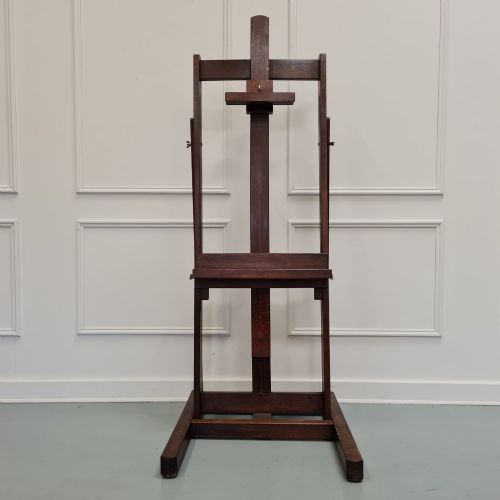
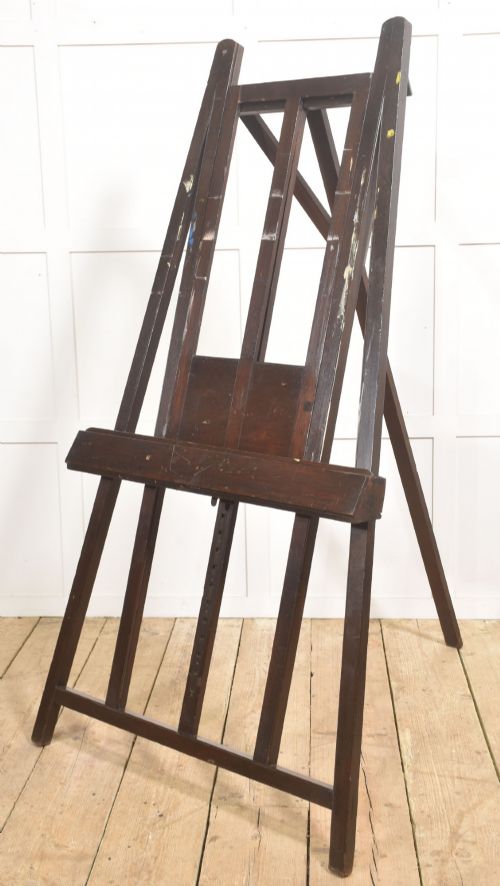
These floor standing artist easel pieces are substantial studio workhorses and display pieces designed to hold canvases securely while you paint or exhibit.
Floor Standing Artist Easel
When you search for floor standing artist easel, you encounter robust structures built to support significant paintings in studios and galleries. The selection spans the nineteenth century up through the nineteen-thirties, incorporating Victorian, Edwardian, and various continental designs.
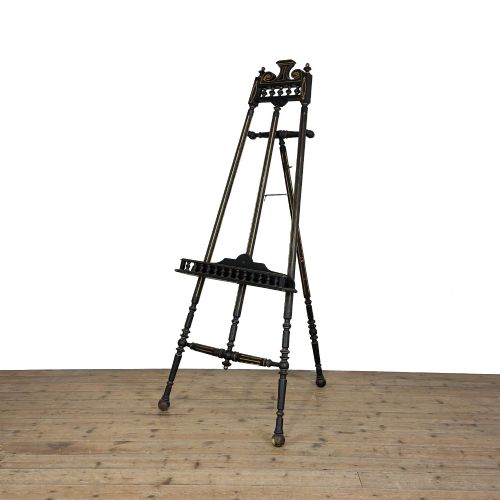
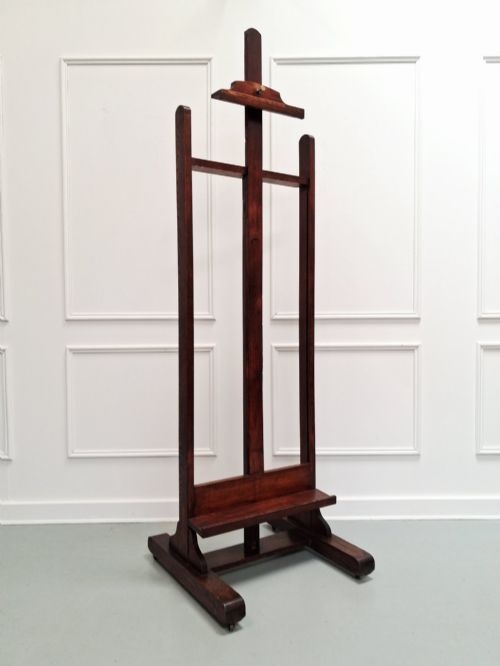
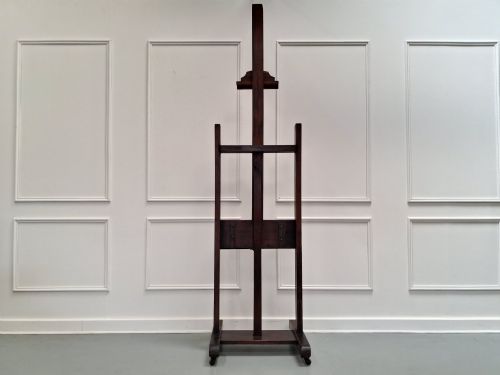
You meet heavy studio formats alongside gallery display types, some offering full adjustability for working artists while others serve primarily to showcase finished works. Oak predominates among the surviving pieces, accompanied by mahogany, pitch pine, ebonised wood, and walnut.
Geographic origins vary from British workshops to French provincial and Italian makers. Certain examples feature specific decorative flourishes such as swan designs or ivory inlay, while others rely on pure utility.
How they were made
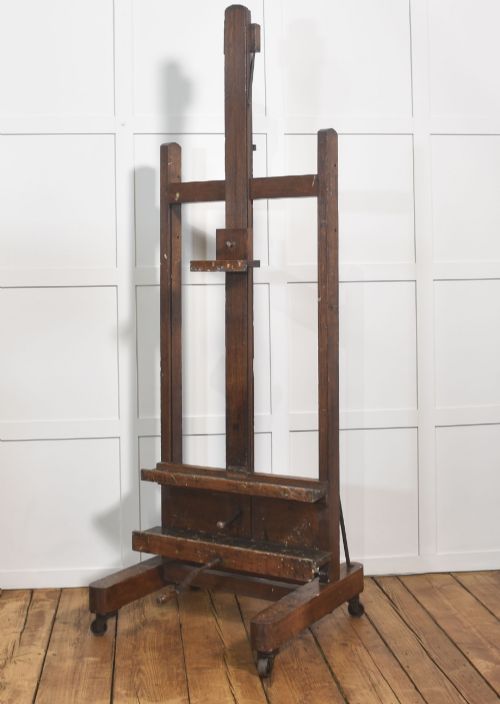
Makers utilised dense timbers like oak and mahogany to build frames capable of withstanding the heavy loads of large canvases. Joints and moving parts often incorporated brass and iron fittings to allow smooth adjustment of height and tilt.
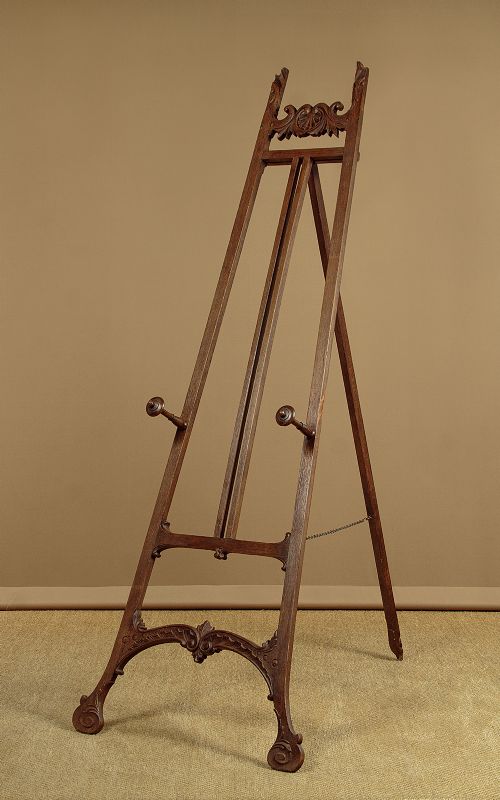
Surface treatments range from natural polished oak and rich mahogany finishes to ebonised wood and fine gold leaf accents. Decorative elements like carving and ivory inlay appear on specific gallery variants designed for formal display.
The listings feature oak, mahogany, pitch pine, and ebonised wood across Victorian, Edwardian, and early twentieth-century periods.
What varies in quality
The sophistication of the mechanical adjustment mechanism distinguishes a standard studio stand from an exceptional piece. Fully adjustable nineteenth-century studio models demonstrate complex engineering designed for heavy daily use.
Timber selection and decorative detail set individual pieces apart, moving from utilitarian pine and oak frameworks up to finely carved oak display stands and ebony veneered walnut gallery easels with ivory inlay.
The Floor Standing Artist Easel Glossary
- Studio easel
- A heavy, adjustable wooden stand designed to hold large canvases securely while an artist paints. These pieces often incorporate winding mechanisms and heavy bases.
- Gallery easel
- A double-sided or display-focused stand intended for exhibiting finished paintings to patrons. They frequently feature decorative carving or fine timber veneers.
- Ebonised wood
- Timber treated to resemble ebony through staining and polishing. This dark finish gained popularity during the nineteenth century for decorative furniture.
- Pitch pine
- A resinous softwood utilised in furniture and studio equipment. It offers strength and distinctive grain patterns.
- Adjustable mechanism
- The system of screws, ratchets, and brass brackets allowing the height and angle of the painting shelf to change. Quality depends on the precision of these metal components.
Floor Standing Artist Easel: Frequently Asked Questions
What is a floor standing artist easel?
A floor standing artist easel is a large wooden structure designed to support canvases upright for painting or exhibition in a studio or gallery. They provide a stable, vertical workspace that can accommodate various canvas sizes.
These pieces range from utilitarian working stands with complex wooden and metal adjustments to ornate display formats intended for finished artwork.
How do I date a wooden easel?
Dating relies on observing the timber types, construction methods, and the style of any decorative carving or metal fittings. Nineteenth-century examples often display heavy oak or mahogany with robust brass winding mechanisms.
Later pieces from the nineteen-thirties or Edwardian era introduce different proportions and simpler joinery while maintaining traditional hardwood materials.
Are these easels still usable for painting?
Many of these pieces remain fully functional and retain their original mechanical adjustments for raising and tilting canvases. Studio models from the nineteenth century were built specifically for daily artistic work.
Gallery and display variants focus more on presentation but can still support substantial framed artwork securely in a home or studio setting.
What is the difference between studio and gallery easels?
Studio easels prioritize heavy-duty mechanical adjustment, heavy timber frames, and mobility for active painting sessions. They often show the functional wear of an artist's workspace.
Gallery easels emphasise decorative appeal, featuring polished walnut, ivory inlay, or fine carving designed to complement exhibited paintings in a public or domestic interior.