




Flemish Wool Wall Hanging
A flemish wool wall hanging brings rich historic texture to an interior, showing the intricate narrative and verdure scenes woven across centuries.
Flemish Wool Wall Hanging
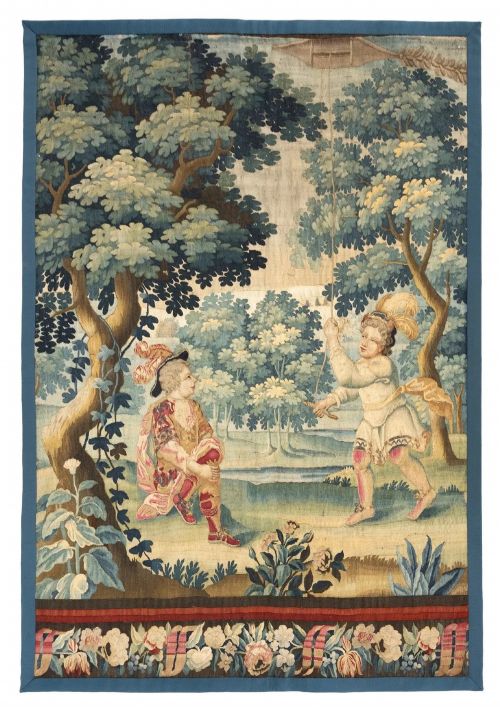
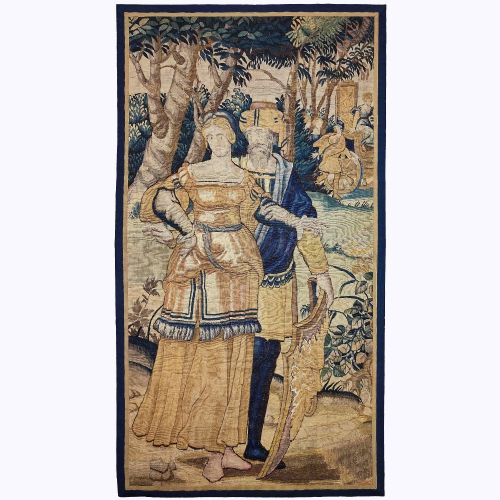
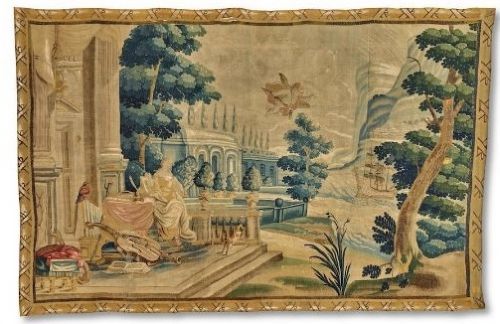
A flemish wool wall hanging encompasses large tapestries, panels, and smaller fragments created across the sixteenth, seventeenth, eighteenth, and nineteenth centuries. These textiles span styles from Flemish Renaissance and Baroque to later European interpretations.
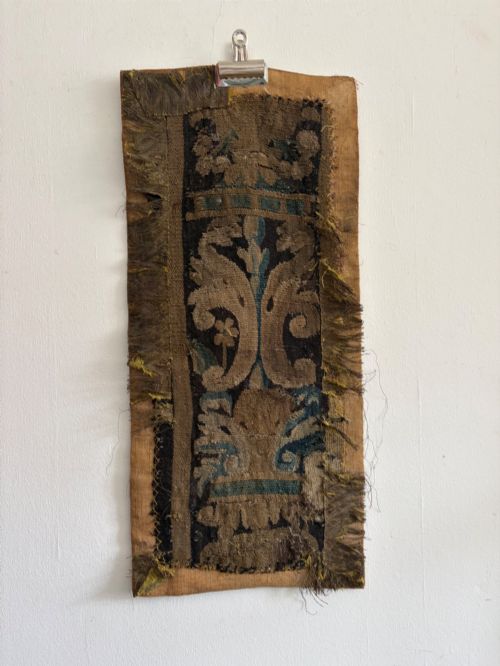
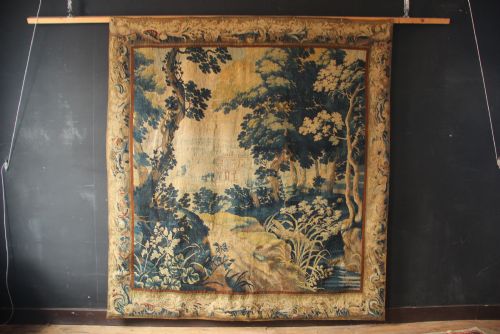
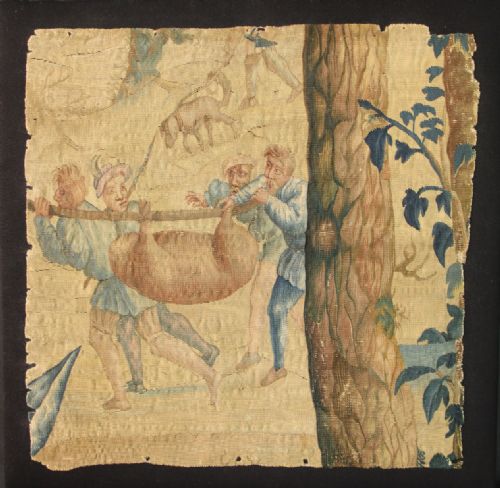
Buyers most frequently encounter verdure tapestries featuring lush foliage, game parks, and mythological or religious narratives. Forms range from grand scale wall tapestries down to cushion covers, border fragments, and mounted textile art.
What varies in quality
The density of the weave and the complexity of the design determine the visual depth of the textile. Pieces with finer thread counts capture subtle shifts in shadow and botanical detail more effectively.
Completeness alters the character of the piece, distinguishing full-scale compositions from border fragments or cushion covers. The survival of original pigments in wool and silk yarns dictates the vibrancy of the remaining scene.
Several pieces depict quiet game parks and pastoral foliage, proving that sixteenth-century interior designers also loved a good houseplant.
The Flemish Wool Wall Hanging Glossary
- Verdure tapestry
- A textile featuring a landscape design dominated by trees, foliage, and plants, often including birds or animals. These scenes formed a major output for Flemish weavers.
- Tapestry fragment
- A surviving section of a larger wall hanging, often salvaged and mounted for modern display. Fragments frequently comprise borders or specific portions of figural scenes.
- Flemish Baroque
- An artistic style characterised by dynamic movement, grandeur, and rich detail. In weaving, this translated into dramatic mythological scenes and deep, layered foliage.
- Audenaarde
- A historic Belgian centre renowned for tapestry production. Workshops in this town specialised in verdure and landscape wall hangings.
Flemish Wool Wall Hanging: Frequently Asked Questions
How do I hang a large tapestry?
Large wall hangings require even distribution of weight across the upper edge to prevent distortion of the wool and linen fibres. Many collectors use a lined sleeve sewn to the reverse, through which a flat wooden batten is slid and secured to the wall.
Smaller fragments and panels are frequently mounted onto linen stretchers or framed behind glass. This protects the historic textiles from dust and direct physical contact while supporting their weight uniformly.
What is a verdure tapestry?
A verdure tapestry depicts a stylised forest, garden, or landscape without necessarily telling a specific historical or mythological story. Trees, leaves, plants, and small animals fill the entire visual field.
These pastoral scenes were immensely popular in Flemish workshops from the sixteenth century onwards. They provided interiors with a sense of depth and brought natural greenery into domestic spaces.
Are these tapestries signed by makers?
Weavers and workshop masters rarely signed their textiles directly on the main pictorial surface. Signature marks, town ciphers, or guild symbols occasionally appear tucked away in the extreme outer borders.
Attributions rely instead on stylistic analysis, weaving techniques, and regional characteristics recorded by historians. Major production centres like Brussels and Audenaarde developed distinct visual signatures over centuries.