




Flemish Renaissance Revival
Flemish renaissance revival pieces bring bold architectural carved oak and walnut into a room, offering heavy historic presence for a collector.
Flemish Renaissance Revival
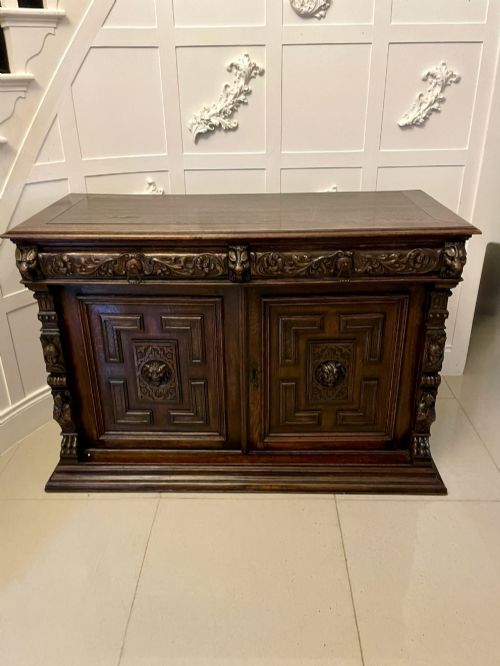
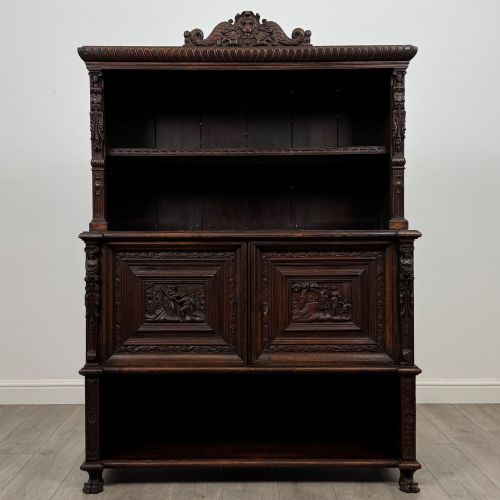
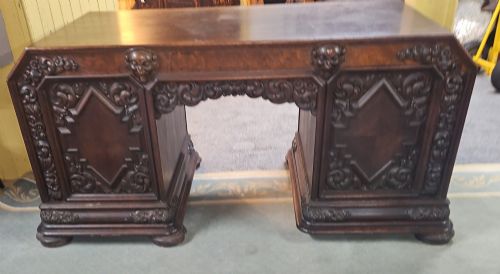
When you search for flemish renaissance revival, you encounter substantial furniture and decorative objects rooted in nineteenth century historical revivals. Cabinets, sideboards, cupboards, and hall stands dominate the material, often displaying deep carving and architectural proportions.
The most common pieces on this page are nineteenth century sideboards, buffets, and cabinets made from carved oak. These domestic storage forms utilise traditional Flemish motifs, including lion masks and figural panels, adapting earlier seventeenth century styles for Victorian interiors.
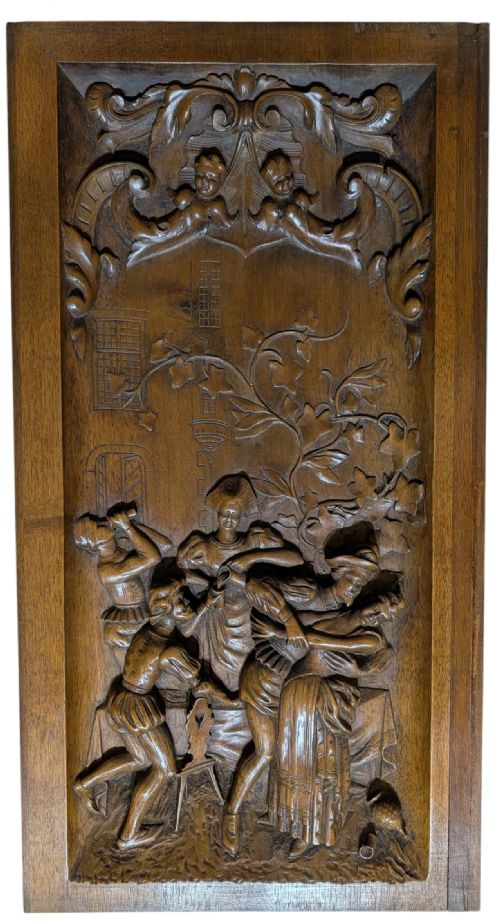
Alongside large cabinetry, you find smaller items such as wall carvings, repousse brass mirrors, and occasional oil paintings. Walnut chairs and dining tables complete the domestic repertoire recorded across the nineteenth century.
Materials and construction
Makers relied primarily on solid oak and walnut, chosen for their strength and suitability for deep relief carving. Iron and brass appear as hardware and decorative elements, including repousse mirror frames.
Joinery is heavy and traditional, supporting massive cabinets, hall stands, and sideboards that often incorporate panels and display glass. Surface work includes oil paint on canvas for portraits, alongside extensive hand carving across structural wood.
A stern green man peers out from nineteenth century dining furniture, keeping watch over the table.
Evaluating the carving and scale
Quality rests principally on the depth, crispness, and artistic command of the wood carving. Fine examples display sharply defined lion masks, green men, and figural panels with balanced proportions, whereas lesser items rely on shallow, mechanical tool work.
The architectural ambition of the piece also separates the tiers, distinguishing massive hall cupboards on stands and large sideboards from simpler utility cupboards and standard wall shelves.
The Flemish Renaissance Revival Glossary
- Repousse
- Metalwork shaped by hammering from the reverse side to form raised relief designs. This technique appears on nineteenth century brass mirror frames.
- Renaissance revival
- A nineteenth century architectural and decorative style drawing inspiration from sixteenth and seventeenth century European forms. It dominates the Victorian furniture on this page.
- Green man
- A sculptural motif depicting a human face surrounded by or entwined with leaves and foliage. It frequently decorates nineteenth century dining tables and benches.
- Liege bowl
- A regional vessel type associated with Belgian metalwork or turned wood traditions. The listings record specific nineteenth century examples in carved oak.
- Lion mask
- A decorative carving shaped like a lion's head, commonly applied to the corners and doors of heavy cupboards and sideboards.
Flemish Renaissance Revival: Frequently Asked Questions
What is flemish renaissance revival furniture?
These are nineteenth century pieces that copy or adapt sixteenth and seventeenth century Flemish designs. They use heavy oak and walnut, featuring dramatic carving.
You will find large sideboards, cabinets, and hall stands built for Victorian homes that favoured historical grandeur and dark wood.
How do I date a carved oak cabinet?
Dating relies on construction methods, timber preparation, and stylistic consistency within the nineteenth century revival period. Most pieces here date from the mid to late nineteenth century, around eighteen fifty to eighteen ninety.
Compare the hardware, the depth of the oak panels, and the style of the revival carving against known Victorian cabinet-making standards.
How do I live with heavy oak furniture?
These substantial pieces require generous floor space and strong structural support, particularly large hall stands and sideboards. Balance the dark wood with lighter wall colours and good natural lighting.
Keep them away from direct heat sources to prevent the solid oak and walnut panels from splitting over time.
Are oil paintings included in this style?
Yes, nineteenth century oil paintings appear alongside the furniture, often echoing earlier northern renaissance portrait styles. They feature subjects like women with spices painted on canvas.
These artworks share the historical interest of the furniture, complementing the carved oak and walnut interiors.