


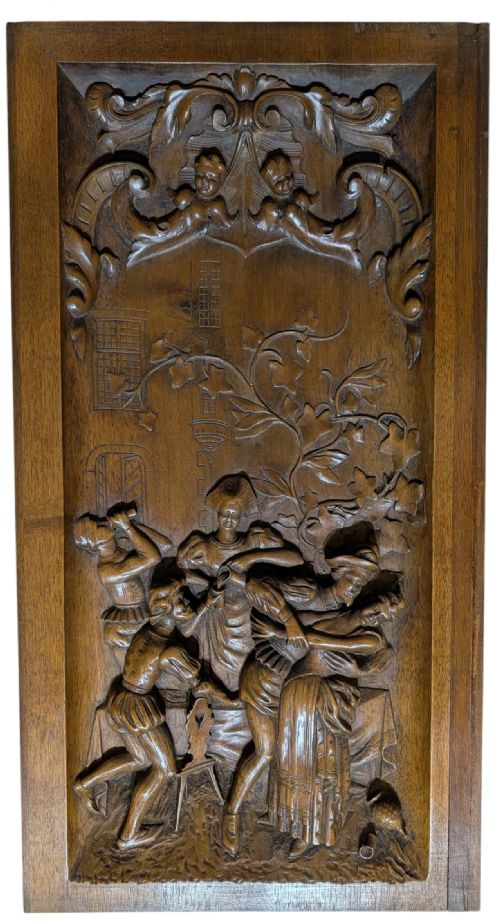


Flemish Renaissance Carving
Flemish renaissance carving brings heavy architectural presence and deep figural relief into a room, offering substantial oak furniture and panels built to command attention.
Flemish Renaissance Carving
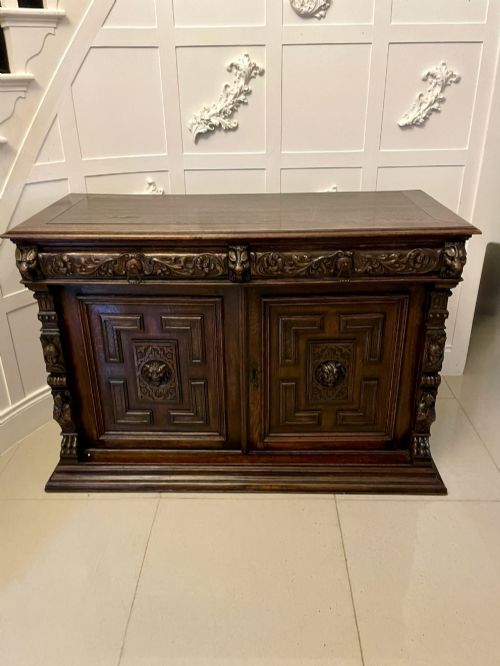
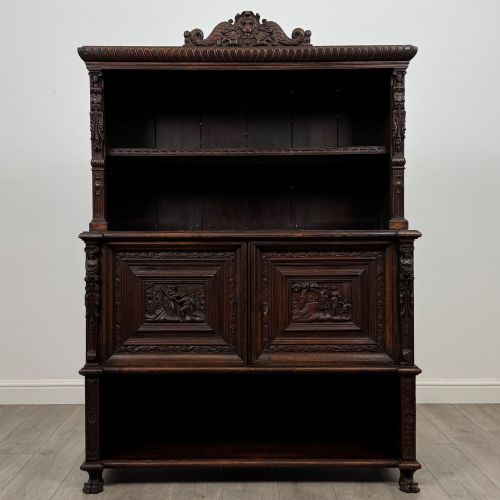
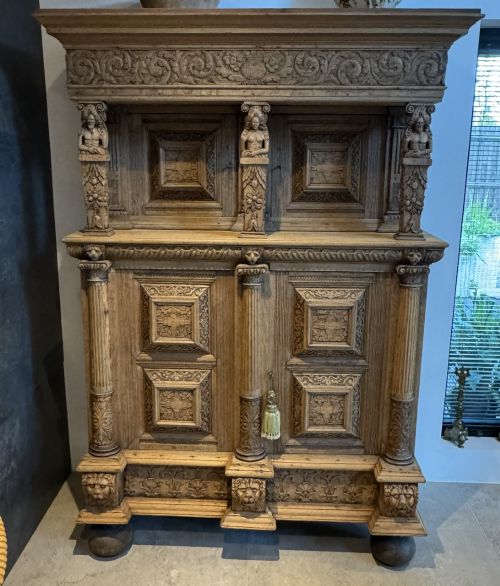
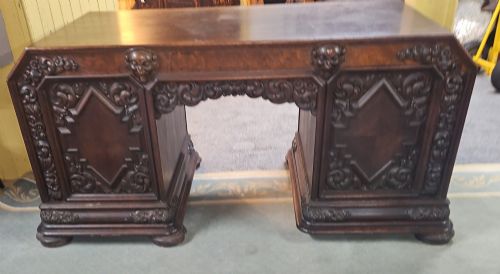
When you search for flemish renaissance carving, you encounter robust domestic furniture and standalone figural panels rooted in Northern European traditions. The pieces appearing here span from genuine sixteenth-century work to nineteenth-century revival interpretations.
Cabinets, sideboards, cupboards and wall carvings form the core of what is available. These functional storage forms and architectural elements display the dense figural motifs and strapwork characteristic of the style.
Nineteenth-century revival items dominate the selection, translating earlier Renaissance and Baroque idioms into heavy Victorian hall stands, sideboards and cabinets. Alongside these, earlier sixteenth and seventeenth-century panels and sculptures appear.
Materials and construction methods
Oak serves as the primary timber across the vast majority of these items, selected for its strength and capacity to hold crisp, deep incisions. Walnut also appears in cabinets and chairs, providing a finer grain for intricate figural work.
Joinery relies on traditional frame and panel construction to accommodate seasonal movement in large timber surfaces. Carvers worked directly into the solid wood of the panels and structural elements, employing deep relief, undercut details and applied mouldings.
Keep an eye out for hidden Green Man faces peering out from the foliage of nineteenth-century dining tables.
Distinctions in quality and execution
The distinction between ordinary and exceptional pieces rests upon the sharpness and anatomical proportion of the figural work. Master carvers executed caryatids, lion masks and religious groups with distinct facial expressions and fluid drapery, whereas lesser examples remain stiff and shallow.
Proportion and structural integrity separate substantial architectural furniture from later pastiche assemblies. Items that integrate original sixteenth or seventeenth-century panels into later nineteenth-century carcases command greater attention than uniform factory reproductions.
The Flemish Renaissance Carving Glossary
- Caryatid
- A sculpted female figure serving as an architectural support instead of a column. They appear frequently on the corners of cabinets and sideboards.
- Renaissance Revival
- A nineteenth-century style drawing inspiration from sixteenth-century artistic forms. Revival pieces often exaggerate the scale and heaviness of the original movement.
- Strapwork
- Ornamentation resembling interlaced leather bands or scrolled ribbons. This motif frames panels and borders across many cabinets and wall carvings.
- Liege bowl
- A specific regional form of turned or carved wooden vessel associated with the Belgian city of Liege. These objects demonstrate domestic woodturning and carving skills.
- Green Man
- A sculptural face depicted carved with leaves, vines or branches emerging from its mouth. This pagan motif persists through medieval, renaissance and revival woodcarving.
Flemish Renaissance Carving: Frequently Asked Questions
How do I date these items?
Dating relies on examining the timber construction, tool marks at the back of panels and stylistic conventions. Sixteenth-century examples show hand-riven timber and distinct wear patterns.
Nineteenth-century revival pieces often utilise standard machine-sawn backing boards and heavier, more theatrical proportions while imitating earlier Renaissance motifs.
Where were these pieces used?
These items functioned as grand storage furniture and architectural embellishments in substantial civic and domestic interiors. Large cupboards, hall stands and sideboards anchored principal reception rooms.
Smaller panels and wall carvings were integrated directly into wood-panelled walls or hung as independent works of art.
How do I live with dark oak furniture?
Dark oak furniture requires balanced room lighting and neutral wall backgrounds to prevent the heavy timber from dominating a space. These pieces anchor high ceilings and large proportions effectively.
Keep them away from direct heat sources and sunlight to protect the aged wood surfaces and historic wax finishes.