


Flemish Carved Cupboard
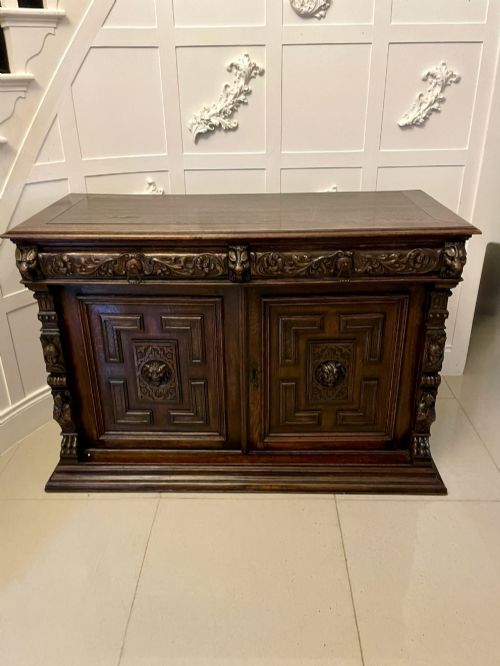
These heavy oak pieces are flemish carved cupboards built to anchor a room with deep relief panels and historic presence.
Flemish Carved Cupboard
A flemish carved cupboard combines architectural presence with deep relief work, taking forms such as sideboards, hall cupboards, and cabinets on stand. Most examples encountered here date from the nineteenth century, drawing heavily on earlier Renaissance and Baroque idioms.
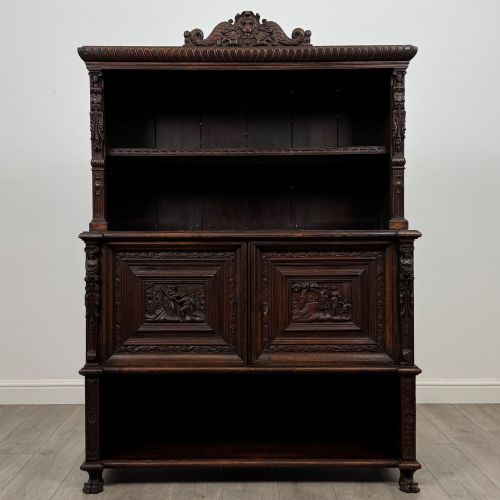
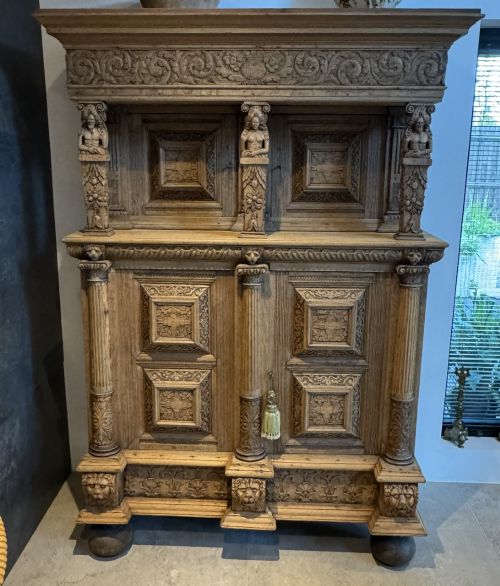
The heavier pieces include court cupboards, armoires, and narrow bookcases above cupboard bases, alongside smaller side cabinets. Continental origins dictate much of the character, particularly seventeenth-century Dutch and Flemish traditions expressed through robust timber construction.
Earlier survivors from the sixteenth and eighteenth centuries appear alongside nineteenth-century revivals, showing how cabinetmakers reinterpreted traditional forms for Victorian interiors. The primary function remains storage, housed behind heavy panelled doors often punctuated by lion masks or figural carving.
How they were made
Solid oak serves as the primary structural material across nearly all examples, supplemented occasionally by walnut, fruitwood inlay, rosewood, and ebony on select continental pieces. Cabinetmakers utilised heavy framing and panel construction to support the dense weight of deep relief carving.
Metalwork played a functional and decorative role, with brass and iron hinges, locks, and handles securing the heavy doors. Stained glass panels also appear in later nineteenth-century doors, introducing colour and light to balance the dark, carved timber.
Watch closely for fierce wooden lion masks snarling from the corners of nineteenth-century cabinet stands.
What varies in quality
The depth and crispness of the carving separate standard nineteenth-century revival production from exceptional work. Sharp undercut relief and expressive figural details require skilled hand labour, whereas mechanical or shallow carving appears flat and repetitive.
Timber selection and structural integration also determine grade. Well-chosen quarter-sawn oak displays pleasing medullary rays, while superior pieces maintain correct period proportions despite their heavy architectural ornament.
The Flemish Carved Cupboard Glossary
- Kast
- A large Dutch or Flemish wardrobe or cupboard, typically double-doored and heavily panelled. These pieces provide substantial storage and often feature architectural cornices.
- Court cupboard
- A traditional two-tier sideboard or storage unit, lower in height, used for displaying plate or storing provisions. The upper section is frequently recessed behind columns or carved brackets.
- Buffet
- A sideboard or serving table enclosed with cupboards or drawers beneath a flat top. They served dining rooms by holding vessels and food.
- Renaissance Revival
- A nineteenth-century design movement that revived sixteenth-century architectural motifs, columns, and strapwork. Furniture in this style displays heavy proportions and classical symmetry.
- Flemish Baroque
- An ornate seventeenth-century style characterised by dramatic curves, rich foliage, and dynamic figural carving. It prioritises movement and visual weight over austere classical lines.
Flemish Carved Cupboard: Frequently Asked Questions
What is a flemish carved cupboard?
A flemish carved cupboard is a heavy wooden storage piece decorated with deep relief panels, architectural mouldings, and figural or floral motifs rooted in continental traditions. Most examples date from the nineteenth century while reviving sixteenth, seventeenth, and eighteenth-century styles.
These pieces function as sideboards, hall cupboards, and cabinets on stand, designed to anchor a room with substantial presence. They provide enclosed storage behind heavy timber doors.
How were these cupboards used?
Historically, these cupboards stored household provisions, textiles, or dining ware, serving both utilitarian and display purposes in domestic interiors. Their grand scale meant they occupied prominent positions in halls, dining rooms, and principal chambers.
Today, they function effectively as statement storage pieces in large reception rooms or kitchens. Their deep shelves and robust construction accommodate modern belongings while retaining historic character.
How do I tell periods apart?
Distinguishing periods relies on examining construction methods, timber patination, and the specific character of the carving styles. Sixteenth and seventeenth-century pieces show authentic age in the timber surface and traditional joinery without modern intervention.
Nineteenth-century revival pieces often display eclectic mixes of Renaissance and Baroque motifs, combined with machine-sawn elements behind the hand-carved facades. Examining the interior framework and hardware helps clarify the true age of manufacture.
How do I live with one?
Living with a flemish carved cupboard requires acknowledging its physical weight and dark timber tones. These pieces demand adequate floor space and balanced lighting to let the deep relief carving stand out without overwhelming a room.
Maintenance involves treating the solid oak with appropriate wax to nourish the grain. Keeping them away from direct heat sources prevents the heavy timber panels from splitting.