




Flatweave Saddle Bags
Flatweave saddle bags are nomadic textiles woven by tribal weavers to carry goods on animals, prized by collectors for their rich geometric patterns and authentic utility.
Flatweave Saddle Bags
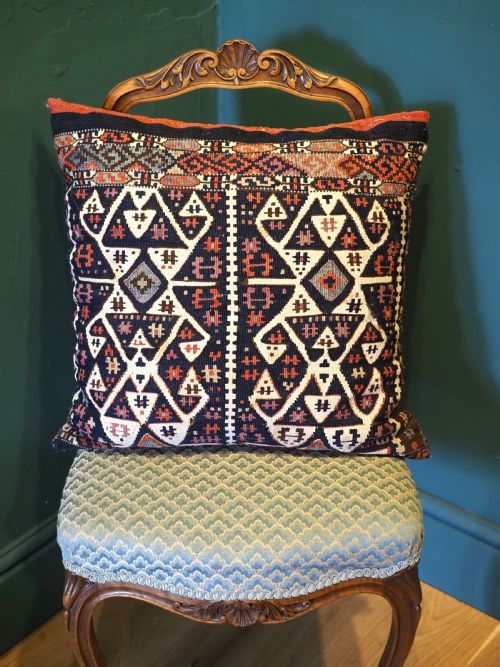
Flatweave saddle bags represent the portable architecture of nomadic life, created by tribal groups across Persia, the Caucasus, and Anatolia during the late nineteenth century. These woven pouches served practical roles in daily transport before being repurposed for modern interiors as cushions, pillows, or wall displays.
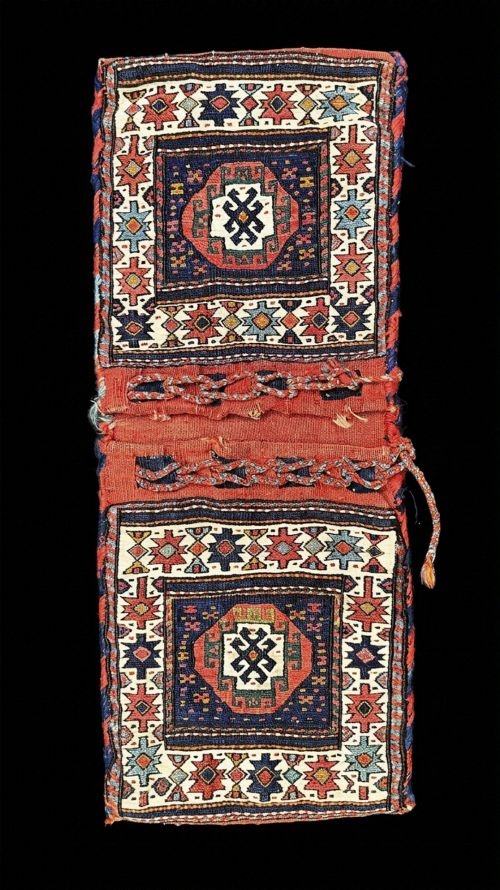
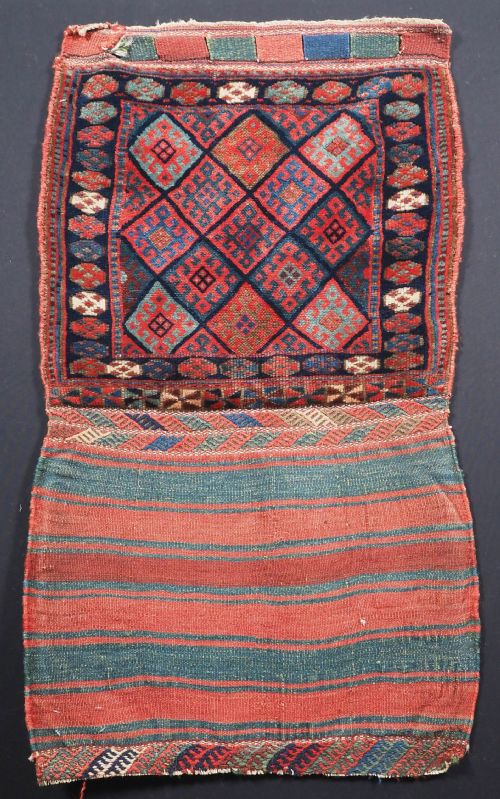
A buyer examining flatweave saddle bags will encounter diverse tribal traditions, including Shahsavan, Afshar, Jaf Kurd, Bakhtiari, and Malatya pieces. Surviving examples often appear as complete pairs, single halves, or items thoughtfully converted into decorative cushions using traditional kilim and soumak techniques.
How they were made
Nomadic weavers utilised hand-spun wool and cotton, combining warp and weft interlocking with supplementary wrap-faced techniques to build durable structures. These textiles relied heavily on natural dyes derived from plants and minerals, yielding deep, enduring shades across the surface.
Many bags incorporate supplementary structural elements such as leather and metal fastenings alongside plain weave backs. The soumak technique appears frequently, adding textured horizontal wrapping that creates raised patterns distinct from standard flat kilim weaves.
Flatweave Saddle Bags Retail Price Guide 2026
Typical asking prices for flatweave saddle bags among the pieces listed under this phrase on Sellingantiques today, from the lower quarter to the upper quarter. They describe what is for sale here now, not the wider market.
Listings feature items dated across the late nineteenth century, spanning the decades from eighteen seventy to nineteen hundred.
What varies in quality
The distinction between ordinary and exceptional pieces rests upon the precision of the tribal weave and the vibrancy of the natural dyes. Tightly compacted hand-spun wool indicates a higher standard of manufacture, ensuring the textile withstands regular handling.
Completeness dictates much of the appeal, with intact pairs holding greater visual symmetry than isolated fragments or altered items. The complexity of the tribal iconography, from Anatolian kilims to Caucasian soumak panels, further defines the standing of an individual bag.
The Flatweave Saddle Bags Glossary
- Soumak
- A brocade-like weaving technique where coloured weft threads are wrapped over the warp threads to create a raised, textured surface pattern. This method adds structural strength and visual depth to tribal bags.
- Kilim
- A flat tapestry-woven textile produced without a pile, forming geometric designs through interlocking weft threads. It serves as the foundational structure for many nomadic storage pieces.
- Khorjin
- The traditional Persian term for a double-sided saddle bag designed to be thrown across the back of a pack animal. These pieces usually feature two large pouches connected by a central slit or web.
- Plain weave
- A simple grid structure where warp and weft threads cross alternately at right angles, frequently used for the backs of saddle bags where pattern is unnecessary.
Flatweave Saddle Bags: Frequently Asked Questions
What are flatweave saddle bags?
Flatweave saddle bags are traditional woven containers made by nomadic tribes to transport belongings on animals. They combine practical storage compartments with intricate tribal symbolism.
Modern collectors value them as textile art or decorative furnishings that preserve nineteenth-century weaving traditions from Persia, the Caucasus, and Anatolia.
How were saddle bags used?
Nomadic families loaded these bags onto horses, camels, or donkeys to carry household goods, grain, and personal items during seasonal migrations. The double pouches balanced evenly across the animal's back.
Inside the camp, the bags often served as storage chests or sleeping bolsters until their nomadic function ceased.
How do I live with saddle bags?
Many collectors display complete saddle bags flat on walls or convert them into floor cushions and pillows for domestic interiors. Their durable wool construction makes them suitable for gentle daily use.
Keeping them away from direct sunlight protects the natural dyes from fading over time.
How do I tell tribal styles apart?
Tribal origins reveal themselves through specific structural methods, colour palettes, and geometric motifs unique to each weaving group. Shahsavan pieces frequently display detailed soumak wrapping, while Afshar bags show distinct regional iconography.
Studying the wool quality and dye characteristics helps identify whether a piece originates from Persian, Caucasian, or Anatolian makers.