


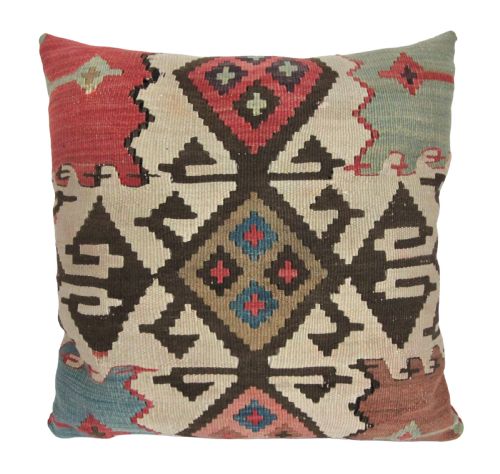



Flatweave Rug Pillow
Flatweave rug pillow pieces bring nomadic textiles into modern rooms as durable cushions fashioned from tribal saddlebags and kelim fragments.
Flatweave Rug Pillow
The selections available here lean heavily toward antique kilim cushions alongside complete pairs of saddlebags and Yomut Turkmen mafrash or torba fragments. Dating spans the mid-nineteenth century through the early twentieth century, capturing distinct regional patterns in wool and cotton.
Tribal motifs dominate the offerings, categorised across Anatolian, Persian, and Central Asian styles. Buyers frequently select these textiles to introduce geometric designs and aged wool textures into contemporary living spaces.
How flatweave rug pillow items were constructed
The foundation of these cushions relies on traditional flatweave techniques where weft threads are tightly packed to cover the warp entirely, creating a durable textile without a pile. Artisans utilised wool and cotton yarns dyed with natural colorants to achieve earthy tones and geometric patterns.
Many pieces repurpose older utilitarian objects, such as Anatolian kilims, Shahsavan bags, and Caucasian saddlebags, cutting and stitching the historical fabric into throw cushions and cushion covers.
Flatweave Rug Pillow Retail Price Guide 2026
Typical asking prices for flatweave rug pillow among the pieces listed under this phrase on Sellingantiques today, from the lower quarter to the upper quarter. They describe what is for sale here now, not the wider market.
Some cushions still retain the original side seams of nomad saddlebags used on nineteenth-century journeys.
What separates fine flatweave rug pillow pieces
Quality rests upon the integrity of the original weave and the depth of the natural dyes used in the textile. Tightly woven wool and crisp, well-preserved tribal motifs elevate an individual piece above standard decorative cushions.
The preservation of the antique fabric and the skill in adapting a saddlebag or mafrash into a cushion determine the distinction between ordinary repairs and superior craftsmanship.
Yomut Turkmen·Shahsavan
The Flatweave Rug Pillow Glossary
- Flatweave
- A textile created without knotted piles, produced by interlocking warp and weft threads to form a flat surface. This technique allows for sharp geometric designs.
- Kilim
- A pileless woven rug or textile originating from the Balkans, the Middle East, and Central Asia. These form the primary material for many antique cushions.
- Mafrash
- A large rectangular storage bag used by nomadic tribes, often featuring banded flatweave designs. Fragments of these containers are frequently adapted into cushions.
- Torba
- A small hanging bag produced by Yomut Turkmen and other tribal groups. They display distinctive cultural motifs.
- Saddlebag
- A paired utility bag designed for transport on animals, combining durable construction with elaborate tribal patterns. Complete pairs are prized by collectors.
Flatweave Rug Pillow: Frequently Asked Questions
What is a flatweave rug pillow?
A flatweave rug pillow is a cushion made from repurposed antique nomadic textiles, such as kilims and tribal saddlebags.
These pieces convert historical flatweaves into functional home decor items utilising wool and natural dyes.
How old are these cushions?
The pieces listed originate from periods spanning the mid-nineteenth century to the early twentieth century.
Dates typically range from the eighteen-fifties through the nineteen-twenties based on the age of the source textiles.
Where do the textiles originate?
The source materials come from Anatolian, Persian, and Central Asian tribal weaving traditions.
Specific regional origins include Azerbaijan, northwest Persia, and Turkmen territories.
How do I care for antique wool cushions?
These cushions require gentle maintenance appropriate for historical wool and cotton textiles. Regular light vacuuming helps preserve the natural fibres without causing damage.