



Flat Woven Floral Carpet
These flat woven floral carpet pieces bring botanical motifs and supple flatweaves together into floor coverings that anchor a room with traditional pattern.
Flat Woven Floral Carpet
A flat woven floral carpet combines the structure of a flatweave textile with botanical designs. Buyers searching for a flat woven floral carpet will encounter various rug types including kilim rugs, area rugs, and needlepoint pieces.
The selection ranges from Bessarabian kilims and Ukrainian wool kilims to Aubusson carpets and Portuguese needlepoint examples. These textiles originate across several decades spanning the mid nineteenth century through to the mid twentieth century.
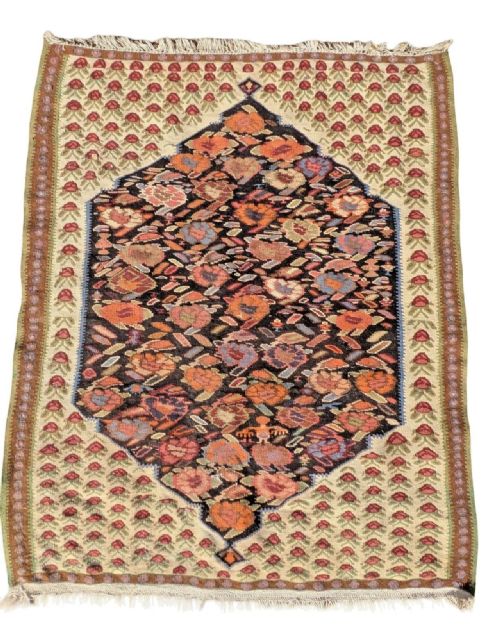
Forms span from individual area rugs to matched pairs and larger formats. The Bessarabian kilim emerges as a frequent style within this group, often displaying characteristic floral compositions.
Materials and construction
Makers constructed these flat woven floral carpet examples primarily using wool and cotton fibres. Wool provides the durable pile-free surface of the flatweaves and needlepoint grounds, whilst cotton frequently appears in the foundational structure.
The weaving and stitching methods vary between flatweave kilim techniques and needlepoint execution. Artisans rendered naturalistic and stylised floral motifs directly into the textile structure through these traditional flat textile methods.
Flat Woven Floral Carpet Retail Price Guide 2026
Typical asking prices for flat woven floral carpet among the pieces listed under this phrase on Sellingantiques today, from the lower quarter to the upper quarter. They describe what is for sale here now, not the wider market.
Several makers chose to portray sprawling floral arrangements that stubbornly refuse to fit into any neat botanical category.
Markers of quality
Quality in a flat woven floral carpet depends upon the crispness of the botanical design and the integrity of the weave. Tightly structured wool yarns and balanced compositions separate superior examples from simpler productions.
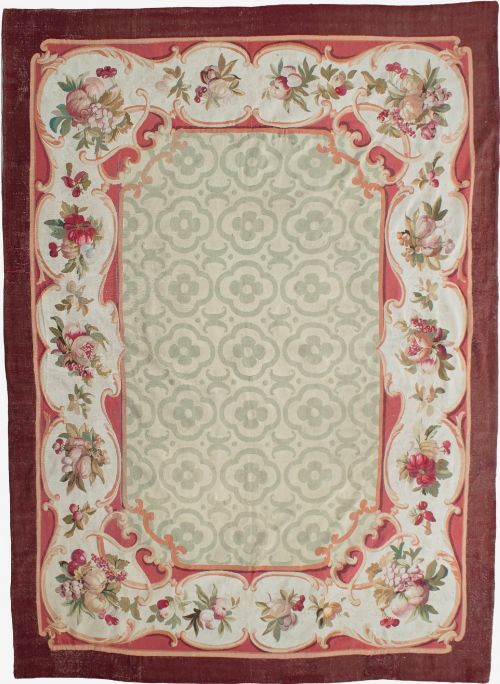
The sophistication of the floral detailing, whether in a French neoclassical style or a regional folk tradition, dictates the aesthetic standing of the piece. Preservation of the original textile structure remains central to the character of each rug.
The Flat Woven Floral Carpet Glossary
- Kilim
- A pileless flat-woven textile produced by interweaving warp and weft strands. This technique creates a lightweight rug without a raised pile.
- Needlepoint
- Stitched embroidery executed on an open-weave canvas ground. It allows for detailed pictorial and floral designs.
- Bessarabian
- Associated with the historical region situated between the Prut and Dniester rivers. Textiles from this area often feature dark grounds paired with vibrant floral motifs.
- Aubusson
- Originating from the French town renowned for tapestry weaving. These pieces draw on neoclassical and chateau design traditions.
- Warps
- The stationary longitudinal threads held under tension on a loom. Wefts are passed across these threads to form the textile body.
Flat Woven Floral Carpet: Frequently Asked Questions
What is a flat woven floral carpet?
A flat woven floral carpet is a textile floor covering constructed without a pile, featuring plant and flower motifs. These pieces encompass regional kilims, needlepoint works, and Aubusson weaves.
They offer a lighter alternative to knotted pile carpets whilst maintaining rich decorative patterns derived from various European and Near Eastern traditions.
How do I care for flatweave rugs?
Care involves gentle vacuuming without a rotating brush bar and professional cleaning when necessary. Protecting the textiles from direct sunlight prevents the fading of natural wool and cotton dyes.
Using an appropriate underlay helps secure the flatweave on hard floors and reduces friction during daily use.
Where were these carpets made?
The pieces originate from diverse workshops and regions including Bessarabia, Ukraine, France, Portugal, and Thrace. Each area developed distinct floral vocabularies.
Regional traditions influenced whether the maker utilised a slit-weave kilim technique or needlepoint stitching on a canvas foundation.
How do I date an antique flatweave?
Dating relies on stylistic analysis, material examination, and structural evidence within the weave. Palettes and botanical drawing styles often reflect the period of production, spanning from the mid nineteenth to the mid twentieth century.
Comparing construction details with documented regional examples helps establish the likely decade of manufacture.