

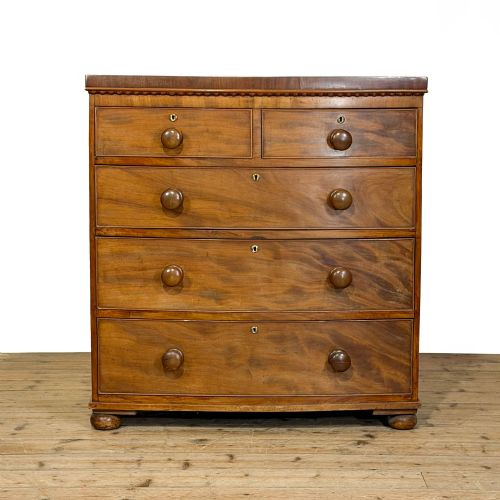
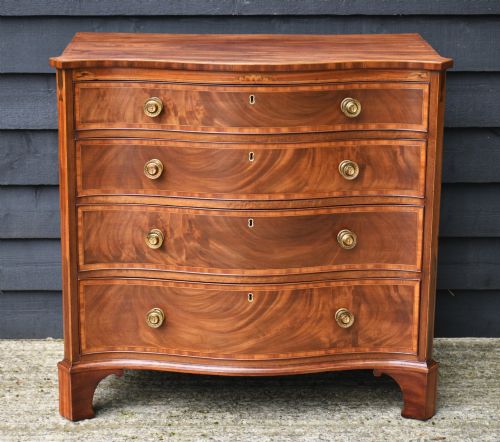
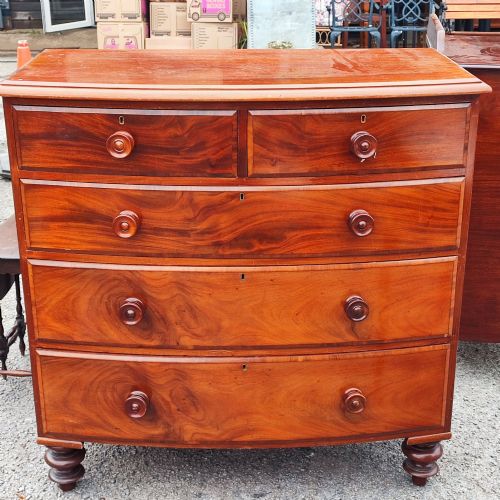
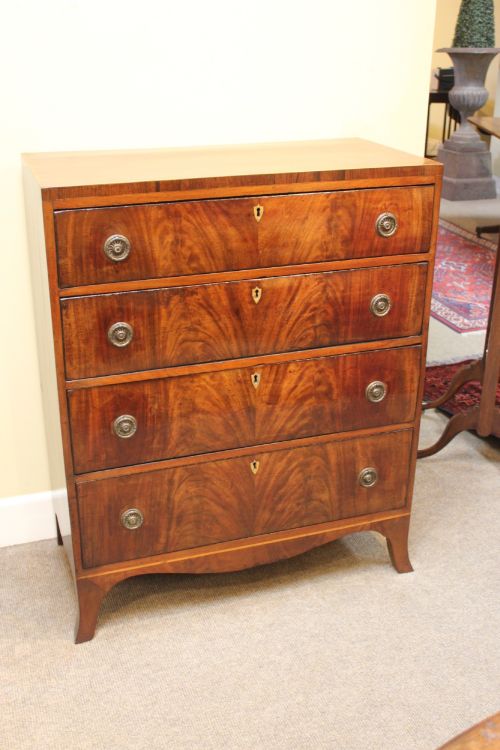
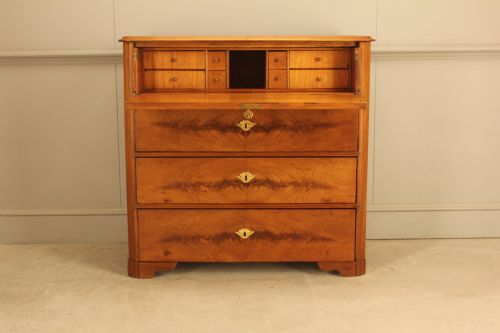
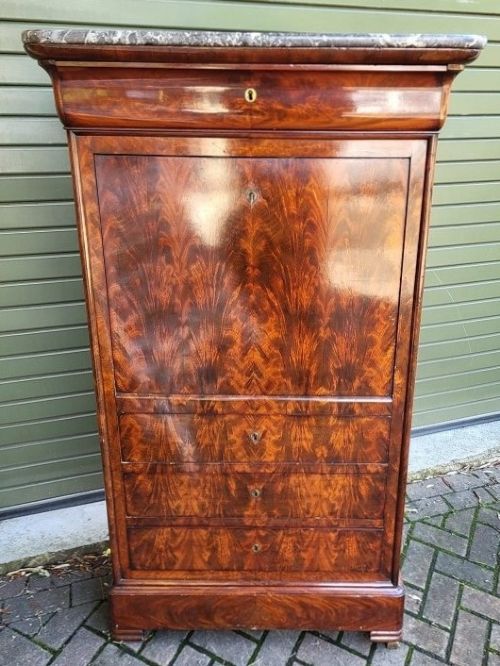
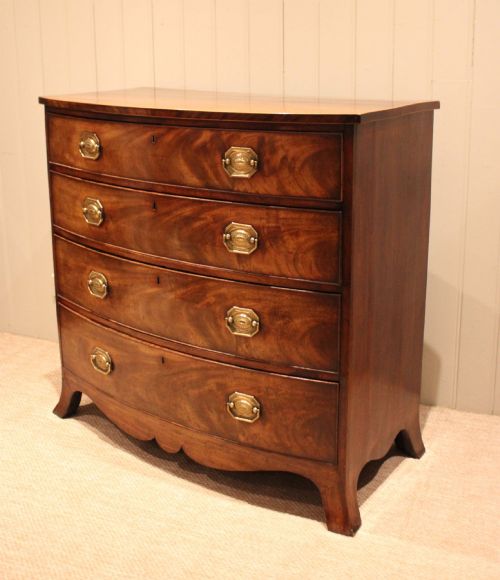
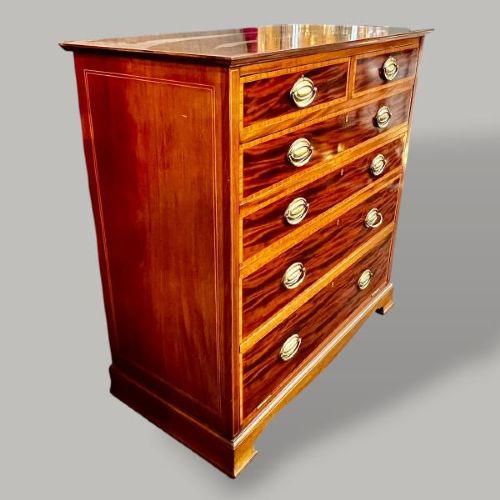
Flamed Mahogany Tallboy
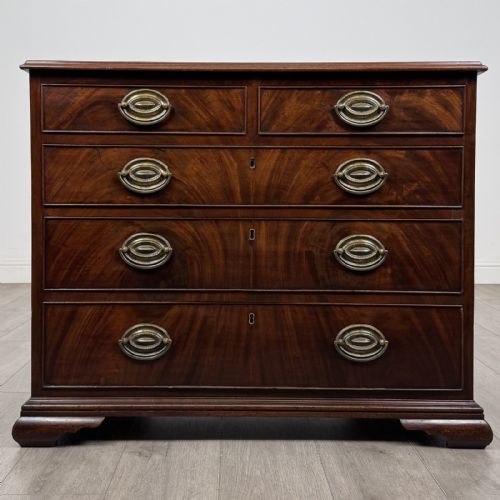
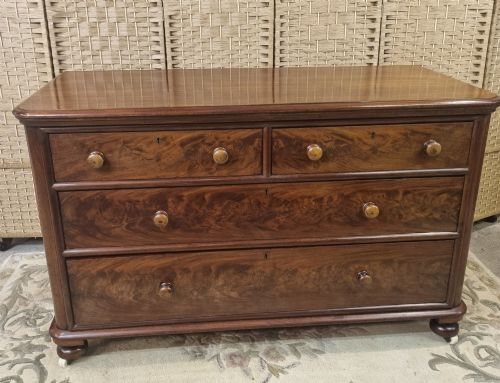
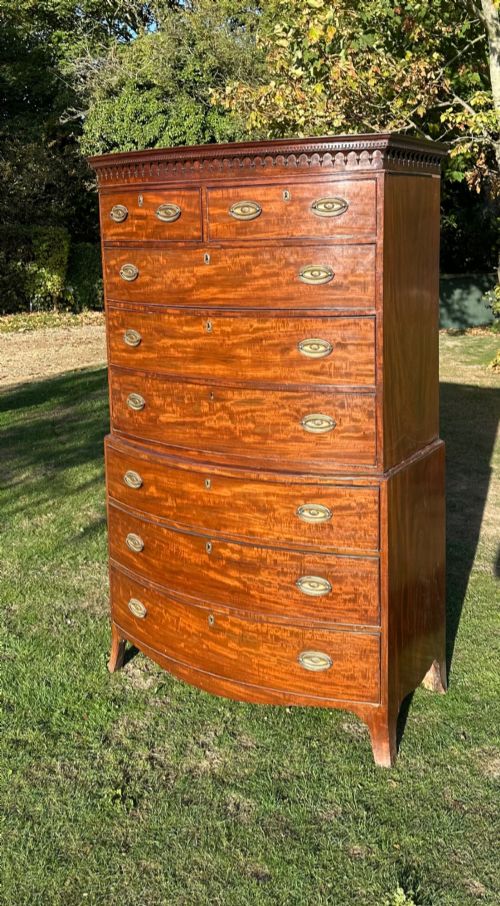
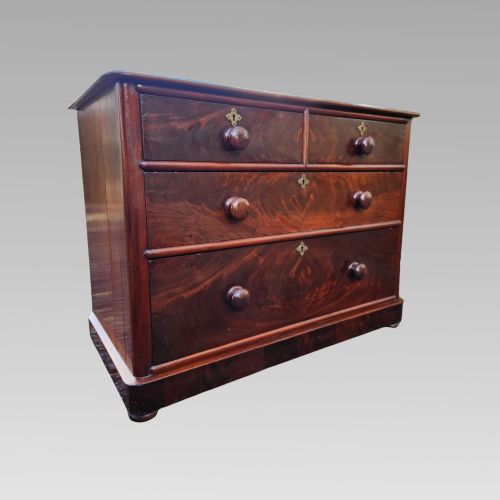
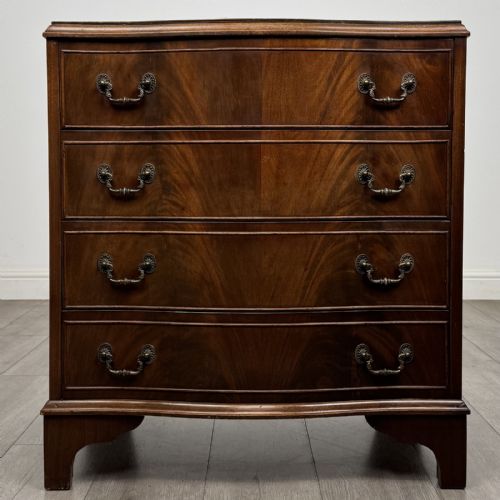
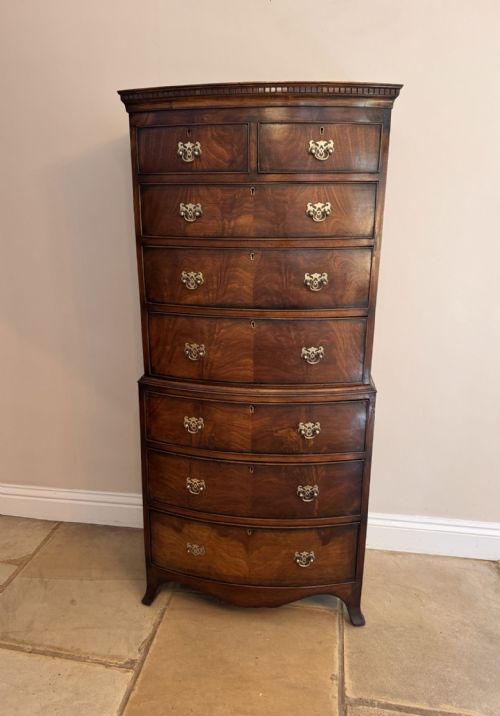
A flamed mahogany tallboy commands a room with rich wood grain and soaring vertical presence.
Flamed Mahogany Tallboy
A flamed mahogany tallboy represents a grand case piece built to store garments and linens within a stacked, vertical format. Buyers searching for a flamed mahogany tallboy seek commanding proportions that combine generous drawer capacity with striking decorative wood grain.
The pieces appearing on this page span the Georgian, 18th Century, and 19th Century periods, alongside Edwardian and Regency examples. Forms range from traditional chest on chest designs to linen presses and fitted cupboards.
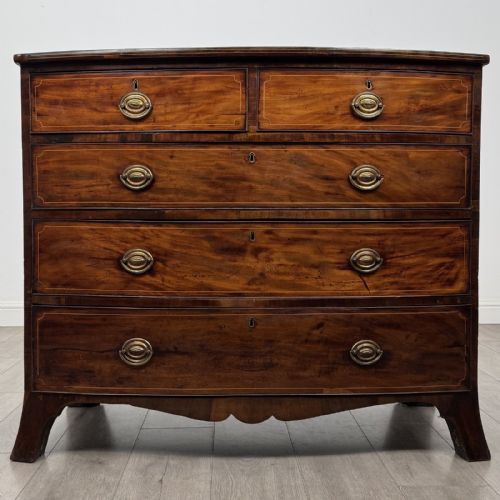
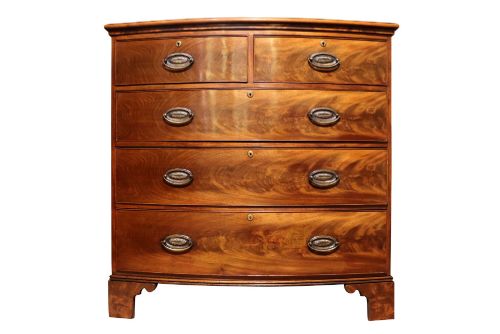
Most examples display rich figure mahogany veneer or flame mahogany surfaces, often shaped into bow fronts or serpentine outlines. Cabinets frequently utilise secondary timbers like oak and pine for internal drawer construction.
How they were made
Cabinetmakers constructed these pieces by applying thin veneers of figured flame mahogany over stable secondary carcase woods such as oak and pine. This technique displayed dramatic wood patterns across large drawer fronts while preventing the solid timber from warping.
Joinery relied on hand-cut dovetails for drawer boxes and carcass frames, ensuring lasting structural integrity. Craftsmen then added brass handles, bone escutcheons, and delicate boxwood inlay to accent the primary mahogany surfaces.
Flamed Mahogany Tallboy Retail Price Guide 2026
Typical asking prices for flamed mahogany tallboy among the pieces listed under this phrase on Sellingantiques today, from the lower quarter to the upper quarter. They describe what is for sale here now, not the wider market.
Several bedside chests hide secrets of their own, designed for midnight reading by candlelit Georgian wrappers.
What varies in quality
The visual impact of a piece depends heavily on the matching and symmetry of the flame mahogany veneer across the drawer fronts. Superior examples exhibit continuous, dramatic grain patterns that flow evenly from the top drawer to the base.
Construction depth defines the tier of craftsmanship, visible in the precision of the dovetail joints and the thickness of the secondary woods like oak. Finer pieces retain original brass hardware, clean internal drawer linings, and crisp boxwood stringing without clumsy restoration.
Gillows·Whytock & Reid
The Flamed Mahogany Tallboy Glossary
- Flame mahogany veneer
- A thinly sliced wood layer cut from timber fork junctions, producing a fiery, mottled grain pattern. This decorative surface defines the aesthetic appeal of high-status furniture.
- Tallboy
- A traditional tall chest of drawers, often built as a chest on chest where a smaller upper section sits atop a larger base. It maximises vertical storage space in domestic chambers.
- Bow front
- A convex, outward-curved cabinet or drawer front popular in Georgian and Regency design. It softens room geometry and catches light across figured wood grain.
- Serpentine
- A gently undulating front edge featuring a convex centre flanked by concave curves. This complex shaping requires advanced woodworking skill.
- Secretaire
- A desk disguised as a chest of drawers, featuring a drop-front writing flap that conceals small interior compartments. It merges the functions of a writing bureau and a tall storage chest.
- Stringing
- A thin inlay line of contrasting timber, such as boxwood, set flush into the mahogany surface. It creates geometric borders and outlines drawer perimeters.
Flamed Mahogany Tallboy: Frequently Asked Questions
What is a flamed mahogany tallboy used for?
These tall cabinets serve primarily to store folded clothing, bed linens, and personal items within deep, stacked drawers. Their vertical arrangement provides substantial storage volume while occupying a minimal floor footprint.
Historically, they anchored bedroom and dressing room interiors, offering secure compartments for valuable garments and household textiles.
How do I distinguish Georgian periods from later styles?
Georgian pieces typically display robust proportions, hand-cut dovetails, and restrained brass hardware rooted in 18th-century design principles. Later Edwardian or Sheraton Revival reinterpretations often feature lighter framing, crisper boxwood inlay, and machine-assisted precision.
Examining the secondary timbers inside the drawer boxes reveals the age of the materials and helps confirm the period of manufacture.
Where should I place a tallboy in my home?
A tallboy suits high-ceilinged bedrooms, dressing rooms, or generous hallway spaces where its vertical scale can anchor the room. Positioning the piece away from direct sunlight and heat sources protects the fragile mahogany veneer from fading and drying out.
Ensure the cabinet is properly anchored to the wall for stability, given its height and top-heavy nature.
How do I care for antique mahogany surfaces?
Maintain the finish by dusting gently with a dry, soft cloth and avoiding silicone-based sprays or harsh chemical polishes. Applying a traditional beeswax occasionally preserves the moisture and natural glow of the timber.
Keep indoor humidity stable to prevent the flame mahogany veneer from lifting or cracking over time.