

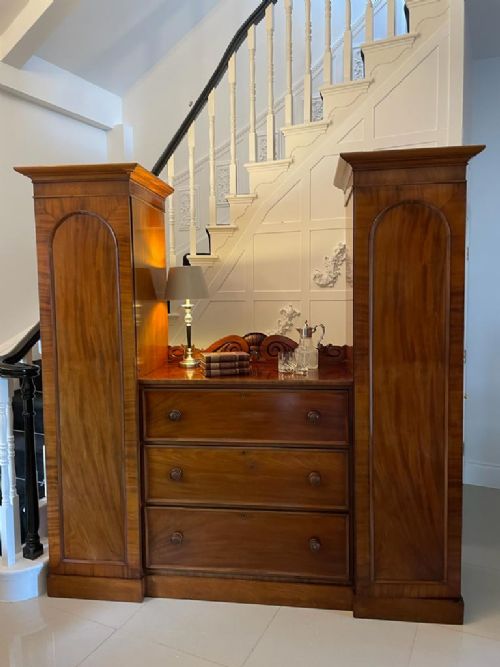
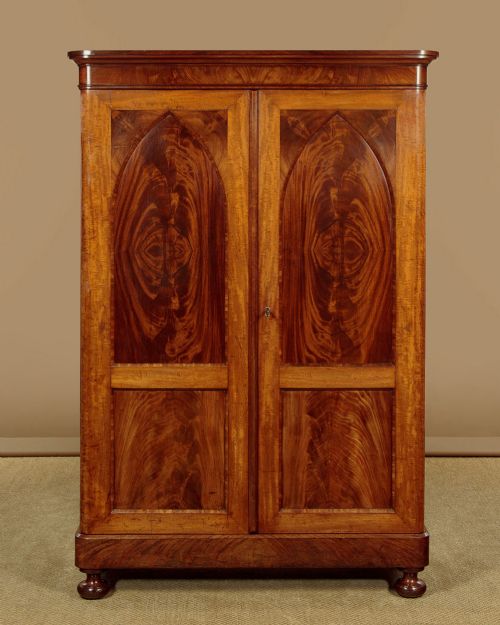
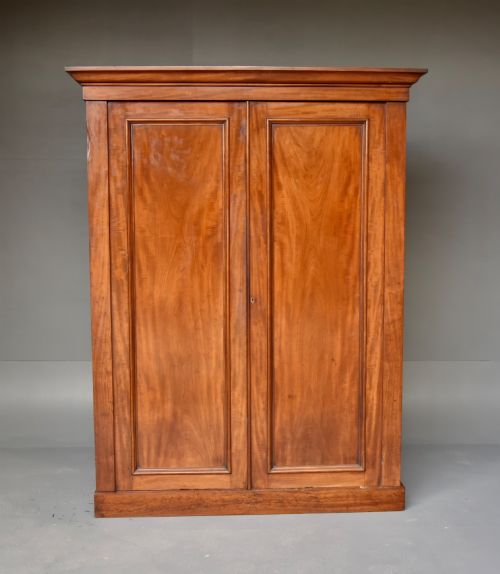
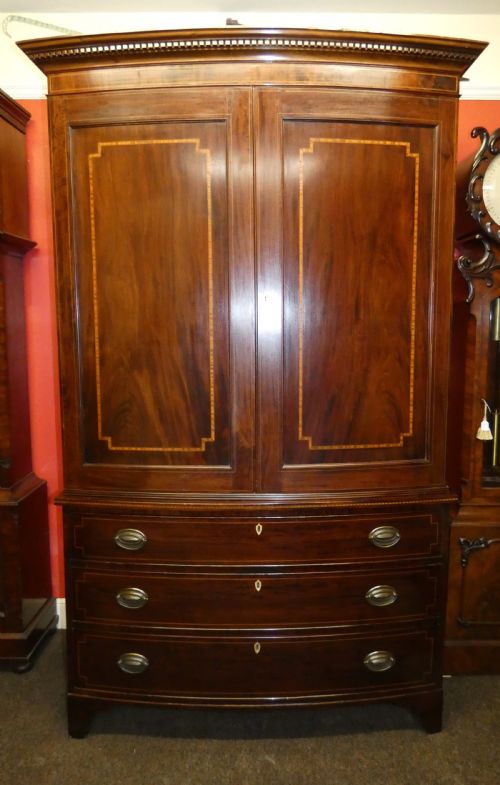
Flamed Mahogany Armoire
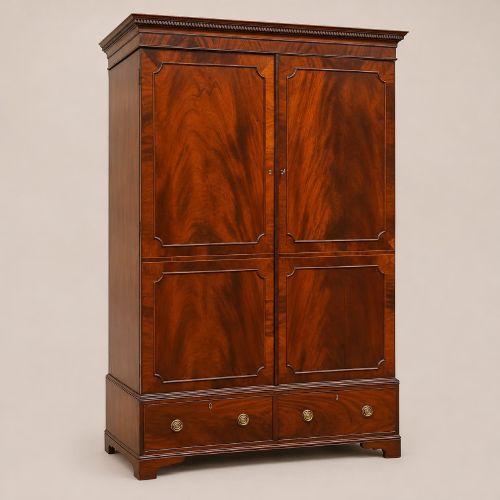
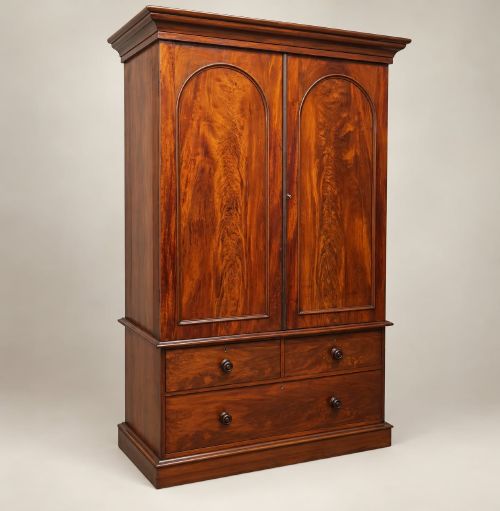
A flamed mahogany armoire brings intense figured grain and deep cabinetwork into a bedroom.
Flamed Mahogany Armoire
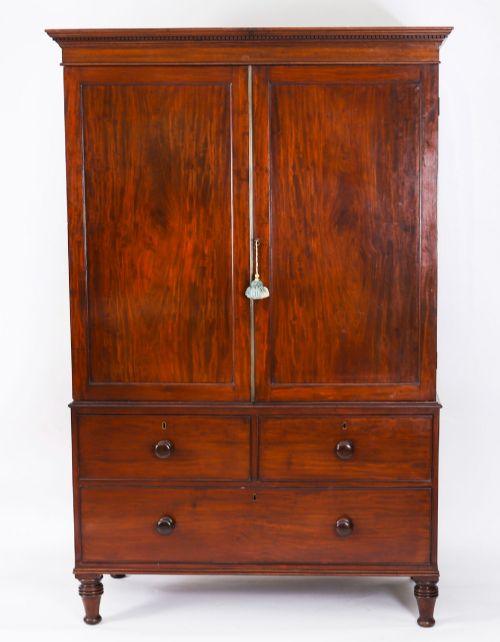
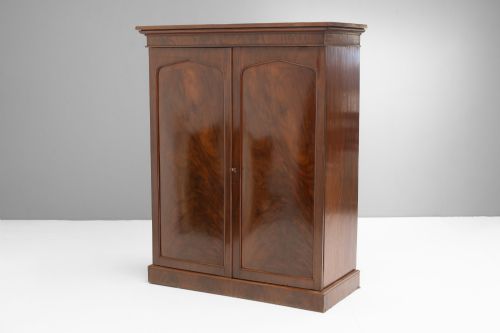
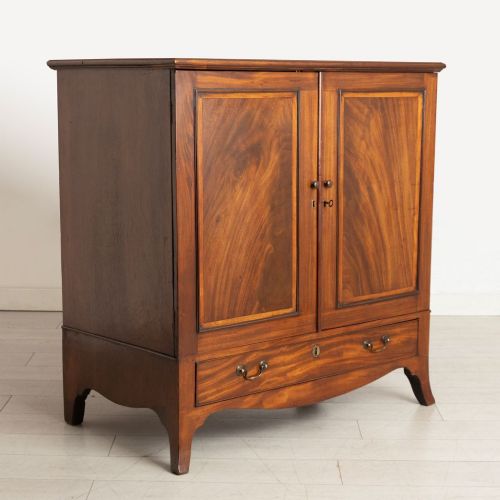
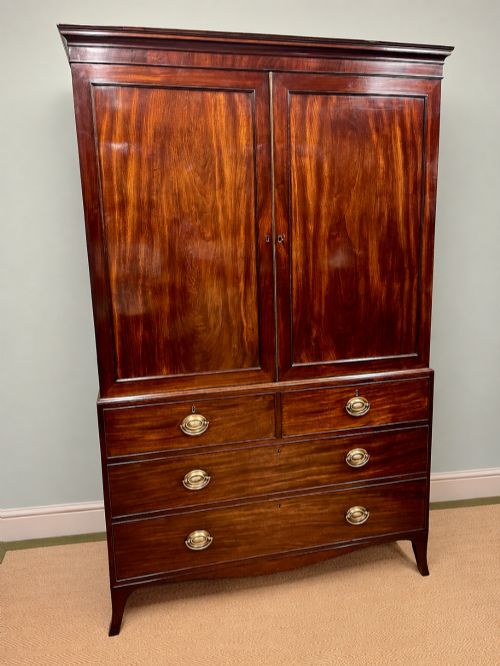
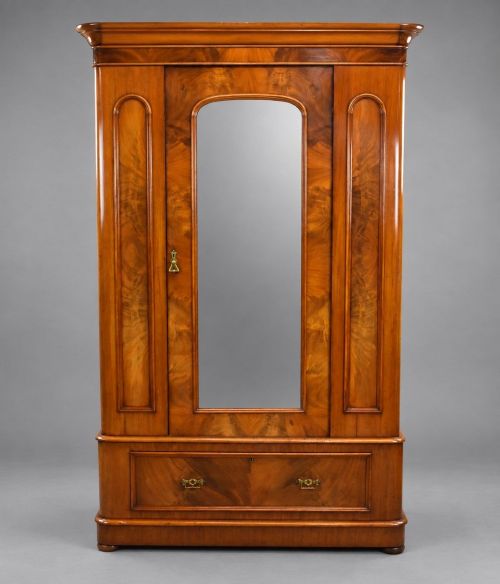
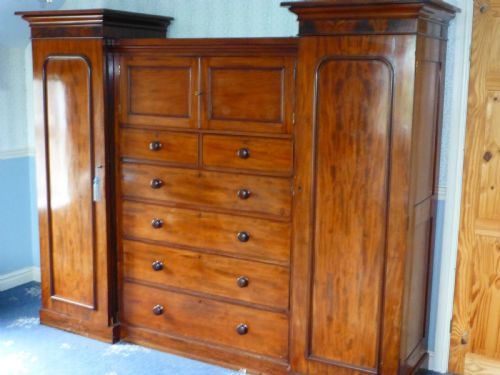
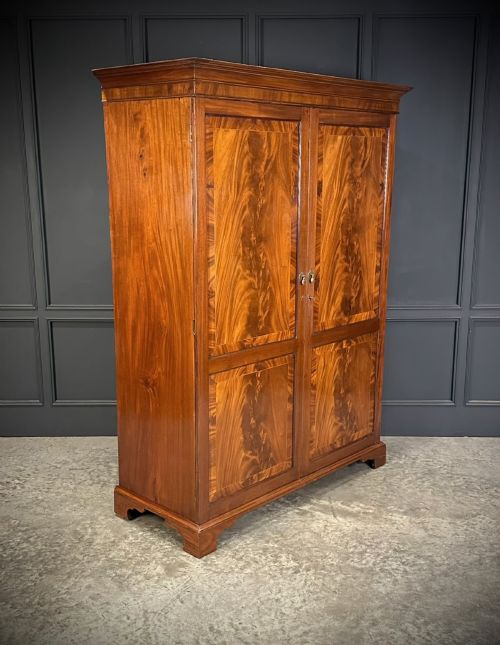
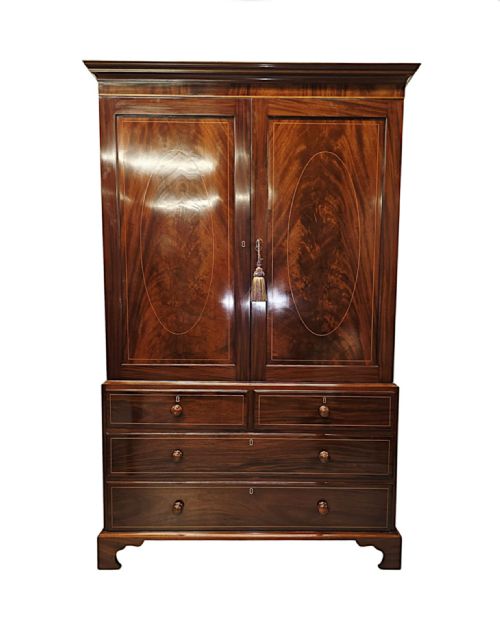
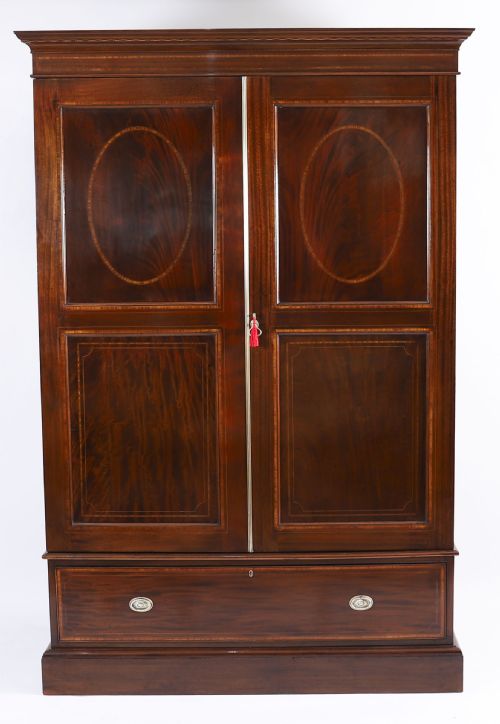
When you search for a flamed mahogany armoire, you encounter grand bedroom storage pieces designed to store garments and linens. These substantial articles appear primarily as wardrobes, linen presses, and compactums across Georgian, Regency, and Victorian periods.
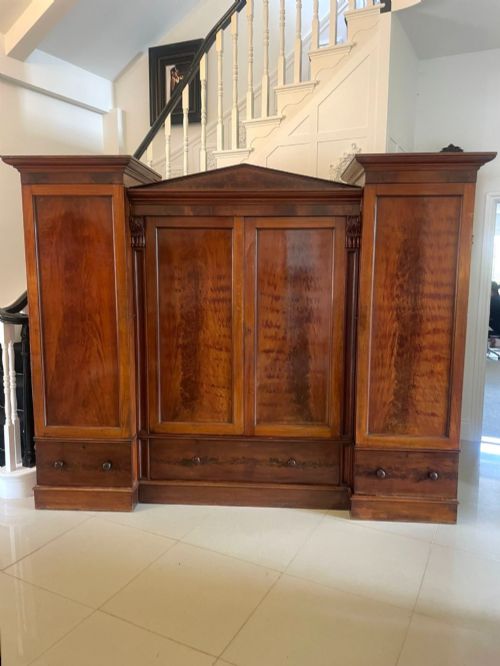
The selections here span centuries of British cabinetmaking, alongside occasional continental examples. You will find pieces ranging from Georgian presses with sliding trays to large Victorian double and four-door wardrobes.
Many examples incorporate flame mahogany veneer, chosen for its swirling, highly figured grain patterns. These large case pieces often feature organised internal compartments, including drawers, hanging spaces, and linen slides.
How they were made
Joinery involved sturdy frame and panel construction to accommodate the natural movement of large timber sections. Workshops utilised brass for locks, hinges, and handles, while internal fittings relied on solid mahogany or oak for durability.
Flamed Mahogany Armoire Retail Price Guide 2026
Typical asking prices for flamed mahogany armoire among the pieces listed under this phrase on Sellingantiques today, from the lower quarter to the upper quarter. They describe what is for sale here now, not the wider market.
Several listings include deep linen presses that easily swallow towering stacks of winter blankets.
What varies in quality
The visual impact depends on the selection and matching of the veneer. Superior pieces display symmetrical flame patterns that flow evenly across multiple doors and drawers, creating a cohesive visual harmony.
Construction standards reveal themselves in the depth of carving, the precision of decorative cornices, and the integration of secondary timbers. Finer examples show careful attention to internal drawer linings and robust architectural mouldings.
Gillows·S & H Jewell·Heals
The Flamed Mahogany Armoire Glossary
- Flame mahogany veneer
- A thin slice of mahogany timber cut from the fork of the tree where branches meet the trunk. This creates a distinctive fiery or mottled pattern used for decorative surfaces.
- Linen press
- A tall cupboard featuring upper doors enclosing sliding trays for folded textiles, placed above a chest of lower drawers. These items served as primary linen storage before modern wardrobes became standard.
- Compactum
- A multi-compartment wardrobe designed for comprehensive clothing storage. It typically combines hanging space, drawers, and shelving within a single large case.
- Blind fretwork
- Carved decorative patterns applied directly to a solid wooden background without piercing through to the other side. This ornamental detail often appears along the cornices of Georgian pieces.
- Inverted breakfront
- A cabinet facade where the central section steps backward rather than projecting forward. This architectural arrangement creates subtle shadow lines across large case pieces.
Flamed Mahogany Armoire: Frequently Asked Questions
What is a linen press?
A linen press is a tall storage cabinet with upper doors that enclose sliding wooden trays for folded garments and bedding. These pieces sit above a base section containing practical chest drawers.
Historically, they stored household linens before hanging wardrobes became the dominant bedroom furniture form in the later nineteenth century.
How do I care for flame mahogany?
Keep mahogany furniture away from direct sunlight and strong heat sources to prevent the wood from drying out and the veneer from lifting. Regular dusting with a soft, dry cloth preserves the polished surface.
Apply a traditional beeswax polish sparingly when the wood appears dry, rubbing it gently in the direction of the grain.
Can these large wardrobes dismantle?
Many large nineteenth-century wardrobes and compactums are designed to break down into modular sections for transport and installation. They typically separate into a cornice, a base, and separate side panels or main carcase sections.
Buyers should check the specific construction method, as some smaller or earlier examples remain solid single pieces.
How do I distinguish Regency from Victorian?
Regency pieces, dating from the early nineteenth century, tend to show classical restraint with clean architectural lines and subtle brass inlay. They reflect the influence of ancient Greek and Roman design.
Victorian pieces often display heavier proportions, richer carving, and more elaborate cornices, leaning into the exuberant revival styles of the later nineteenth century.