


Flame Veneer Storage Cabinet
A flame veneer storage cabinet brings striking figured timber to domestic rooms, offering enclosed space with considerable visual warmth.
Flame Veneer Storage Cabinet
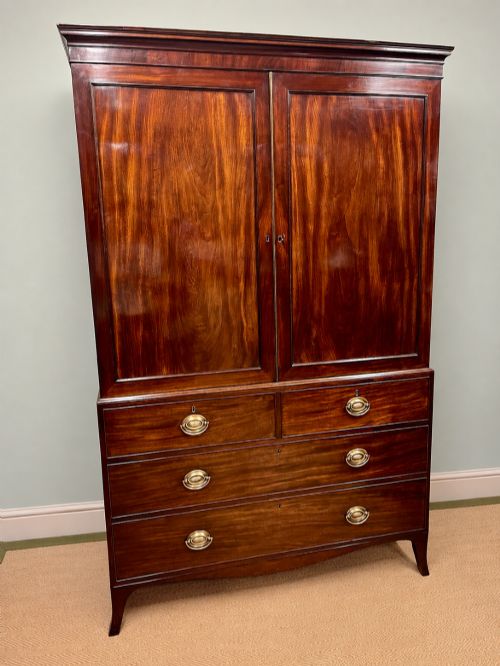
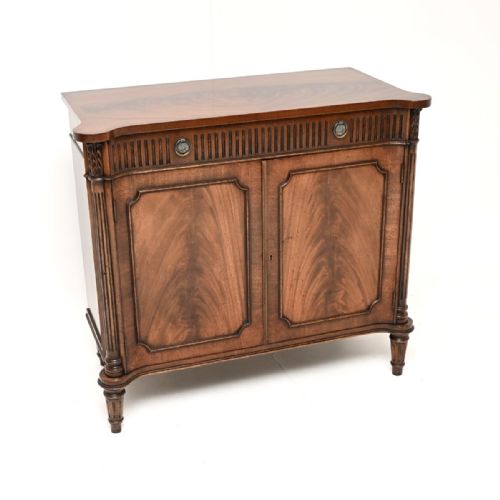
When you search for a flame veneer storage cabinet, you encounter a selection of nineteenth-century case furniture built primarily in mahogany and walnut. These pieces include linen presses, chiffoniers, side cabinets, and music cabinets spanning the Regency, Victorian, and Edwardian eras.
The version you are most likely to meet on this page is the mahogany chiffonier or linen press from the nineteenth century. These forms utilise rich wood figuring across doors and drawers, combining display or storage utility with the distinctive patterns of figured veneers.
Originating across British and continental workshops during the Regency and Victorian periods, these cabinets serve practical storage roles while displaying decorative timber surfaces. The selection also includes Biedermeier consoles and cabinets showing continental interpretations of figured mahogany and satinwood veneers.
How they were made
Cabinet makers constructed these pieces using solid timber frames faced with thin slices of flame mahogany or walnut veneer. This technique allowed craftsmen to position symmetrical wood grain patterns across large surfaces like cupboard doors and drawer fronts.
Secondary structural elements incorporate solid mahogany and other native timbers to support the carcase, whilst brass mounts and glazed panels appear on specific Regency and Victorian examples. Finishers applied shellac polishes to deepen the natural contrast of the figured grain.
What varies in quality
The visual impact of a flame veneer storage cabinet depends upon the symmetry and boldness of the grain selection across the main doors. Master craftsmen matched veneer leaves carefully to create dramatic flame patterns, whereas simpler pieces display less deliberate grain alignment.
Construction integrity distinguishes fine cabinet work from simpler production, visible in the precision of the drawer dovetails and the stability of the timber carcase. The quality of original brass hardware and secondary wood selection further separates standard utility pieces from high workshop output.
The Flame Veneer Storage Cabinet Glossary
- Flame veneer
- A thin slice of wood cut from the fork of a tree where branches join, producing a flickering, feather-like grain pattern. Cabinet makers laid these veneers symmetrically across prominent surfaces.
- Linen press
- A tall storage cabinet featuring upper sliding trays or shelves enclosed by doors, positioned above a base section with drawers. These pieces traditionally stored household linens.
- Chiffonier
- A low sideboard or cabinet developed during the nineteenth century, typically featuring enclosed cupboards below and sometimes a shelf or mirror above. They became popular for holding dining china and books.
- Biedermeier
- A Central European style dating from the early to mid-nineteenth century, focusing on clean architectural lines and figured veneers without excessive ornamentation. Walnut and mahogany were favoured timbers in this tradition.
Flame Veneer Storage Cabinet: Frequently Asked Questions
What is a flame veneer storage cabinet used for?
These cabinets provide versatile storage for books, linens, and household items within living spaces and bedrooms. Their enclosed cupboards keep contents out of sight while adding decorative presence to a room.
Historically, specific forms like linen presses and music cabinets served specialised domestic functions. Today, they function effectively as standalone storage furniture in modern interiors.
How do I date a nineteenth-century cabinet?
Dating relies on examining construction methods, timber choices, and stylistic details characteristic of periods like Regency, Victorian, or Edwardian. Regency pieces often exhibit classical proportions and brass detailing, whilst Edwardian examples show lighter framing.
Secondary woods inside drawers and the thickness of the veneer application provide further clues to the manufacturing decade. Comparing hardware fixings and backboards helps confirm the period of production.
How do I care for flame veneer furniture?
Keep these cabinets away from direct sunlight and strong heat sources to prevent the timber and veneer from drying out or fading. Maintaining stable room humidity protects the delicate wood layers from lifting.
Apply traditional wax polish sparingly to nourish the wood surface and preserve the polished finish. Avoid using modern silicone sprays which can damage antique French polish.
What distinguishes Regency style cabinets?
Regency furniture draws inspiration from classical Greek and Roman designs, featuring restrained ornamentation and strong architectural lines. Mahogany and rosewood veneers frequently featured in these ambitious commissions.
Ormolu mounts, brass inlay, and carved paw feet are common decorative elements on higher-status Regency pieces. Proportions remain balanced and formal compared to later Victorian items.