
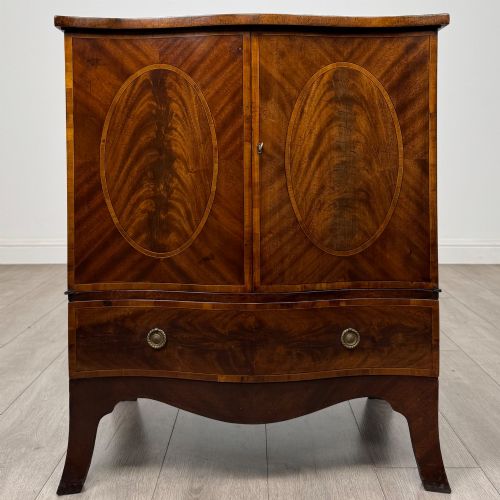
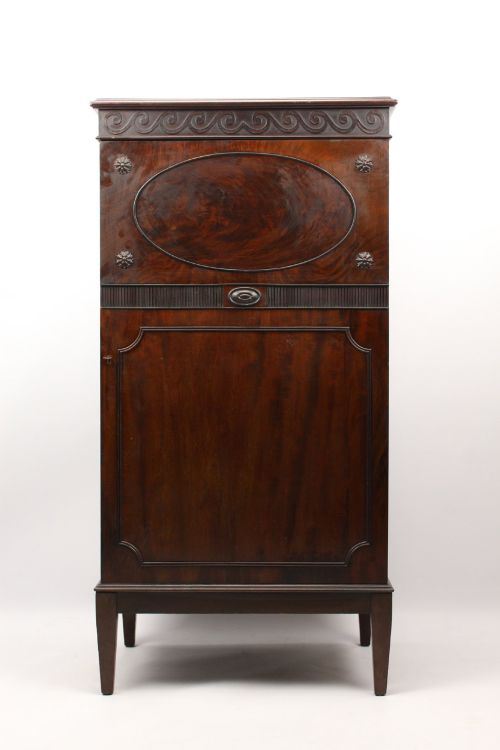
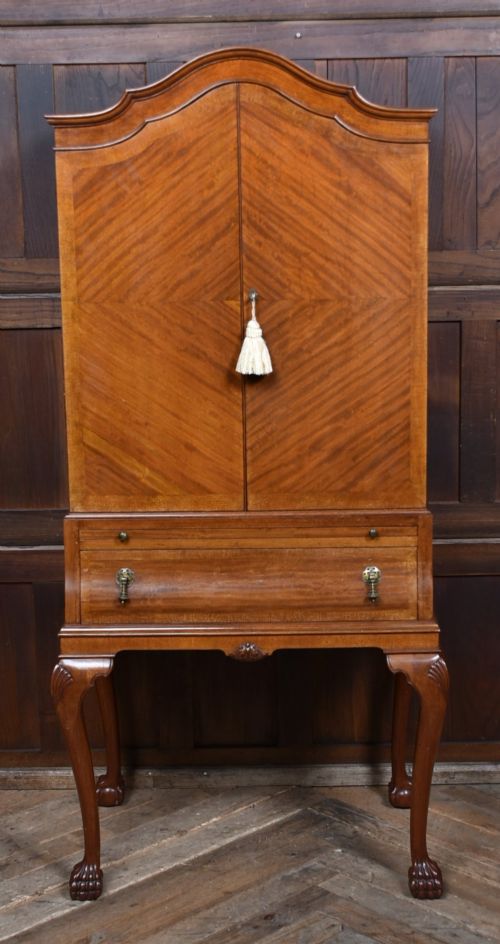
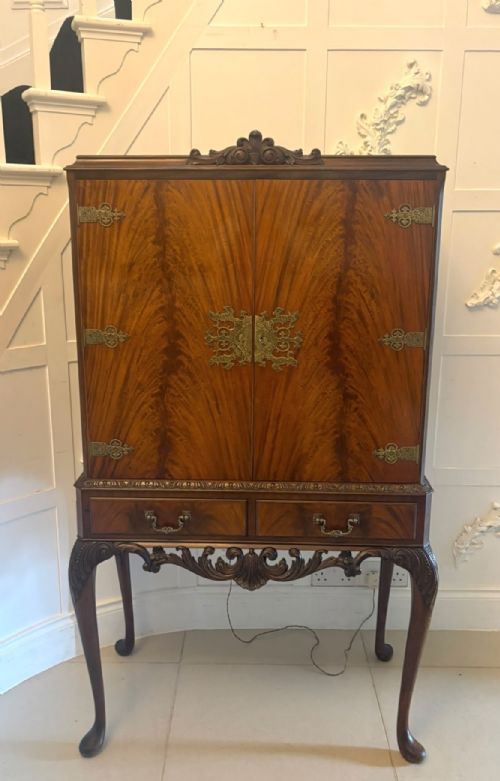
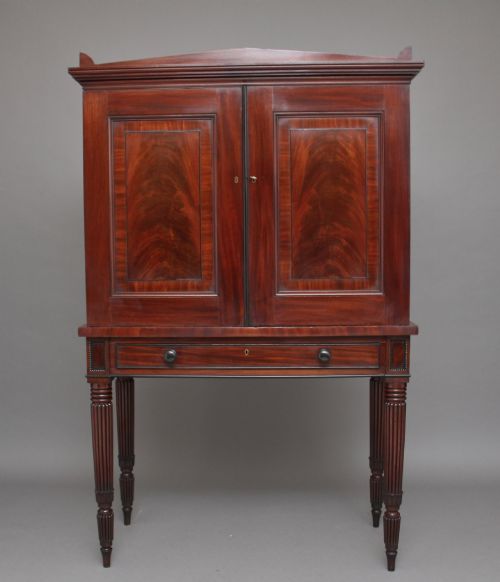


Flame Mahogany Standing Cabinet
Flame mahogany standing cabinet forms a striking focal point in a room, offering rich timber figuring and practical upright storage.
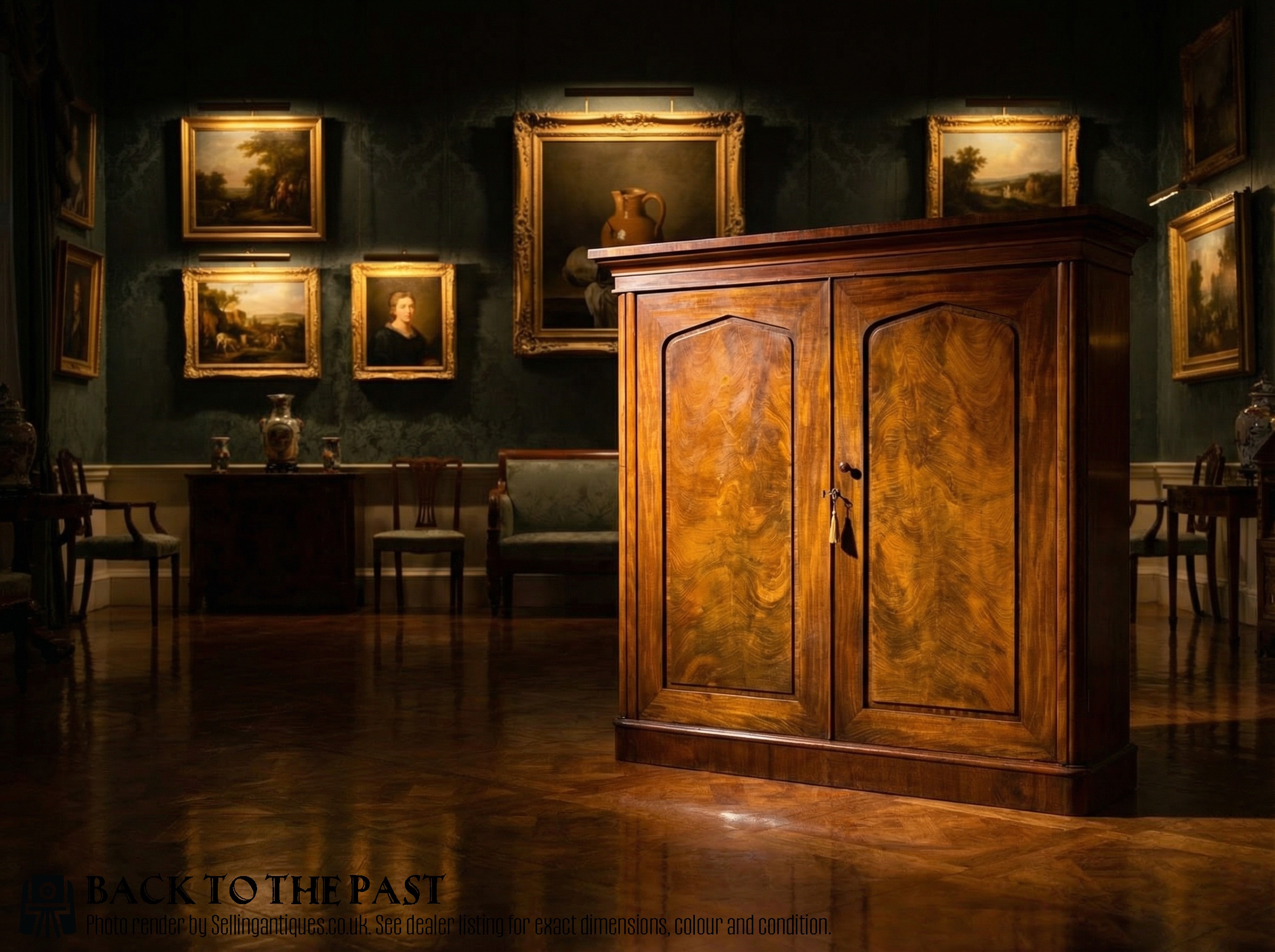
Flame Mahogany Standing Cabinet
A flame mahogany standing cabinet brings together upright storage forms and deeply figured timber, spanning periods from the Georgian era through the Edwardian years and into the early twentieth century. Buyers seeking a flame mahogany standing cabinet encounter corner cupboards, side cabinets, and tall display pieces originating from country houses and domestic interiors.
Originating across British and continental workshops, these standing cabinets utilise substantial timber carcasses fitted with doors, drawers, or glazed panels to create vertical storage.
Materials and Construction
Cabinet makers constructed these pieces primarily using solid mahogany and flame mahogany veneer applied over secondary timber carcases. Selected sections display dramatic ripple and flame figuring in the grain, occasionally accented with contrasting satinwood inlay or fine brass hardware.
Glazing appears on display units and bookcases, whilst interior shelving utilises timber or upholstered linings. Structural integrity relies on traditional joinery, housing panelled doors and fitted drawers within rigid standing frames.
Listings feature flame mahogany cabinets spanning the Georgian, Victorian, and Edwardian periods alongside 1920s variants.
Craftsmanship and Proportion
Quality rests in the intensity and symmetry of the timber veneer selection, where superior examples exhibit deep, rolling flame patterns across the primary surfaces. Finer pieces demonstrate precise matching of the grain across doors and drawer fronts rather than random application.
Proportion and detailing dictate value, distinguishing standard utility pieces from exceptional country house commissions. Crisp edge mouldings, original brass mountings, and well-balanced architectural cornices elevate a cabinet above ordinary production.
Denby & Spinks·Walker & Hall
The Flame Mahogany Standing Cabinet Glossary
- Standing cabinet
- An upright furniture piece designed to rest directly on the floor without requiring wall suspension. These tall forms provide enclosed shelving or hanging space.
- Bow front
- A convex curved front elevation popular on cabinets and chests from the Georgian and Regency periods. This shaping softens rectangular room geometries.
- Pedestal cabinet
- A vertical storage unit, often square or hexagonal, designed to stand alone or support an urn or lamp. Such pieces frequently serve as bedside or side tables.
- Cellarette
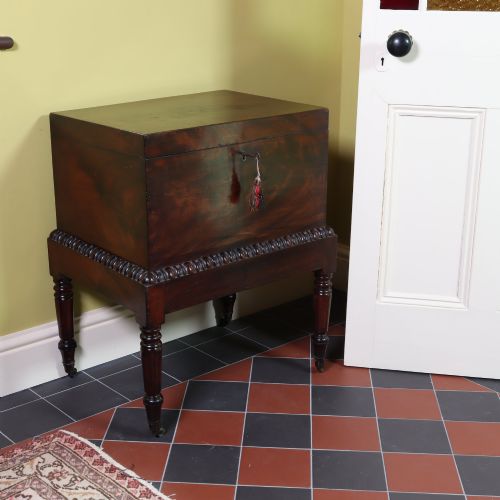
- A fitted cabinet or box originally designed to hold wine bottles securely inside compartments. Many examples incorporate lead linings or internal dividers.
Flame Mahogany Standing Cabinet: Frequently Asked Questions
Where do I place a standing cabinet?
These upright pieces suit corners, alcoves, or flat wall spaces where vertical storage is required without occupying excessive floor area. Corner cabinets utilise unused angles effectively in dining rooms or reception spaces.
Tall side cabinets and bookcases anchor larger rooms, providing a formal display surface for books, ceramics, or glassware while concealing everyday items within the lower cupboards.
How do I care for flame mahogany?
Maintain polished mahogany surfaces by dusting gently with a dry, soft cloth and applying quality beeswax sparingly to nourish the timber. Avoid placing cabinets near direct heat sources or strong sunlight to prevent veneer lifting and fading.
Protect the finish from moisture by using coasters and mats beneath any decorative objects or drinks placed on top.
How do I distinguish Georgian from Edwardian pieces?
Georgian furniture generally displays heavier proportions, solid timber construction techniques, and hand-cut joinery characteristic of eighteenth and early nineteenth century workshops. Details often include bracket feet, dental mouldings, and rich patination.
Edwardian revivals and later pieces from the early twentieth century often utilise mechanical saws, lighter framing, and machine-cut veneers while referencing earlier eighteenth century classical styles.
What is a cellarette used for today?
Originally built to store wine bottles in country houses, a cellarette now functions effectively as a small drinks cabinet or distinctive side table. The internal compartments accommodate modern bottled beverages or occasional items.
Compact proportions allow these low cabinets to fit easily beside seating areas or within narrow hallways.