
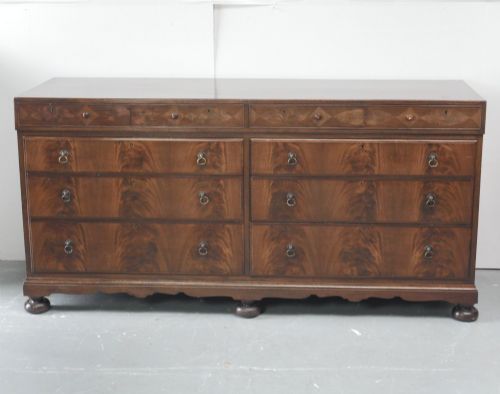
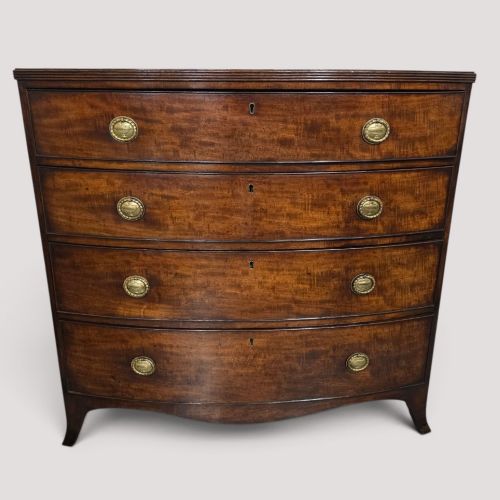

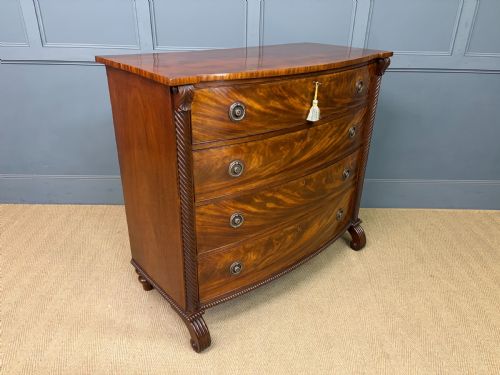
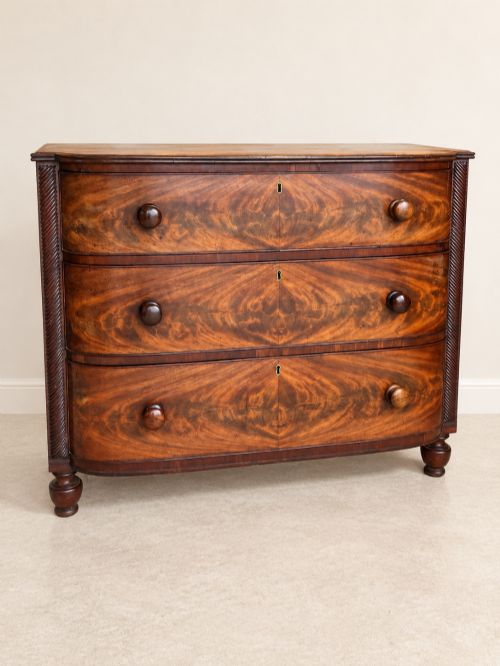

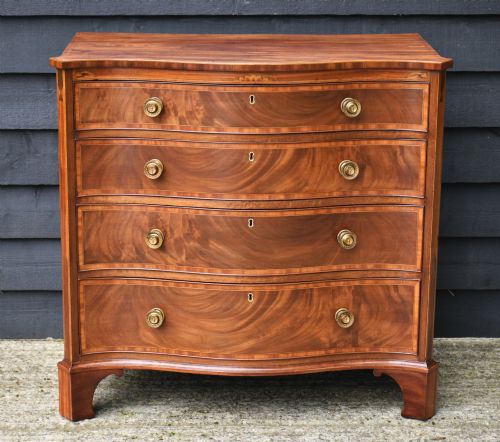
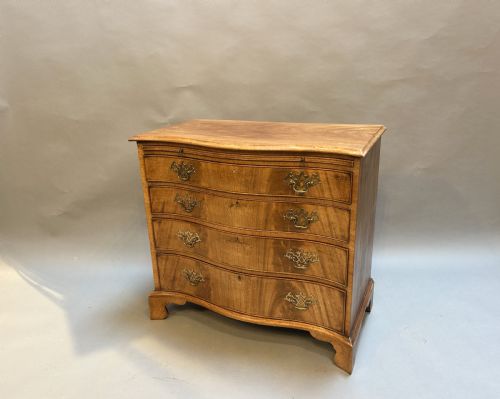
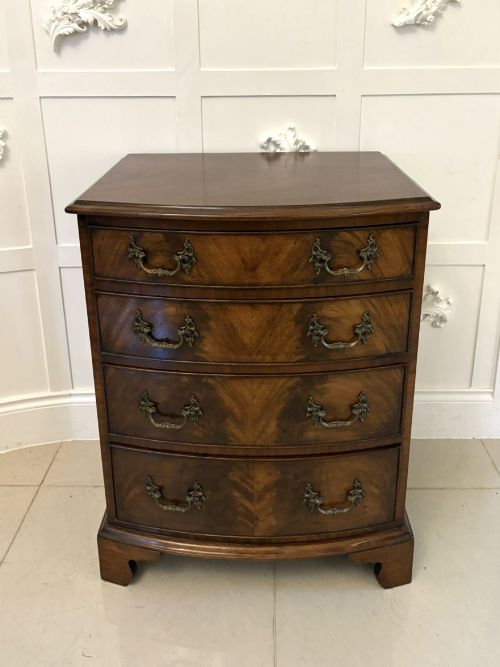
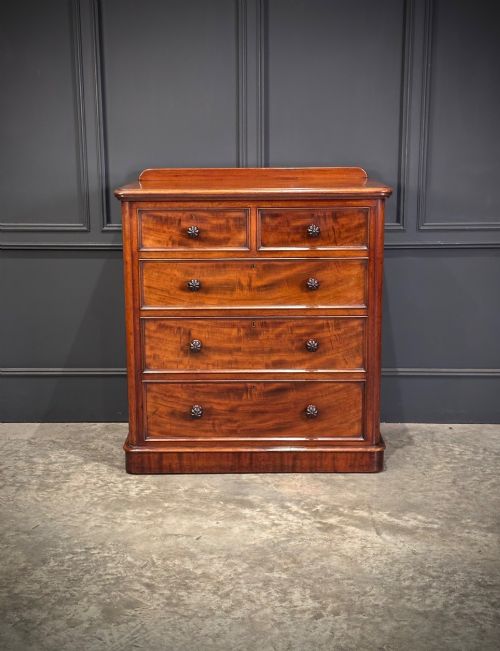
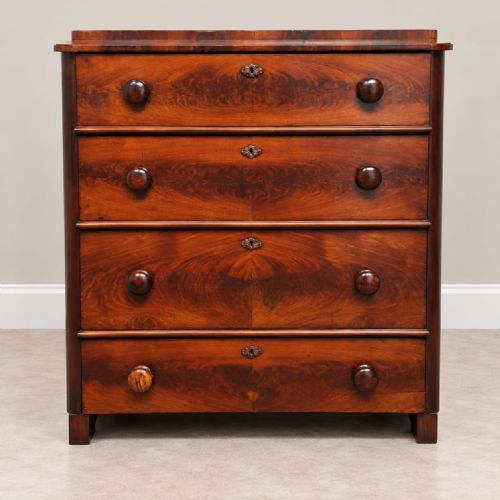
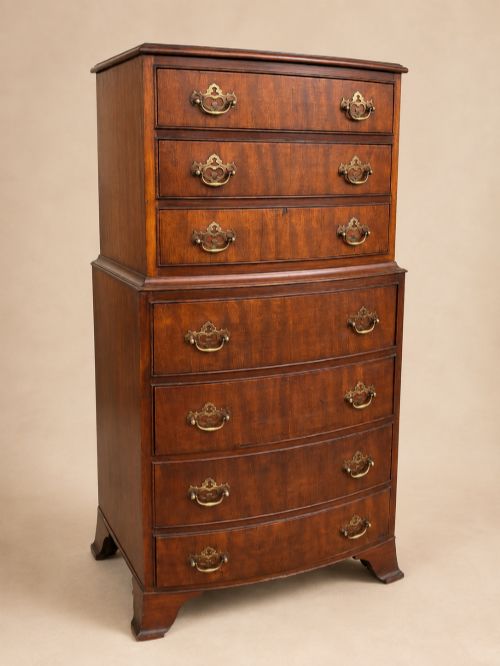
Flame Mahogany Chest of Drawers
When you search for a flame mahogany chest of drawers, you find figured timber shaped into practical storage from the Georgian, Regency, and Victorian eras.
Flame Mahogany Chest of Drawers
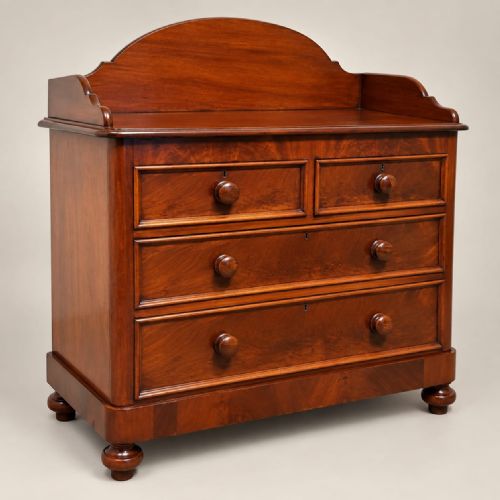
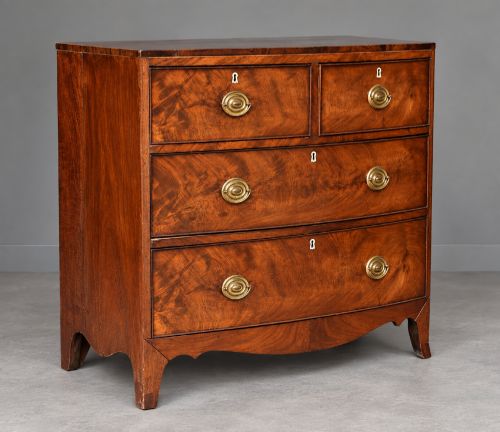
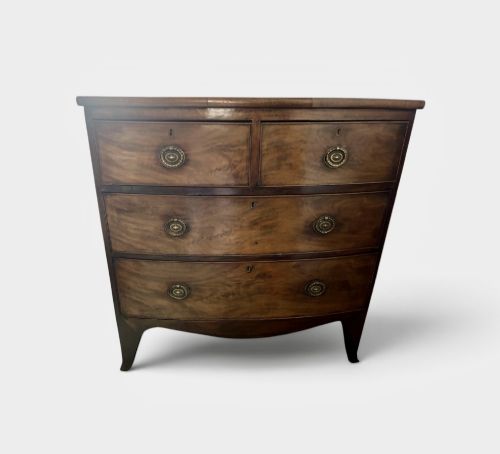
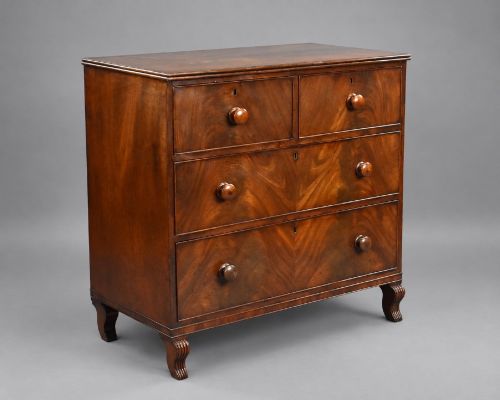
A flame mahogany chest of drawers provides stacked storage housed within timber selected for its dramatic, tongue-like grain pattern. Pieces matching this description appear frequently in bow-front, serpentine, and straight configurations across eighteenth, nineteenth, and early twentieth-century periods.
The most common examples on this page date from the Georgian, Regency, and Victorian eras, often taking the form of bow-fronted or tall five-height chests. Makers also applied the style to bedside tables, gentleman's dressing chests, and larger Scotch chests.
Originating largely from British workshops, though occasionally drawing on French Empire or Biedermeier influences, these items served primary sleeping quarters and reception rooms as status furniture.
How They Were Made
Cabinet makers constructed these carcases using solid secondary woods like oak or pine for internal drawer linings, applying thin slices of figured mahogany veneer to the primary exterior surfaces. This technique allowed craftsmen to display symmetrical flame patterns across drawer fronts without exhausting supplies of solid timber.
Drawer dividers, brass pulls, and sometimes bone or glass details completed the construction, whilst specialised sawing methods uncovered the distinctive grain swirls characteristic of branch junctions.
Carved bracket feet, turned legs, or plinth bases supported the heavy carcases, depending on the prevailing style of the decade.
Materials recorded across the archive include solid mahogany, oak linings, brass hardware, and occasional marble tops on continental commodes.
What Varies in Quality
The visual impact of the timber figure dictates much of the distinction, separating uniform planking from intensely mirrored, book-matched flame veneers that demand precise hand-matching by the cabinet maker. Superior examples exhibit continuous grain flow across multiple drawers.
Construction methods also separate standard production from master craftsmanship, visible in hand-cut dovetail joints on the drawer boxes and the retention of original brass hardware or secret locking mechanisms.
Whytock & Reid
The Flame Mahogany Chest of Drawers Glossary
- Flame Mahogany Veneer
- A thin slice of wood cut from the fork of a mahogany tree where branches meet the trunk, creating a fiery, feather-like grain pattern. This decorative layer forms the defining visual characteristic of these items.
- Bow Front
- A convex, curved front profile popular in Georgian and Regency cabinet making. This shape softens the room presence of heavy timber storage.
- Serpentine
- A furniture front featuring a gentle undulating curve that sweeps inward and outward in a continuous line. It requires exceptional skill from the maker to fit drawers accurately to this contour.
- Scotch Chest
- A tall, substantial chest of drawers originating from Scotland, often featuring a deep top drawer flanked by smaller spice drawers. They typically display robust proportions and heavy flame grain veneers.
- Secretaire
- A cabinet or chest containing a fitted pull-out writing drawer with a drop-front lid and small interior compartments. This form combines a standard chest of drawers with a compact desk.
Flame Mahogany Chest of Drawers: Frequently Asked Questions
What is a flame mahogany chest of drawers?
It is a practical storage item built from timber sliced to reveal swirling grain patterns, produced largely during the Georgian, Regency, and Victorian periods.
Craftsmen veneered the exterior surfaces of oak or pine carcases to highlight the dramatic natural figures of the wood.
How do I identify a Regency chest?
Regency pieces often display strong architectural lines, brass ring handles, and rich flame mahogany veneers dating from the early nineteenth century.
They frequently feature bow-fronted profiles and stand upon bracket feet or short turned legs.
What is a Scotch chest?
A Scotch chest is a tall, heavy Victorian or Edwardian storage unit characterised by a deep top drawer and robust proportions.
These pieces frequently showcase intense flame grain timber and sometimes incorporate hidden or secret compartments.
Where should I place a bow front chest?
A bow front chest works well in a bedroom or hallway where the curved projection softens the walkway and provides useful surface space.
The finished back and sides on many older examples also allow for placement where the piece remains visible from multiple angles.