

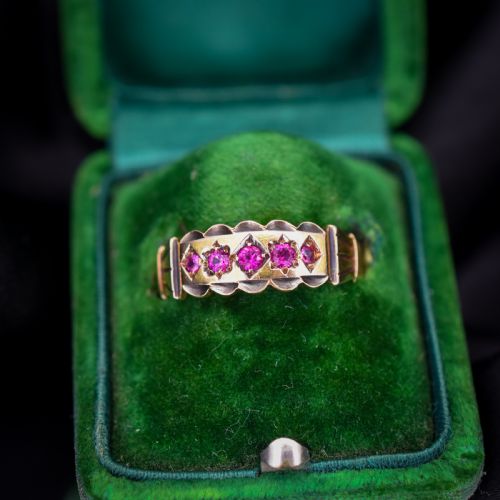
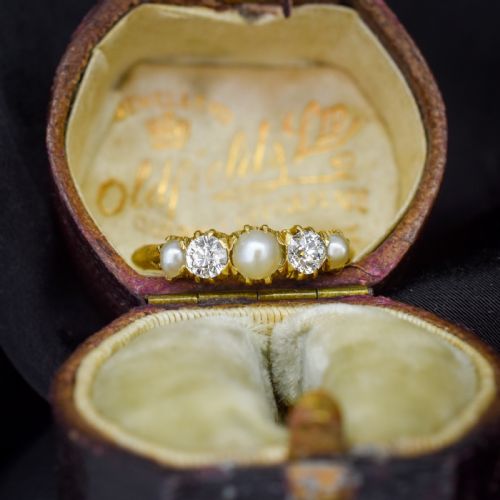

Five Stone Carved Ring
A five stone carved ring brings together gems aligned in precious metal, often taking the familiar boat or half hoop shape from the late nineteenth and early twentieth centuries.
Five Stone Carved Ring
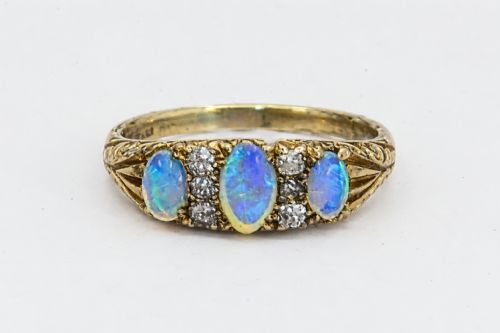
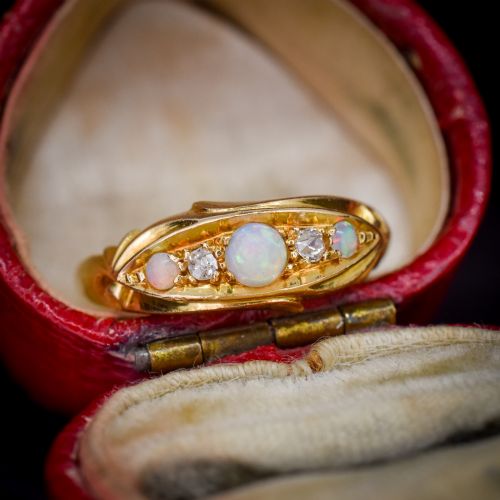
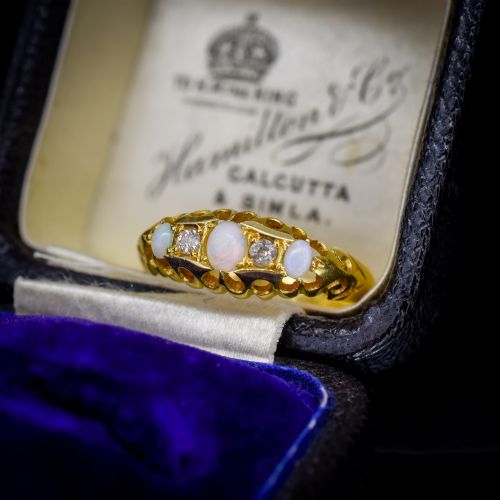
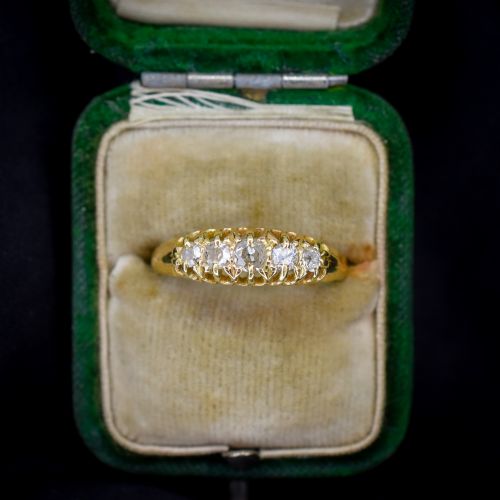
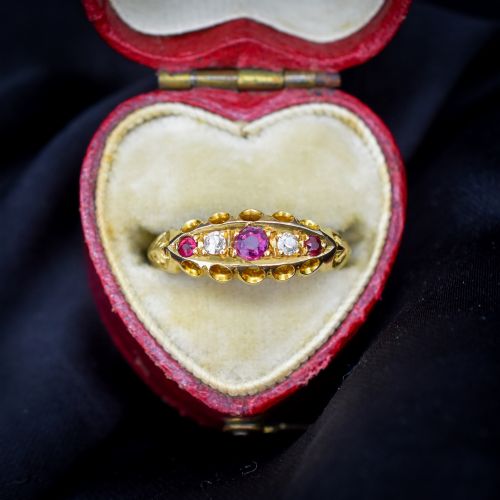
A five stone carved ring displays a horizontal sequence of gems set across the finger, a format frequently found in late Victorian, Edwardian, and early twentieth-century jewellery. These pieces often take the boat shape, curving gently to follow the finger with graduated or uniform stones.
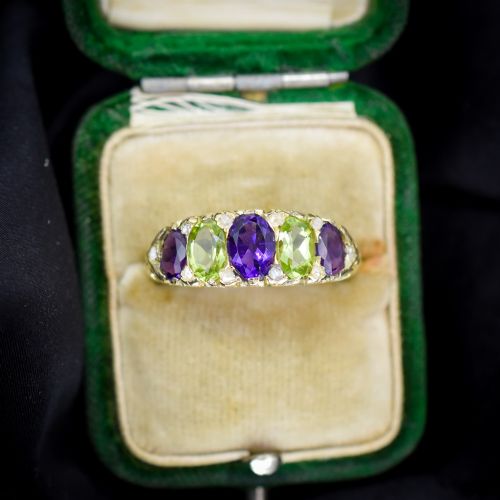
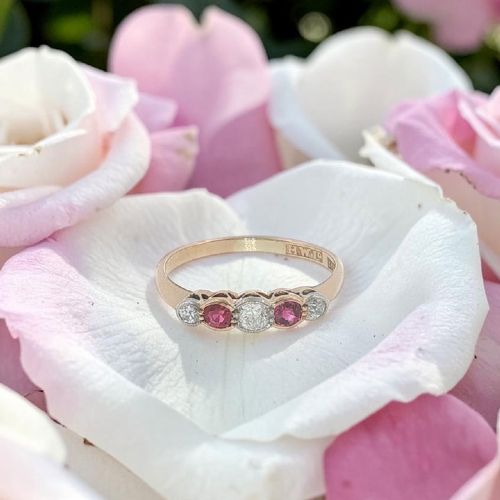
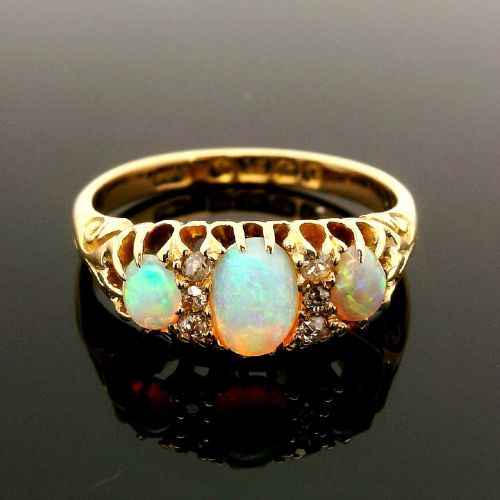
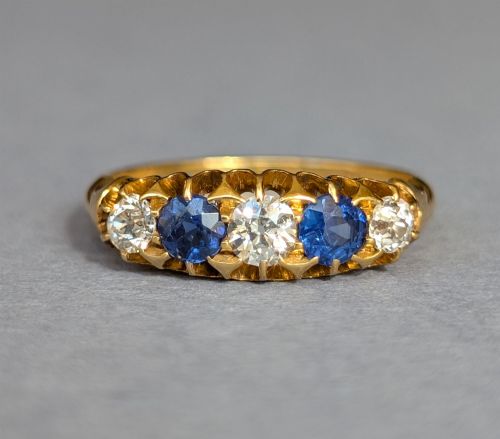
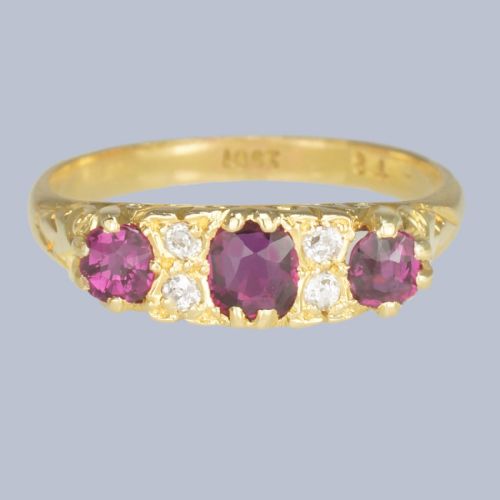
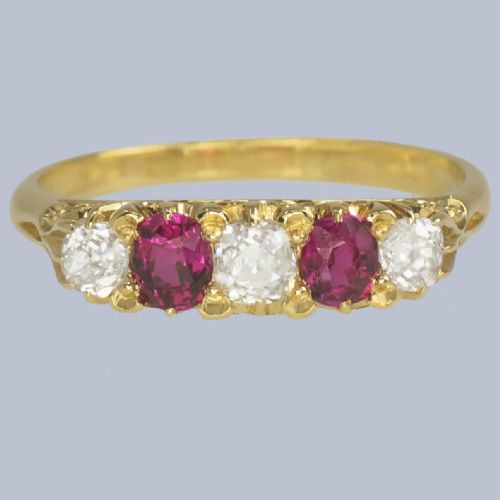
The materials paired in these rings include diamonds alongside rubies, sapphires, opals, and pearls, often mounted in eighteen carat yellow gold or platinum. While diamonds dominate the selections, coloured stones such as turquoise, amethyst, and garnet also appear in nineteenth-century and vintage examples.
Origin details often emerge from regional assay office hallmarks stamped inside the shank, pointing to cities such as Birmingham and Chester alongside specific dates from the eighteen nineties through to the nineteen fifties.
Materials and construction
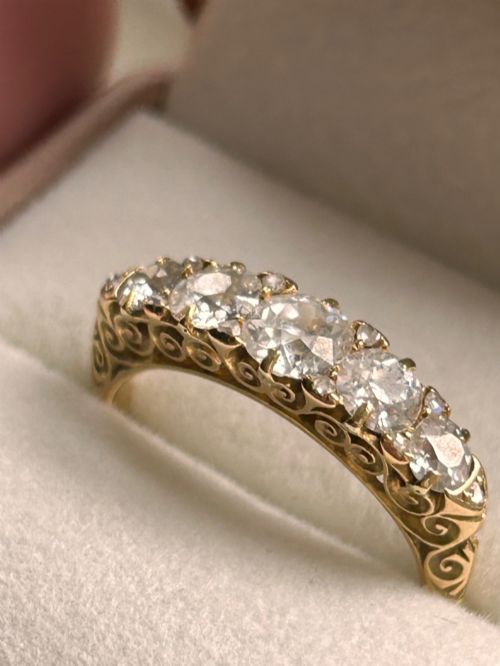
Goldsmiths utilised eighteen carat yellow gold and occasionally platinum to construct the shanks and settings, mounting gems using claw, boat, or scroll configurations. Old cut and old mine cut diamonds are shaped by hand, giving each stone distinct facets that catch candlelight differently than modern brilliant cuts.
Carved details along the band or shoulders frequently incorporate scrollwork and patterned motifs, securing the stones in a continuous line across the hand. Assay marks struck into the metal record the exact year and location of testing.
Listings feature items spanning from the late nineteenth century through the Edwardian period and into the mid-twentieth century, predominantly formed in eighteen carat gold.
Distinctions in quality
The standard of a five stone carved ring rests upon the matching and calibre of the set gems, particularly when diamonds are paired with coloured stones like rubies and sapphires. Uniformity in stone size, colour saturation, and the crispness of carved scrollwork separate standard production from finer goldsmith work.
The preservation of original claw settings and clean hallmarking inside the eighteen carat gold band indicate how well a piece has survived decades of wear. Subtle graduation in stone weight and clean lines in boat-shaped mounts reflect thoughtful design.
The Five Stone Carved Ring Glossary
- Boat ring
- A ring setting curved to resemble the hull of a boat, elevating the central stones above the finger.
- Old cut diamond
- A hand-faceted diamond cut prior to the standardisation of modern brilliant facets, often featuring a smaller table and larger culet.
- Hallmark
- A series of official marks stamped into precious metal indicating purity, origin assay office, and year of testing.
- Half hoop
- A ring design featuring a row of gemstones spanning the upper portion of the band in a uniform line.
- Gypsy set
- A mounting style where gemstones are flush-set directly into the thick metal band, creating a smooth outer surface.
Five Stone Carved Ring: Frequently Asked Questions
How can I date my ring?
Dating relies heavily on British assay office hallmarks stamped inside the band, which include date letters and town marks alongside purity stamps.
Stylistic cues such as boat settings and old cut diamonds also point toward specific decades like the eighteen nineties or nineteen hundreds.
Are these rings suitable for daily wear?
Eighteen carat gold and diamonds offer robust durability, though softer stones like opals and pearls require greater care during everyday tasks.
Checking the security of the settings with a jeweller helps ensure the gems remain firmly in place over time.
What stones are typically used?
Diamonds appear frequently, often paired with traditional coloured gems including sapphires, rubies, opals, turquoises, and garnets.
Combinations vary from all-diamond bands to multi-gem arrangements featuring amethysts and peridots.