


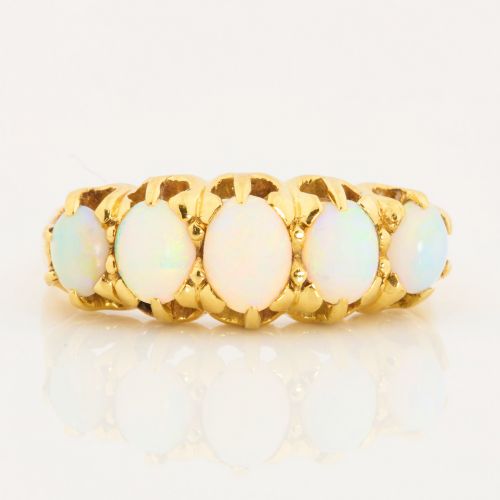
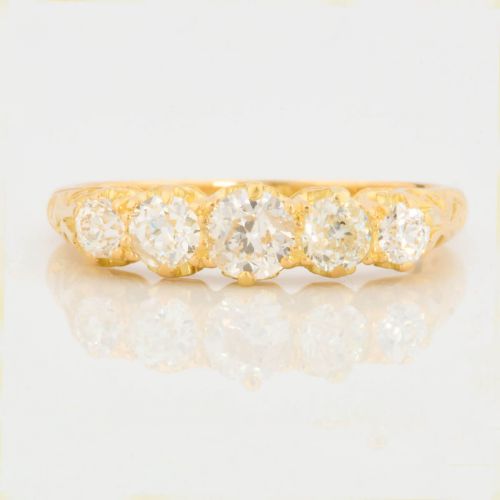
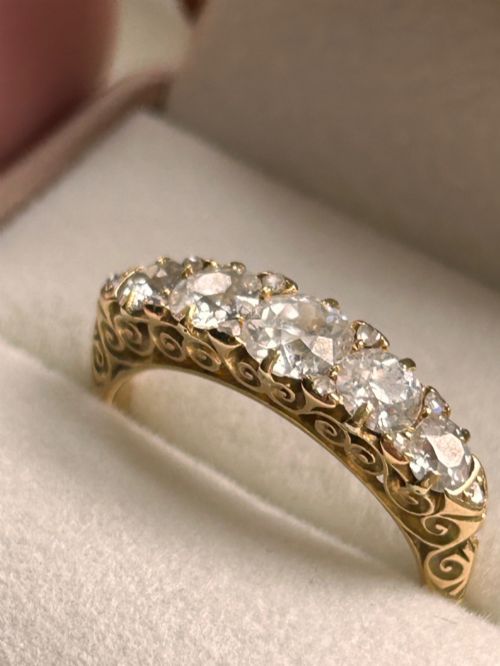
Five Stone Carved Band
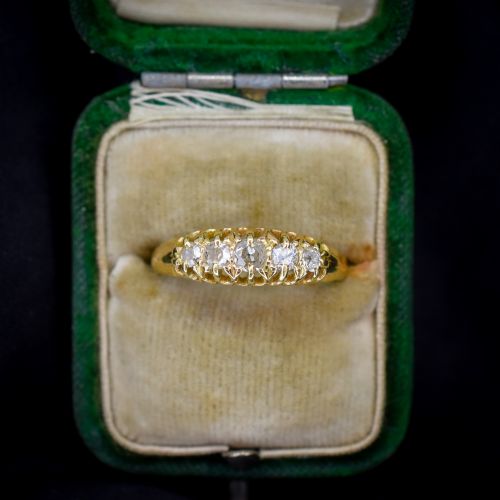
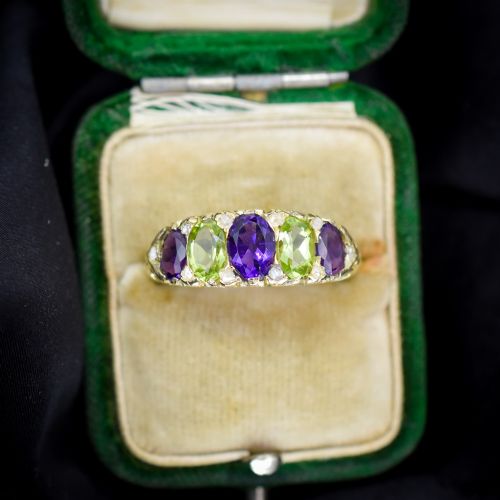
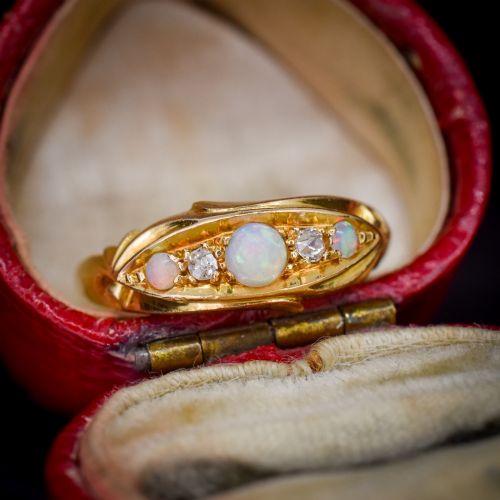
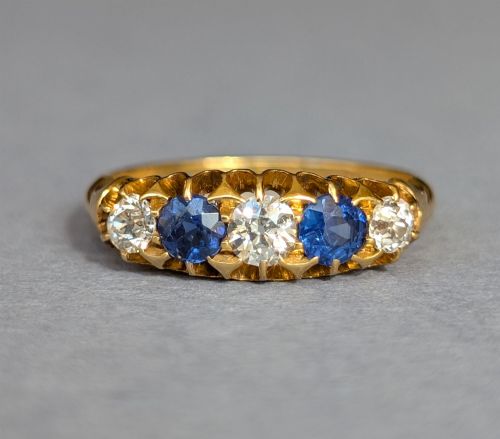
These five stone carved band rings combine rich gemstones and gold, offering a classic finger-spanning arrangement that suits everyday wear.
Five Stone Carved Band
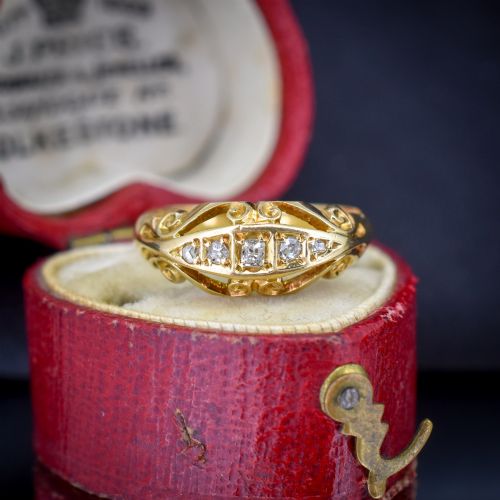
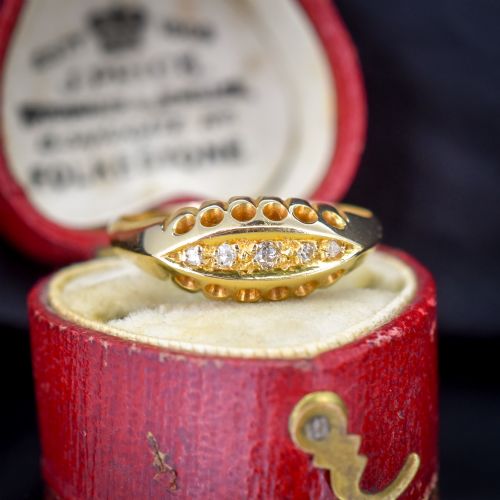
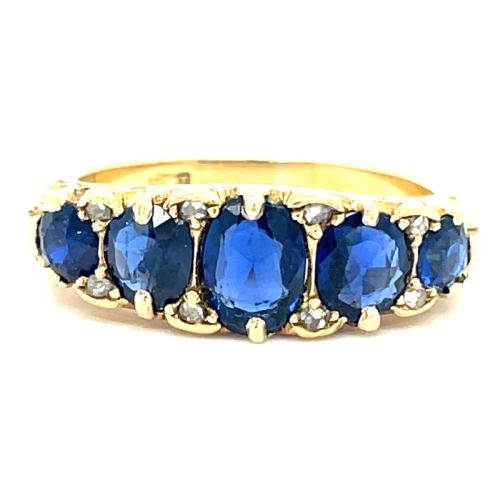
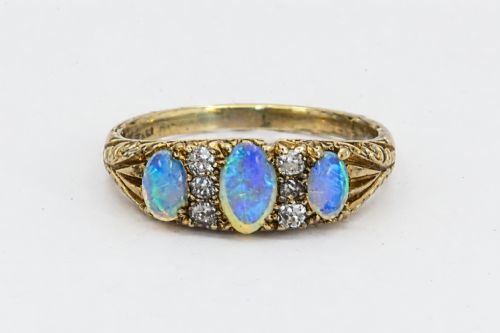
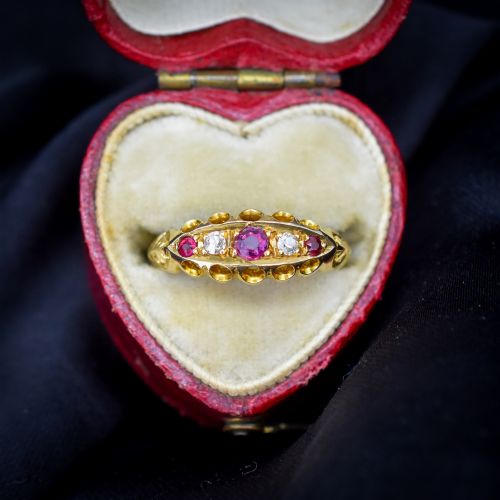
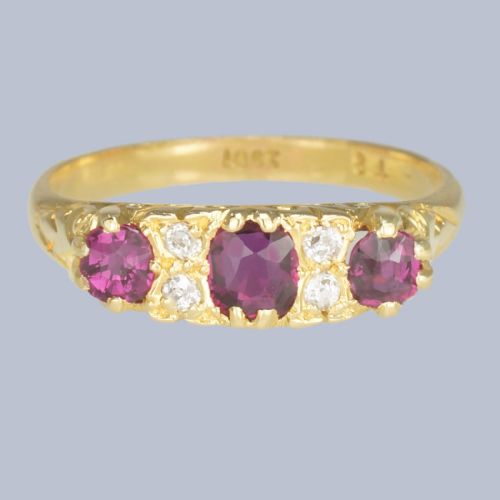
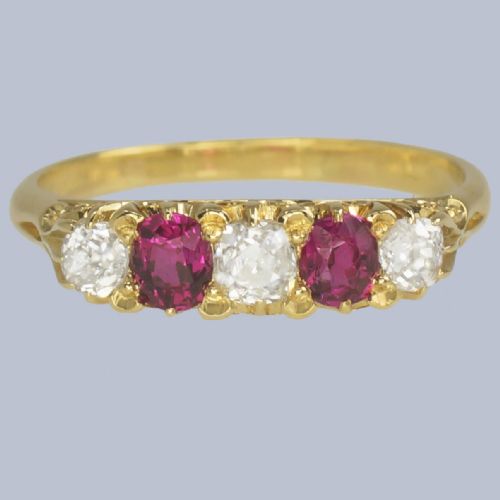
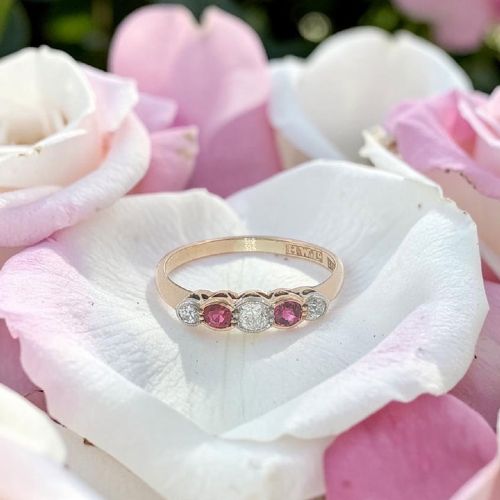
A five stone carved band presents a linear arrangement of gems set across the finger, a format seen frequently in late Victorian, Edwardian, and early twentieth-century jewellery. These rings often combine diamonds with coloured stones such as rubies, sapphires, opals, and amethysts, mounted in symmetrical half-hoop or boat-shaped settings.
The profile typically involves carved shoulders or engraved band details leading up to the stones, merging structure with ornament. Most examples encountered here date from the late nineteenth century through to the mid-century eras, reflecting periods of skilled British provincial assay office hallmarking.
Distinctions in craftsmanship and materials
Quality rests in the matching and cut of the stones, particularly the presence of old-cut or old-mine diamonds alongside vibrant, well-matched rubies or sapphires. Uniformity in stone size and depth elevates the visual harmony across the finger.
The crispness of the carved details on the gold band and the clarity of full hallmarks stamped by assay offices indicate the level of original workshop execution and subsequent preservation.
Five Stone Carved Band Retail Price Guide 2026
Typical asking prices for five stone carved band among the pieces listed under this phrase on Sellingantiques today, from the lower quarter to the upper quarter. They describe what is for sale here now, not the wider market.
Listings span periods from the late 19th century through the Victorian, Edwardian, and mid-century eras, utilising 18ct gold, platinum, diamonds, and opals.
The Five Stone Carved Band Glossary
- Old cut
- A vintage diamond cutting style characterised by a smaller table, higher crown, and open culet, designed to catch candlelight.
- Boat ring
- A ring setting shaped like a traditional boat hull, curving gently to house a cluster or line of stones.
- Navette
- A boat-shaped or eye-shaped setting type that tapers to points at either end along the finger.
- Half hoop
- A ring design where stones span only the upper half of the band rather than encircling the entire finger.
- Hallmark
- An official stamp applied by an assay office to indicate metal purity, origin city, and the year of testing.
Five Stone Carved Band: Frequently Asked Questions
What is a five stone carved band?
A five stone carved band is a ring featuring a row of five gemstones mounted across the top of a patterned or engraved gold band. These pieces were popular during the Victorian and Edwardian eras.
They combine linear gem settings with decorative metalwork on the shoulders, creating a balanced profile designed to sit flat against the finger.
How do I date these rings?
Dating relies heavily on official assay office hallmarks stamped inside the gold band, which indicate specific years and towns of manufacture. Stylistic clues such as boat-shaped settings and old-cut diamonds also point to late nineteenth and early twentieth-century periods.
Comparing the stone combinations and shoulder carvings helps narrow the era from Victorian through to mid-century designs.
Can I wear these rings daily?
These rings were built for daily wear using durable 18ct gold settings, though softer stones like opals require extra care against hard impacts. Regular inspection of the claw settings helps secure the gems over time.
Removing the ring during manual tasks protects the carved band details and prevents unnecessary wear on the gemstone surfaces.
What stones are typically used?
Diamonds frequently appear alongside coloured gemstones including rubies, sapphires, opals, amethysts, and turquoise. These stones are often arranged in alternating patterns or centred in boat-shaped mounts.
Combinations varied according to the jeweller's design and the client's preference during the Victorian and Edwardian periods.