
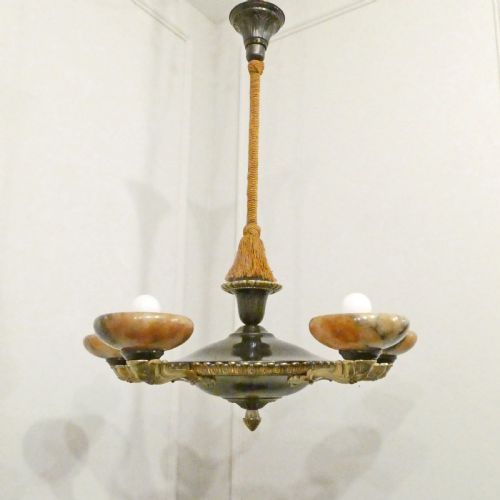
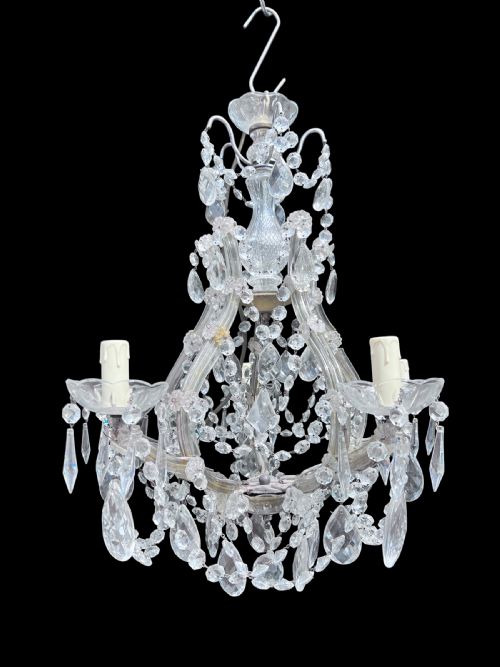
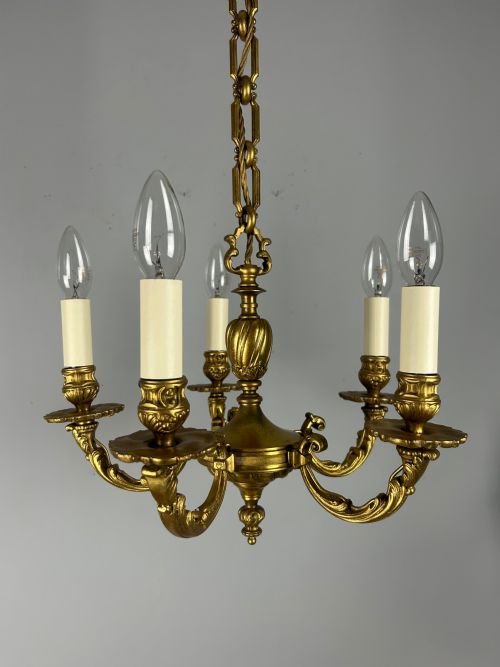
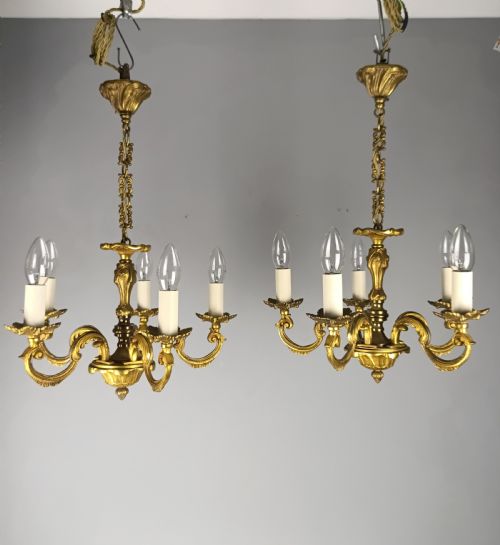


Five Light Chandelier
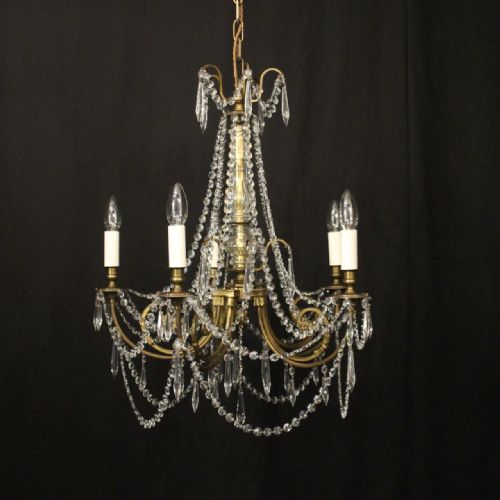
A five light chandelier brings balanced illumination and presence to a room, drawing the eye upward with five distinct arms or branches.
Five Light Chandelier
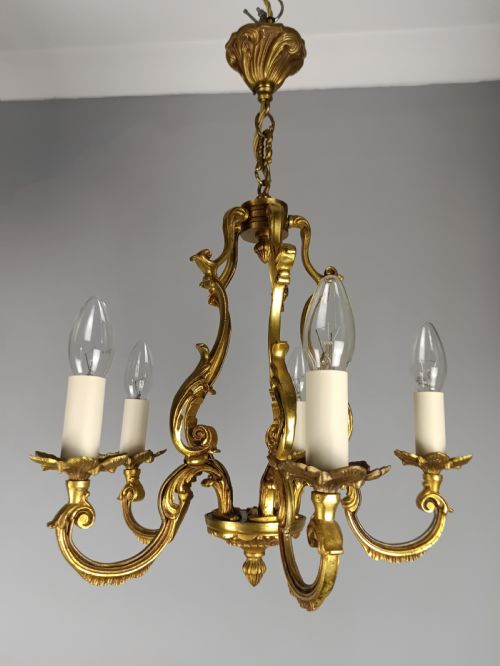
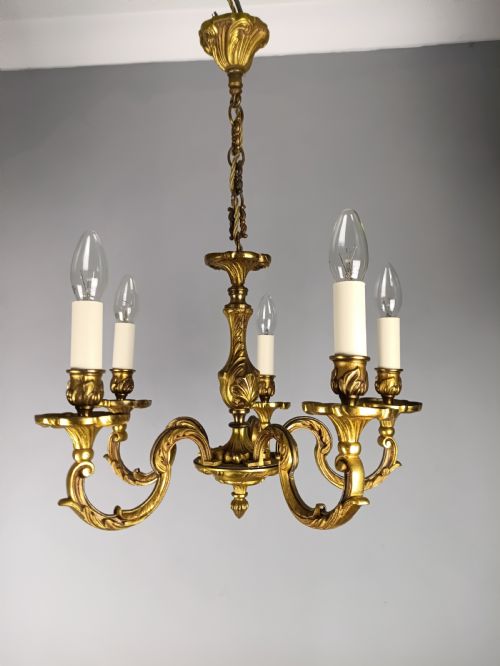
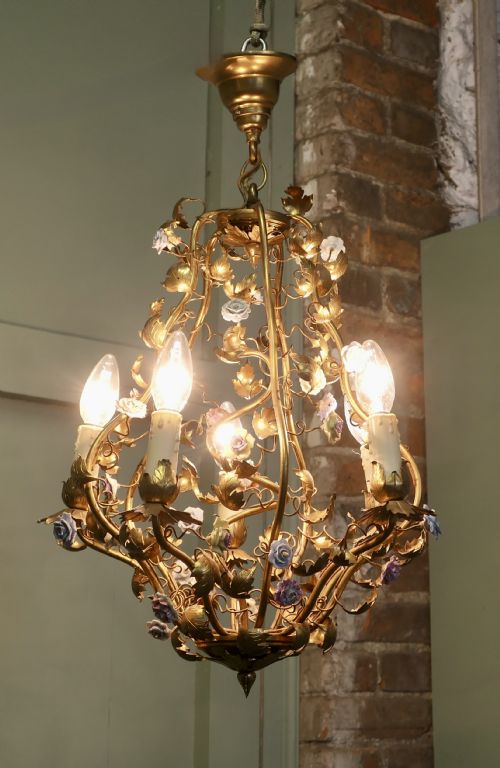
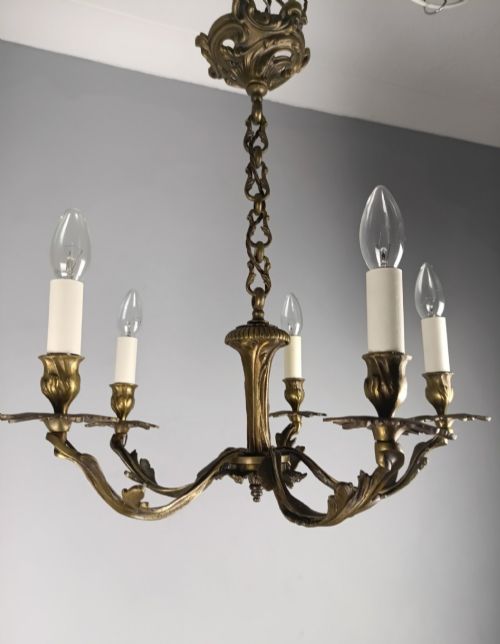
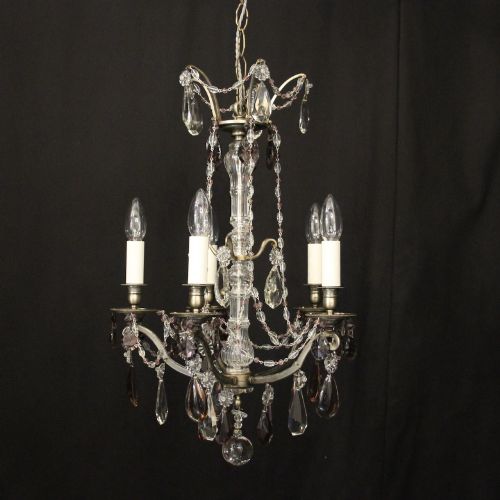
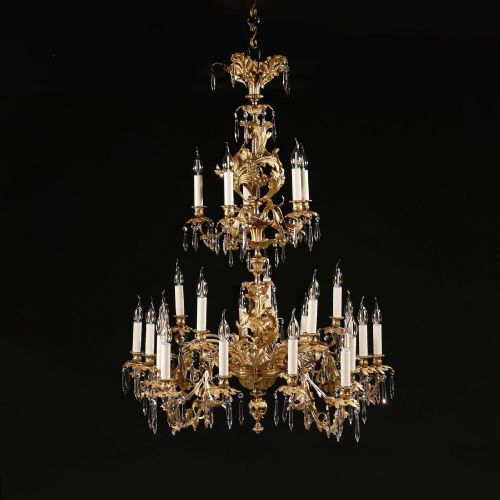
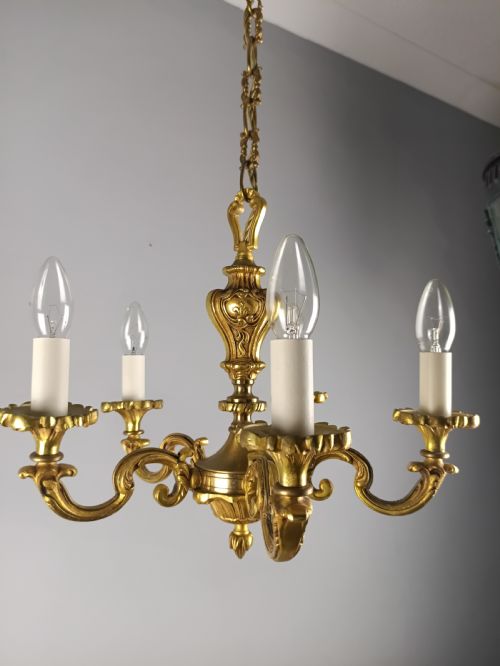
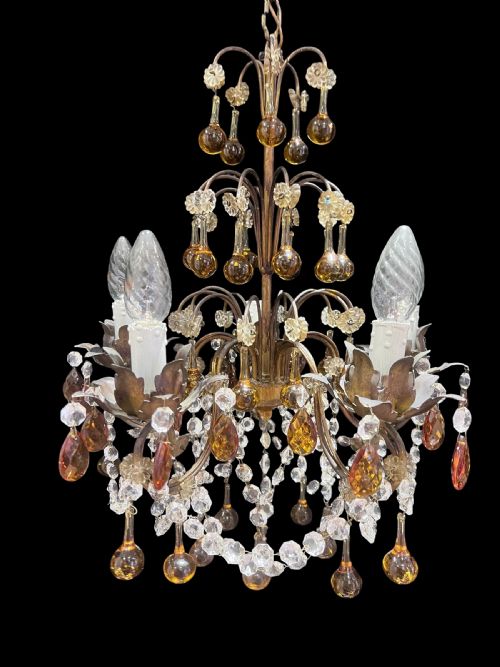
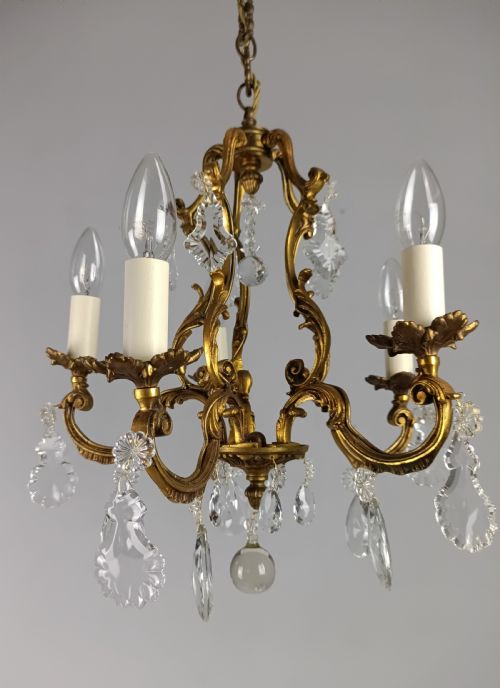
When searching for a five light chandelier, buyers encounter a range of period forms spanning the eighteenth century through to the interwar decades of the twentieth century. French provincial and Parisian designs dominate the selection, often taking the form of gilt bronze, brass, or painted toleware fitted with ceramic flowers and crystal drops.
Beyond French country and chateau styles, the selection includes Italian Florentine giltwood frames, English Edwardian brass and silver plated fixtures, and geometric Art Deco tiers. The consistent element across these diverse origins is the five arm or five bulb configuration distributing light across a central stem.
Most pieces date from the early twentieth century, specifically the 1920s and 1930s, alongside nineteenth century revivals of Rococo and Baroque tastes. Buyers find everything from patinated bronze and dark metal frames to heavily gilded mounts enriched with cut glass and coloured crystals.
Materials and construction methods
Metals form the structural backbone of these fixtures, with founders utilising cast bronze, brass, gilt metal, and wrought iron to shape the branches and central stems. Gilding, silver plating, and patination were applied to these metal surfaces to achieve specific decorative sheens.
Glass and crystal elements complement the metalwork through cut drops, beads, and moulded shades that refract the illumination. In toleware and ceramic examples, artisans painted floral motifs by hand onto sheet metal and earthenware components.
Five Light Chandelier Retail Price Guide 2026
Typical asking prices for five light chandelier among the pieces listed under this phrase on Sellingantiques today, from the lower quarter to the upper quarter. They describe what is for sale here now, not the wider market.
Listings feature brass, gilt bronze, and crystal materials across periods ranging from the eighteenth century to the 1930s.
Distinctions in craftsmanship
Quality rests in the crispness of the metal casting and the depth of the chasing, where finer examples show sharp detail in leaf scrolls and figural mounts rather than softened edges. The integration of hand cut crystal drops and substantial gauge brass or bronze separates superior pieces from lighter, mass produced alternatives.
Surface finishes also determine standing, as genuine fire gilding or well preserved mercury gilt retains a warmth and lustre that simple modern paint cannot replicate. The structural integrity of the arm junctions and the weight of the supporting ceiling components dictate the overall durability of the fixture.
The Five Light Chandelier Glossary
- Toleware
- Painted sheet metal used for decorative floral and foliate elements. It appears frequently in French country lighting of the early twentieth century.
- Gilt bronze
- Copper alloy coated with a thin layer of gold, often termed ormolu in French pieces. This finish provides a durable golden surface that resists tarnishing.
- Cut glass
- Glass shaped and faceted on a wheel to increase light refraction. It catches and scatters illumination from the bulbs across the room.
- Florentine
- A decorative style originating in Italy characterised by carved giltwood, scrollwork, and organic leaf motifs. These frames often lack central glass bowls in favour of open arm structures.
- Bobeche
- The drip pan or small saucer positioned beneath the candle socket or bulb holder. It catches wax in older designs and diffuses light in crystal configurations.
Five Light Chandelier: Frequently Asked Questions
How high should I hang a five light chandelier?
Suspension height depends on the room function and whether the fixture hangs over a piece of furniture or an open floor. In general walkways, the bottom of the chandelier clears the floor by at least seven feet.
When placed above a dining table, the lower rim sits lower, typically thirty inches above the tabletop to provide intimate illumination without blocking conversation.
Can these antique chandeliers use modern wiring?
Most antique fixtures require rewiring to meet contemporary electrical standards before installation in a modern home. Professional electricians can adapt the internal channels to house standard lamp holders safely.
Original frames retain their structural historic value while accommodating modern wiring and LED bulbs when handled by a specialist restorer.
Are these chandeliers heavy to install?
Weight varies significantly depending on the materials, with solid bronze, heavy crystal, and cast iron models requiring substantial ceiling support. Lighter brass and toleware fixtures place fewer demands on structural timber.
Heavy pieces need a dedicated steel ceiling joist or a heavy duty mounting box rather than standard plasterboard fixings to bear the load safely.