

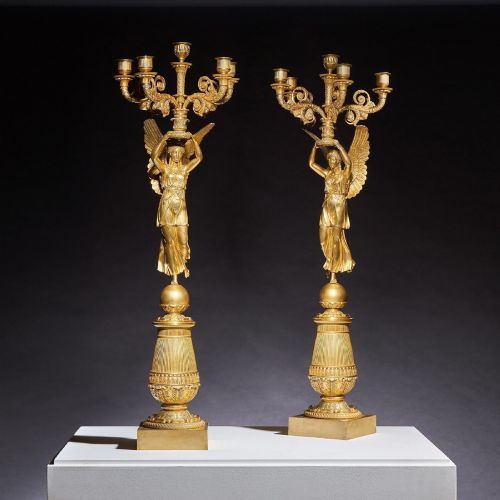
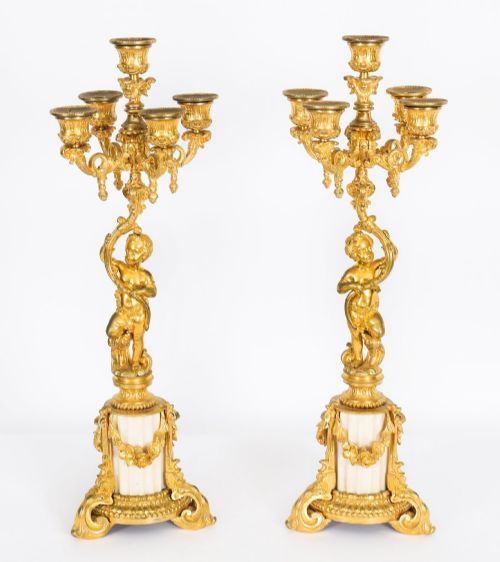
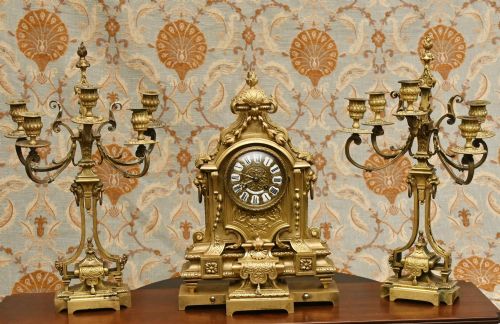
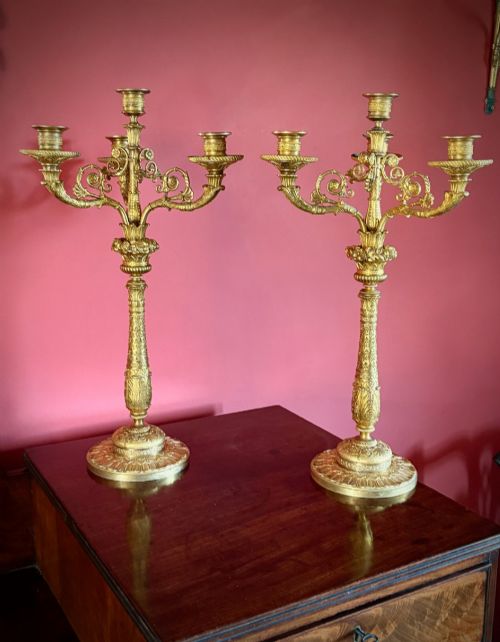


Five Light Bronze Candelabra
These five light bronze candelabra bring genuine nineteenth-century presence to a mantelpiece or side table.
Five Light Bronze Candelabra
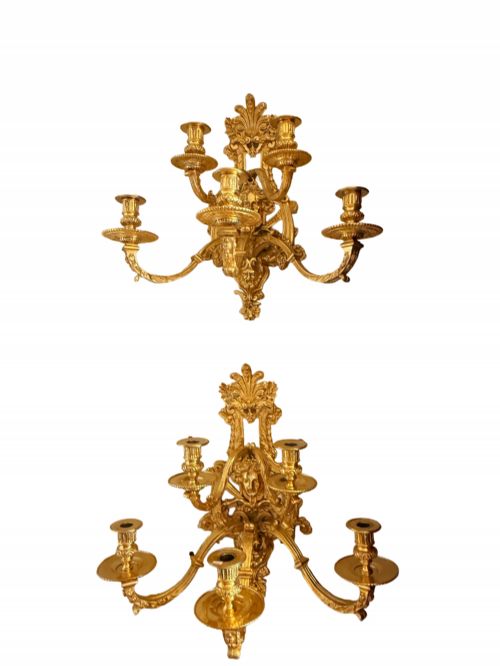
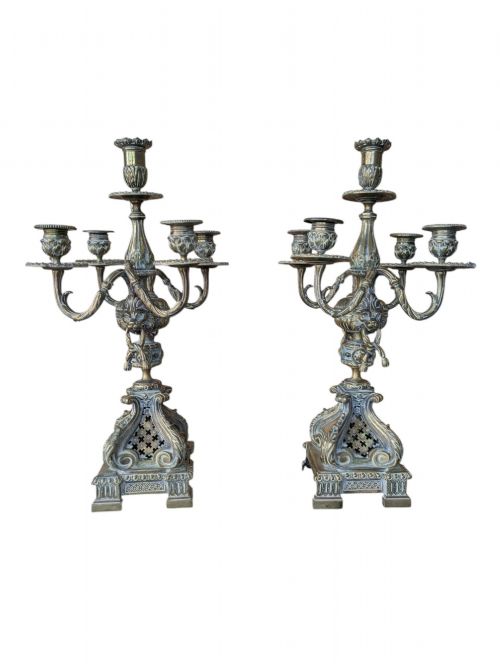
When you search for five light bronze candelabra, you find branched lighting fixtures designed for five candles, most frequently encountered as pairs dating from the nineteenth century. These objects include freestanding table candelabra alongside wall-mounted sconces and occasional clock garniture components, spanning periods from the eighteenth century through to the early twentieth century.
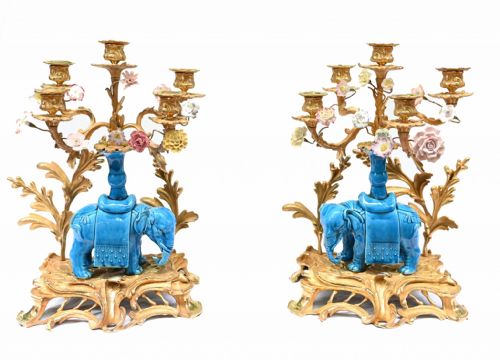
The aesthetic vocabulary draws heavily on French design movements, notably the Empire, Louis XIV, Louis XVI, and Rococo Revival styles, alongside Victorian interpretations. Alongside standard bronze and patinated bronze, listings incorporate gilt bronze, ormolu, gilded brass, and marble elements, occasionally incorporating porcelain or cherub figures.
Freestanding examples typically feature a central stem rising from a decorative base to support multiple candle nozzles, while wall lights attach directly to vertical surfaces. These pieces served both practical illumination and decorative display in period interiors, remaining functional decorative items for modern rooms.
Evaluating Quality
Quality rests upon the crispness of the metal chasing and the depth of the original gilding or patination. Finer examples display sharp, detailed casting in the foliage and figurative elements, whereas lesser pieces show softer contours and simpler surface treatments.
The integration of materials also defines the standard of a piece, such as the weight and selection of the marble base or the precise fit of the removable drip pans and nozzle branches. Heavier, more substantial castings with unified stylistic schemes sit at the upper end of the range.
Five Light Bronze Candelabra Retail Price Guide 2026
Typical asking prices for five light bronze candelabra among the pieces listed under this phrase on Sellingantiques today, from the lower quarter to the upper quarter. They describe what is for sale here now, not the wider market.
Cherubs and putti frequently peer out from the candle branches, keeping watch over the mantelpiece.
Pierre Philippe Thomire·AD Mougin Paris
The Five Light Bronze Candelabra Glossary
- Ormolu
- A method of applying finely ground gold amalgam to a bronze object, followed by firing to drive off the mercury. This technique creates a durable golden finish seen on many French decorative items.
- Candelabra
- A branched candlestick designed to hold multiple candles at once. These fixtures typically feature a central shaft dividing into several arms ending in individual nozzles.
- Garniture
- A set of ornamental objects designed to be displayed together, commonly comprising a clock flanked by matching candelabra or vases on a mantelpiece.
- Patinated Bronze
- Bronze that has been chemically treated to alter its surface colour, ranging from deep brown to near black. This finish protects the metal and provides a stable visual tone.
- Chasing
- The manual process of refining a cast metal surface using small punches and hammers. Artisans use this technique to add texture, sharpen details, and correct minor casting flaws.
Five Light Bronze Candelabra: Frequently Asked Questions
How do I clean bronze and ormolu?
Dust gently with a soft, dry cloth to remove surface particles. Avoid chemical polishes and abrasive cleaners, as these can strip the delicate gilt layer on ormolu surfaces.
Keep the metal away from direct moisture and sources of excessive heat. Professional conservation is advisable if deeper cleaning becomes necessary.
Were these electrified later?
Many nineteenth-century candelabra were converted to electricity during the twentieth century to serve as table lamps or wall sconces. Some retain their original candle-only configuration without wiring alterations.
Check individual listings to see whether the piece holds standard candle fittings or electrical wiring. Reversible conversions allow modern use while preserving the physical structure.
How do I date a pair of candelabra?
Dating relies on stylistic clues, casting methods, and the specific materials used in the base and stem. Pieces exhibiting heavy chasing and distinct Rococo Revival or Empire motifs typically point to the nineteenth century.
Maker marks, where present on the bronze or clock movements, offer precise chronological reference points. Stylistic restraint or exuberance helps separate eighteenth-century work from later revivals.