


Fitted Mirrored Armoire
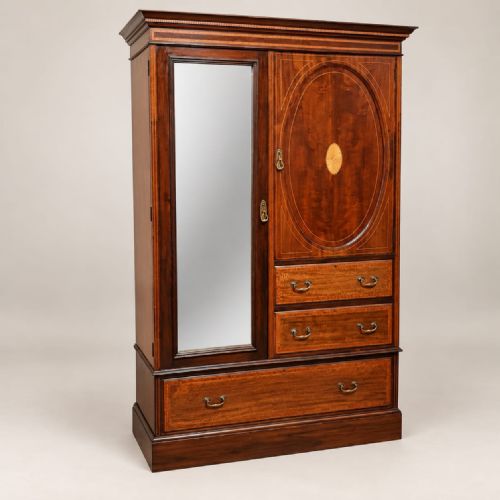
A fitted mirrored armoire offers substantial storage space behind large glass panels that open up a bedroom.
Fitted Mirrored Armoire
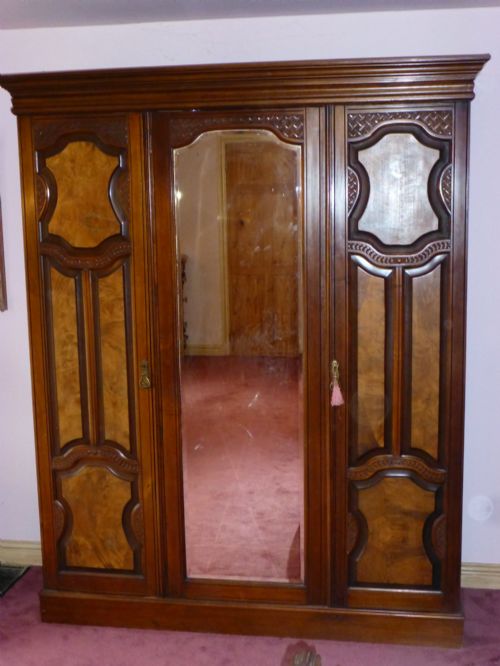
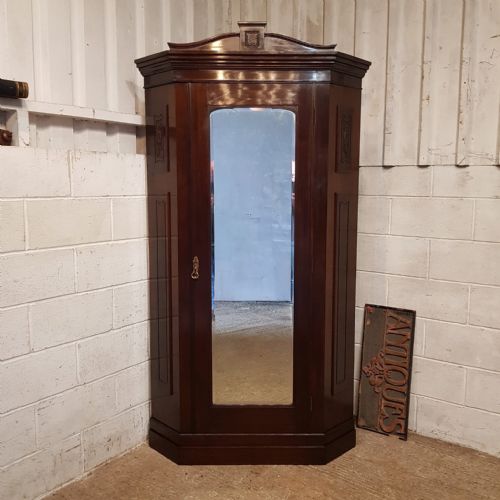
A fitted mirrored armoire is essentially a large wardrobe or compactum designed to hold clothing with hanging space, drawers, and shelving. You will most frequently encounter these pieces in Victorian and Edwardian iterations, spanning the nineteenth century through the early twentieth century.
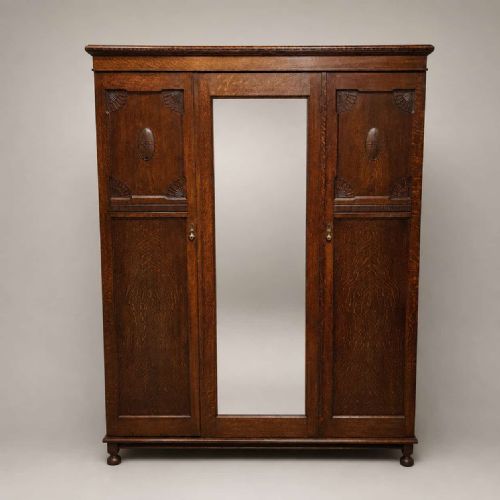
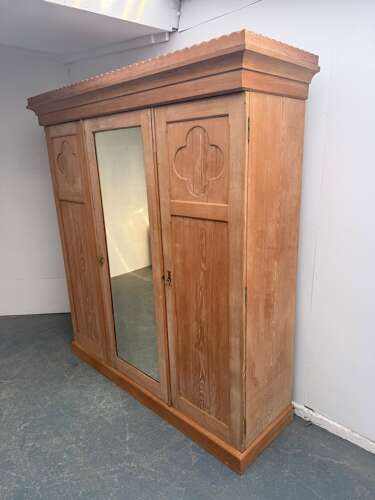
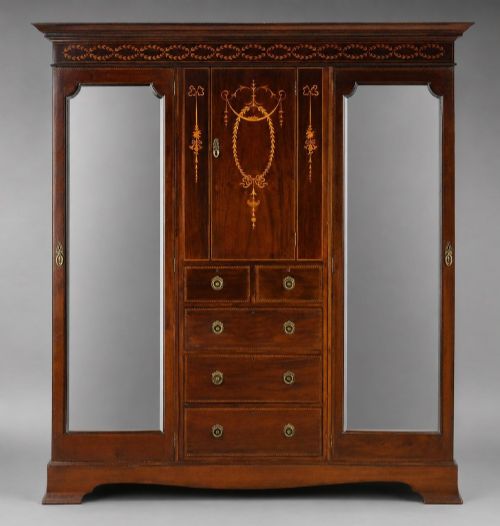
The configurations vary from single door units to expansive triple and breakfront wardrobes. Many examples incorporate central mirrored doors flanked by hanging compartments or internal drawers.
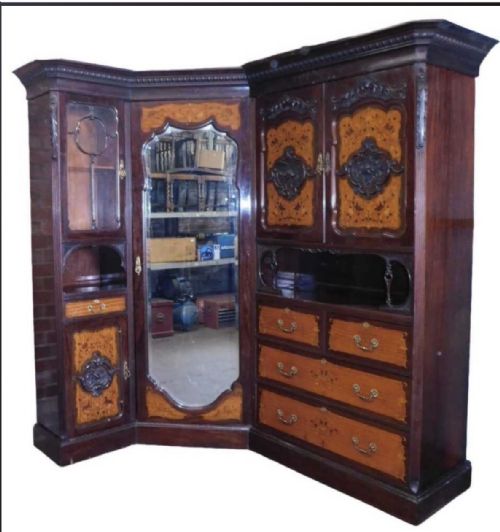
Makers utilised various formats including corner units, bow fronts, and combination pieces that integrated multiple storage functions into a single large cabinet.
Materials and construction
Cabinet makers built these wardrobes using substantial hardwoods such as mahogany, oak, walnut, and satinwood, often accentuating the exteriors with burr walnut, pollard oak, or satin birch veneers. Brass hardware provided functional hinges and locks, while glass plates formed the large central mirrors.
Decorative techniques recorded on these pieces include marquetry inlay, delicate satinwood stringing, and carved detailing reflecting Arts and Crafts, Aesthetic Movement, or Jacobean Revival styles.
Some gentleman's wardrobes include hidden compartments designed specifically for storing top hats and stiff collars.
Distinctions in quality
Quality in a fitted mirrored armoire rests upon the selection of timber veneers and the precision of the cabinetwork. Pieces produced by established workshops demonstrate superior timber matching, intricate marquetry inlay, and robust internal framing that supports heavy mirrored doors.
Simpler versions rely on plain oak or pine with straightforward panel construction, whereas high-end compactums integrate complex internal drawer arrangements, brass fittings, and superior figured woods like burr walnut.
Holland and Sons·Maple & Co·Gillows of Lancaster
The Fitted Mirrored Armoire Glossary
- Compactum
- A large multi-section wardrobe designed to provide comprehensive clothing storage, often combining hanging space, drawers, and shelving in one unit.
- Combination wardrobe
- A fitted storage piece that integrates different internal compartments such as linen presses, hanging spaces, and drawers behind matching doors.
- Marquetry
- The art of applying decorative veneer pieces in wood to create patterns and pictures on the surface of furniture.
- Breakfront
- A cabinet design where the central section projects forward from the flanking outer sections.
- Satinwood
- A hard, durable timber with a characteristic golden-yellow sheen, frequently utilised for inlay work and cabinet veneers.
Fitted Mirrored Armoire: Frequently Asked Questions
How do I clean the mirror glass safely?
Use a soft cloth and a gentle glass cleaning solution applied to the cloth rather than directly onto the mirror surface. This prevents moisture from seeping behind the silvered backing.
Avoid abrasive materials that might scratch the old glass or damage the surrounding wooden frame.
Can these large wardrobes be dismantled?
Many Victorian and Edwardian triple wardrobes and compactums were constructed to be taken apart for transport and installation. They typically utilise a cornice, a base, and separate side and central carcase sections joined by bolts or interlocking fittings.
Professional assembly is often recommended to ensure the heavy mirrored doors hang correctly and square within the frame.
What is the difference between an armoire and a wardrobe?
Traditionally, an armoire is a tall cupboard with doors enclosing shelves or hanging space, originating as a container for arms or armour. In modern antique terminology, the terms are frequently used interchangeably to describe large clothes storage cabinets.
Fitted mirrored armoires on this page typically refer to large wardrobes featuring integrated mirrors on the doors.
Where should I place a mirrored wardrobe?
Position the piece against a sturdy interior wall away from direct sunlight and strong heat sources that could dry out the timber or crack the veneers. Placing it opposite a window will help the mirror reflect natural light deep into the room.
Ensure the floor beneath is level so the large doors swing freely without binding.