


Fitted Home Bar Cabinet
These fitted home bar cabinet designs offer proper period storage for glassware and bottles, bringing vintage style straight into the modern dining or living room.
Fitted Home Bar Cabinet
A fitted home bar cabinet serves as a dedicated station for entertaining, designed specifically to house bottles, decanters, and glassware behind secure doors. These pieces date across several decades, ranging from nineteenth-century chests to early twentieth-century designs.
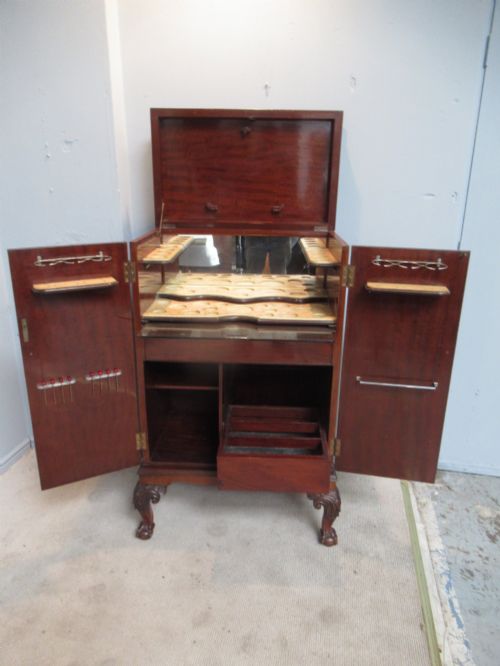
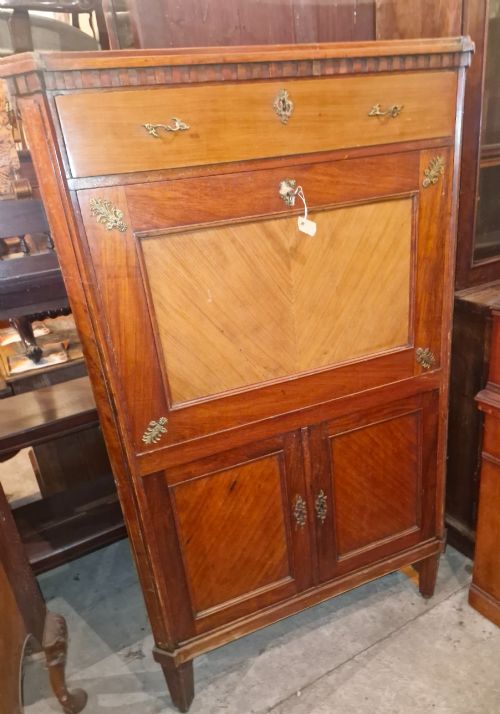
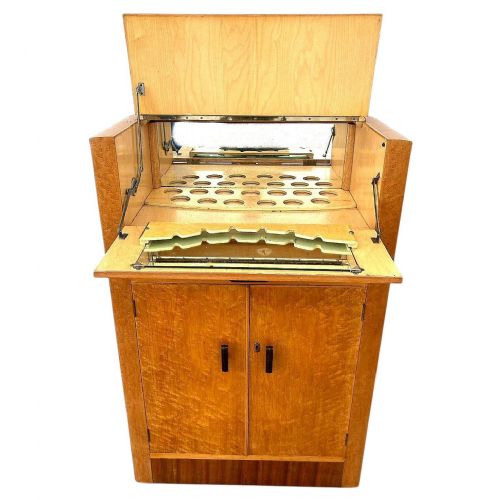
The selection on this page relies heavily on the nineteen-thirties Art Deco period, alongside earlier revival styles. Buyers encounter cocktail cabinets, drinks cabinets, and secretary chests equipped with internal fittings tailored for hospitality.
Walnut, burr walnut, and mahogany form the backbone of these pieces, often paired with specialist glass and mirror work. The forms vary from streamlined geometric fronts to traditional revival cabinetwork.
How they were made
Cabinetmakers utilised rich timber veneers such as burr walnut, bird's-eye maple, and figured walnut over sturdy carcases to create striking grain patterns on the exterior facades. Solid mahogany also appears on revival pieces, showing traditional joinery and carving.
Interiors incorporate fitted mirror panels, glass shelves, and specialised pull-down writing or mixing surfaces alongside chrome and brass hardware. Bakelite and specialised metal accents occasionally surface on the inter-war pieces, marking the period's shift toward modern industrial materials.
The listings span from the mid-nineteenth century through the nineteen-thirties, showing a strong concentration of Art Deco walnut designs.
What varies in quality
Quality rests in the choice of timber veneer and the precision of the internal fittings, where master cabinetmakers matched grain patterns across entire fronts. Superior examples balance imposing exterior presence with intricately organised interior compartments designed for practical service.
The complexity of the internal mirror work, lighting provisions, and specialised pull-out mixing slides distinguish finer examples from standard production. Cabinetwork that retains its original fitted glass and secure locking mechanisms commands greater attention from collectors.
Harry and Lou Epstein
The Fitted Home Bar Cabinet Glossary
- Art Deco
- A design style spanning the inter-war years characterised by sleek geometric shapes, streamlined forms, and rich veneers. It dominates the modern selection of cocktail furniture.
- Burr Walnut
- A specialised wood cut from walnut tree growths, yielding intricate, swirling grain patterns. Cabinetmakers prize it for creating highly decorative exterior panels.
- Secretaire
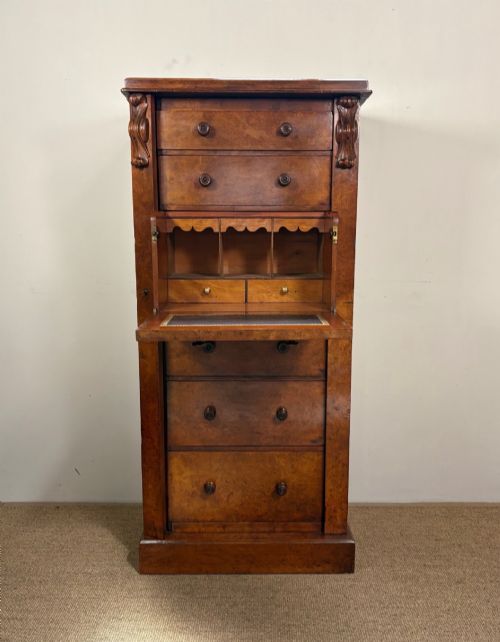
- A cabinet or chest featuring a pull-down writing flap that conceals small drawers and pigeonholes. In drinks furniture, this drop-front often doubles as a mixing surface.
- Bakelite
- An early synthetic plastic utilised for handles, fittings, and trim during the twentieth century. It offers a tactile, durable contrast to traditional wood surfaces.
- Chippendale Revival
- A decorative style inspired by eighteenth-century furniture designs, featuring mahogany construction and classical carved details. It represents the more traditional aesthetic found in these listings.
Fitted Home Bar Cabinet: Frequently Asked Questions
What is a fitted home bar cabinet used for?
These cabinets serve as specialised storage units for bottles, glassware, cocktail shakers, and mixing accessories. Their internal compartments keep everything organised and ready for entertaining guests.
Many designs include pull-down flaps that double as preparation surfaces for pouring drinks. This layout keeps the hospitality items contained neatly within a single piece of furniture.
How do I identify an Art Deco cocktail cabinet?
Art Deco models typically date from the nineteen-twenties and nineteen-thirties, featuring clean geometric lines and striking wood veneers. They often utilise burr walnut or bird's-eye maple to create symmetrical patterns on the front doors.
Inside, you will frequently find mirrored backs, glass shelves, and specialised holders for glasses. The hardware often includes chrome or polished metal details characteristic of the period.
Are these cabinets suitable for modern homes?
These cabinets fit well into contemporary living spaces, functioning as practical storage for modern glassware and spirits. Their compact footprints make them ideal for dining rooms, sitting rooms, or home offices.
Living with them requires little adjustment beyond standard wooden furniture care. The internal fittings provide the same functional utility today as they did nearly a century ago.
How do I tell different periods apart?
Earlier nineteenth-century examples often lean toward traditional revival styles, utilising solid mahogany and classical proportions. They frequently take the form of secretary chests with hidden compartments.
Twentieth-century pieces embrace the inter-war aesthetic with exotic veneers and streamlined silhouettes. The presence of chrome, mirrored interiors, and geometric symmetry usually points straight to the nineteen-thirties.