


Fitted Drawer Chest
When you handle a fitted drawer chest, you find clever internal compartments designed to organise papers, writing materials, and personal valuables.
Fitted Drawer Chest
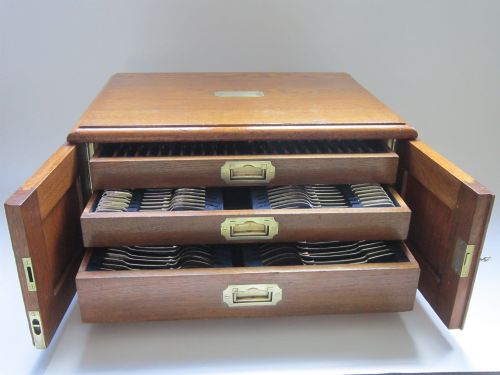
A fitted drawer chest combines standard storage with specialised internal compartments, compartments that often pull out to reveal small pigeonholes, concealed wells, or integrated writing surfaces. When buyers search for a fitted drawer chest, they encounter pieces spanning the Georgian, Regency, and Victorian periods, alongside Edwardian and later examples.
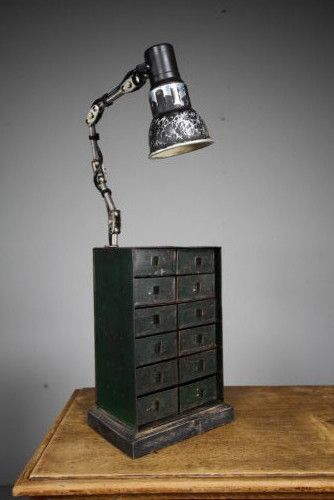
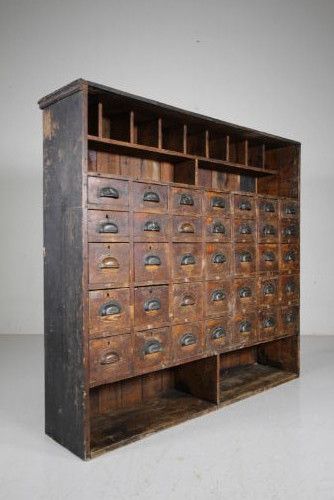
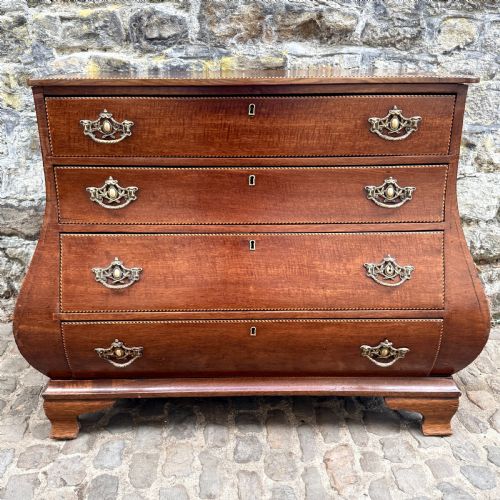
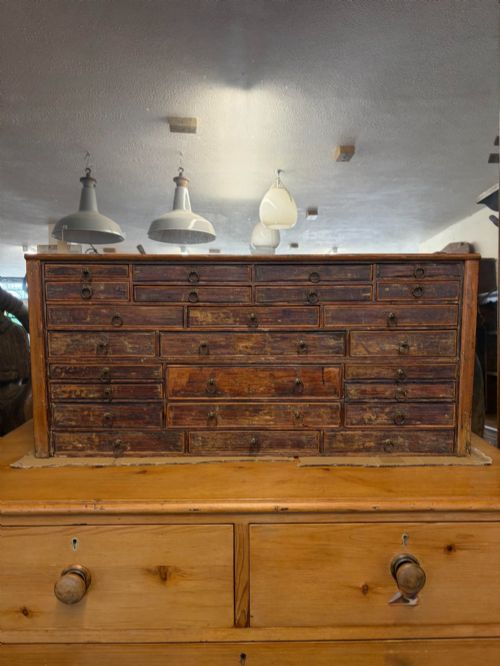
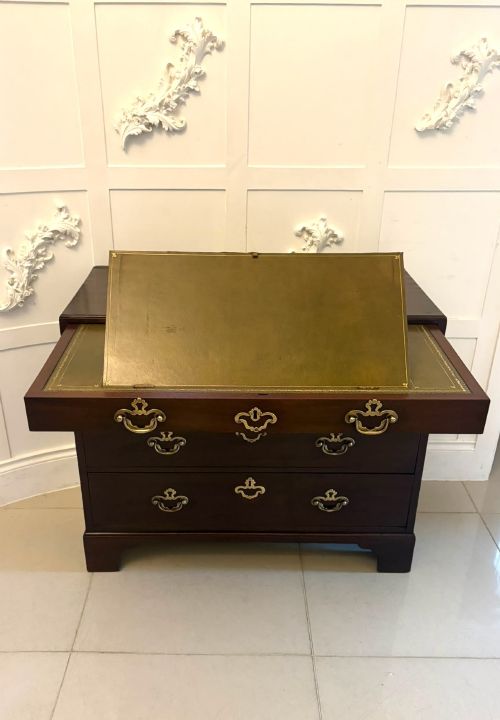
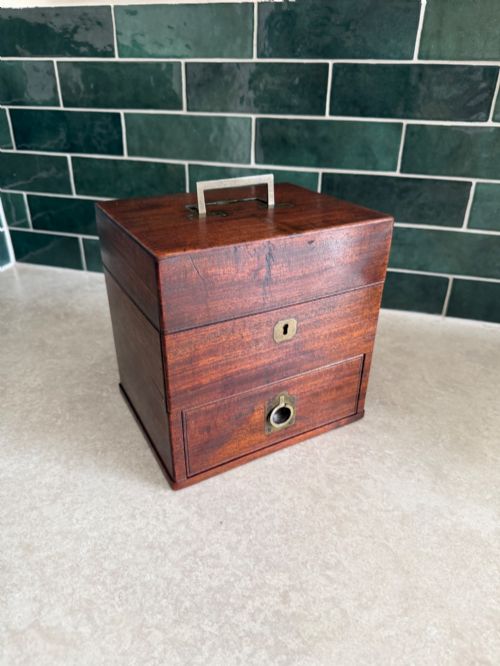
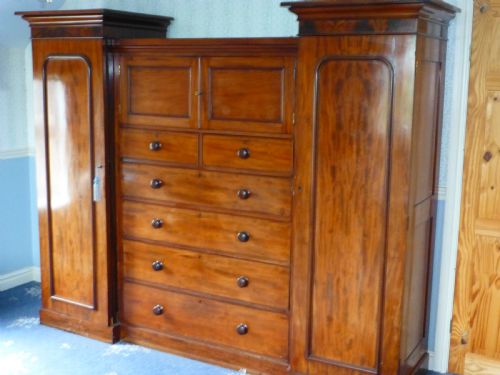
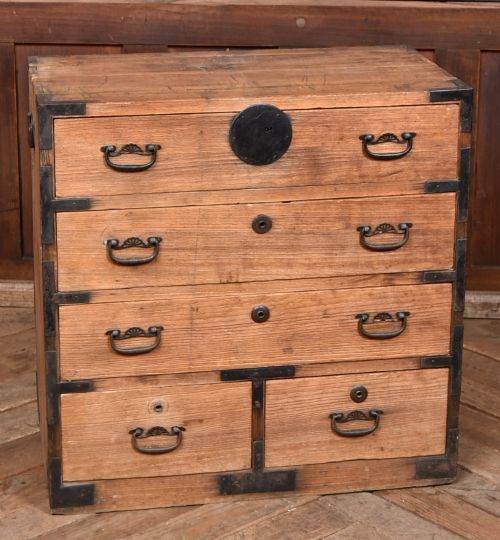
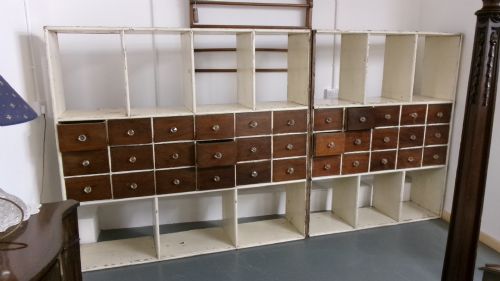
The forms vary considerably across the selection, ranging from traditional mahogany tallboys and secretaire chests to industrial banks of drawers, apothecary boxes, and shop fittings made of pine or walnut. Many incorporate drop-front writing drawers or fitted top drawers equipped for dressing or stationery use, reflecting the specific domestic or commercial needs of their original makers and users.
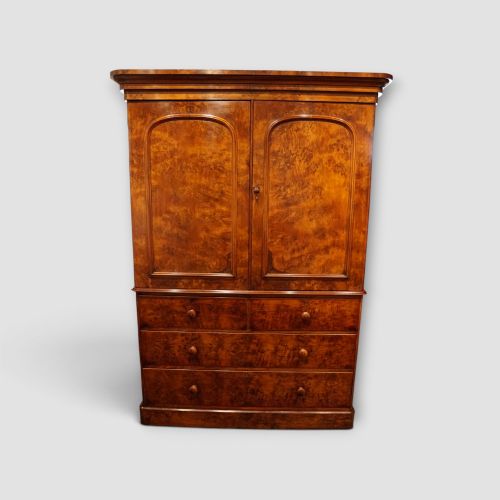
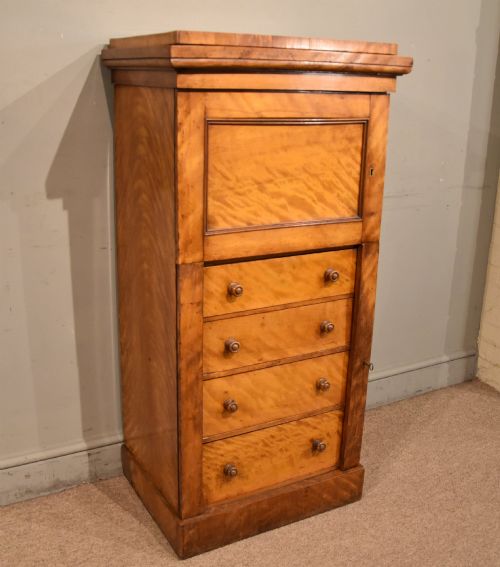
Georgian and Regency iterations lean towards fine mahogany, burr walnut, and satin birch, often featuring serpentine fronts or complex internal writing slides. Victorian examples frequently expand into larger banks of drawers, campaign pieces in brass-bound timbers, or painted shop fittings designed for heavy mercantile service.
How they were made
Cabinet makers constructed these pieces primarily using dense timbers such as mahogany, walnut, rosewood, and pine, frequently pairing structural hardwoods with secondary woods like oak for drawer linings. Joinery techniques relied on hand-cut dovetails for drawer construction and sturdy mortise and tenon joints for frames.
Hardware played an essential structural and decorative role, with brass handles, escutcheons, and campaign mounts securing corners and facilitating movement. Surface finishes ranged from polished French polish on formal mahogany and burr walnut furniture to protective painted layers on utilitarian shop fittings and pine storage units.
Chests range from single domestic writing compartments up to monumental industrial banks containing fifty distinct drawers.
What varies in quality
The standard of craftsmanship shows in the precision of the internal fittings, such as secret compartments that operate smoothly and pigeonholes assembled with fine dovetailing rather than simple butt joints. Superior examples maintain original handles, locks, and fitted interior dividers without modern replacement timber.
Timber selection dictates the finish, where choice cuts of figured mahogany, burr walnut, or rosewood veneer demonstrate superior cabinet making compared to plain or heavily patched surfaces. The integrity of the secondary woods inside the drawers and the crispness of the exterior mouldings further separate workshop standards.
Gillows·Maple and Co
The Fitted Drawer Chest Glossary
- Secretaire
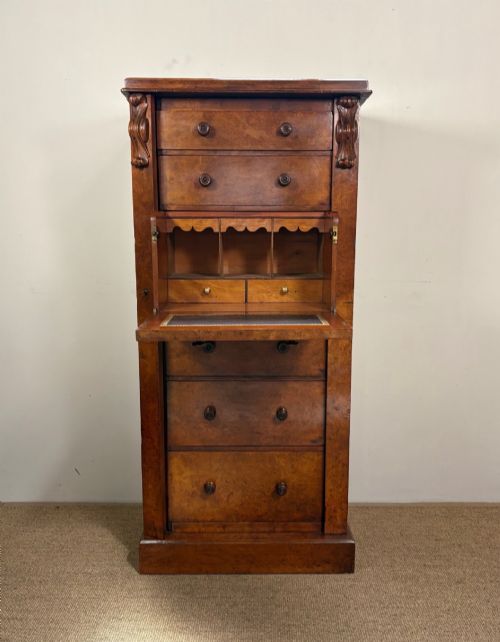
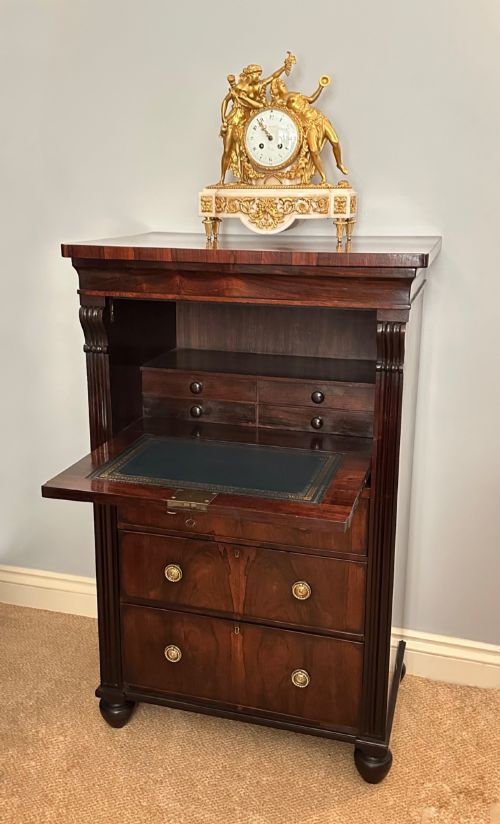
- A cabinet or chest featuring a drawer with a drop-front that reveals a writing surface and small internal drawers. This clever design conceals a compact bureau within a standard chest configuration.
- Tallboy
- A tall chest of drawers made in two sections, typically stacking a smaller chest upon a larger one. These pieces maximise vertical storage space while maintaining domestic proportions.
- Campaign chest
- Portable furniture built in sections with recessed brass handles and corner brackets designed for military transport. Officers used these robust pieces during nineteenth-century campaigns.
- Wellington chest
- A tall, slender chest of drawers secured by a hinged vertical locking sidebar that fastens with a key. This clever mechanism bars access to all drawers simultaneously.
- Bank of drawers
- A multi-drawer storage unit originally created for commercial, apothecary, or workshop use. They provide extensive compartmentalised storage through numerous uniform drawers.
Fitted Drawer Chest: Frequently Asked Questions
What is a fitted drawer chest?
A fitted drawer chest is a storage unit containing internal compartments, writing slides, or specialised trays hidden within or behind the primary drawers.
These pieces were designed to keep writing materials, valuables, or specialised tools organised and secure.
How do I spot a secretaire drawer?
A secretaire drawer looks like a standard deep drawer from the outside, but the front folds downward on hinges to create a writing desk.
Inside, you will find small pigeonholes and miniature drawers for stationery.
What woods were used?
Cabinet makers predominantly utilised mahogany, walnut, rosewood, and satin birch for formal pieces, while utilitarian pieces employed pine.
Secondary woods like oak appeared regularly inside drawer construction.
Are campaign chests heavy?
Campaign chests are built from dense hardwoods like mahogany and reinforced with heavy brass corners, making them surprisingly substantial.
They were engineered to separate into distinct sections for easier transport during travel.