
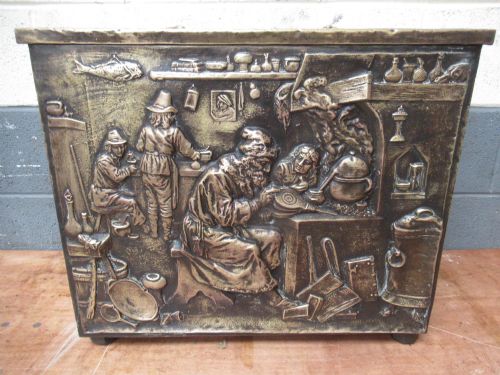


Fireside Log Chest
These fireside log chest examples hold fuel in solid wood and metal, bringing warmth and character to a hearth.
Fireside Log Chest
A fireside log chest provides practical hearth storage for timber and fuel while concealing domestic clutter. These pieces take the form of bins, boxes, and scuttles designed to sit beside a fireplace.
The selections here span from the Georgian era through to the Victorian, Edwardian, and 1930 periods. Buyers encounter variations including French Provincial examples, English oak boxes, and Belgian stores.
Forms range from military-style walnut seats and pine storage boxes to embossed copper slipper boxes and brass-mounted log bins. Each piece reflects the utility and decorative taste of its respective period.
Materials and construction
Many Edwardian and late nineteenth-century examples incorporate decorative metalwork, such as hammered copper panels and galleon designs affixed to wooden carcases. Brass mounts and hinges reinforce corners and lids, combining structural strength with visual contrast.
Assessing quality and craftsmanship
Quality rests on the integrity of the timber joinery and the gauge of the metal used in panels and linings. Thicker hardwoods and substantial metal fixings distinguish superior boxes from lighter utilitarian containers.
Artistic execution also separates standard utility pieces from finer items, seen in crisp brass mountings, detailed embossing on copper surfaces, and thoughtful proportion. The harmony between wood bodies and applied metal decoration defines the upper tier of these hearth accessories.
The Fireside Log Chest Glossary
- Fireside Storage
- Containers specifically built to hold fuel near a hearth. These include bins and boxes meant to keep wood and coal tidy.
- Slipper Box
- A lidded wooden box, often metal-lined or embossed, traditionally used for storing slippers or fuel. They frequently feature sloping lids and carry handles.
- Aesthetic Movement
- A late nineteenth-century design style emphasising visual beauty over narrative or moral themes. Pieces from this period often display refined craftsmanship and stylized ornamentation.
- Arts and Crafts
- A design movement valuing traditional handcraft, simple forms, and honest materials. Log boxes in this style typically showcase visible metal panels and hand-beaten textures.
Fireside Log Chest: Frequently Asked Questions
What is a fireside log chest used for?
These chests serve primarily to store firewood, kindling, or coal beside an active fireplace. They keep fuel dry and organised while containing stray bark and dirt.
Beyond pure utility, they function as decorative furniture pieces that complement hearth surrounds and period interiors.
How do I date a log box?
Dating relies on identifying the prevailing timber, construction methods, and stylistic cues present in the piece. Georgian examples often show simpler, robust joinery, whereas Victorian and Edwardian items frequently employ applied brass mounts or embossed copper.
Matching the design characteristics to periods like the Aesthetic Movement or Arts and Crafts helps narrow the timeframe of manufacture.
Are these chests suitable for coal as well as logs?
Many historic bins and scuttles were built to accommodate coal alongside wood, often featuring metal linings or inserts to protect the timber. These metal interiors contained coal dust and prevented moisture transfer from damp fuel.
Inspection of the interior reveals whether a box originally held heavy coal or lighter logs.
Where should I place a log box in a room?
A log chest belongs immediately adjacent to the fireplace or stove for convenient access to fuel during use. Their decorative exteriors in oak, walnut, or copper allow them to sit openly as part of the room's seating area arrangement.