


Arts and Crafts Coffer
An arts and crafts coffer brings solid oak and simple ironwork into a room, offering both storage and the weight of the movement.
Arts and Crafts Coffer
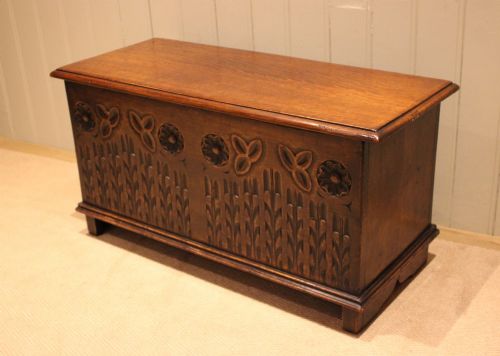
When you search for an arts and crafts coffer, you are looking at sturdy storage furniture made primarily from solid oak. These chests range from plain panelled designs to pieces decorated with carved details, metal straps or metal panels.
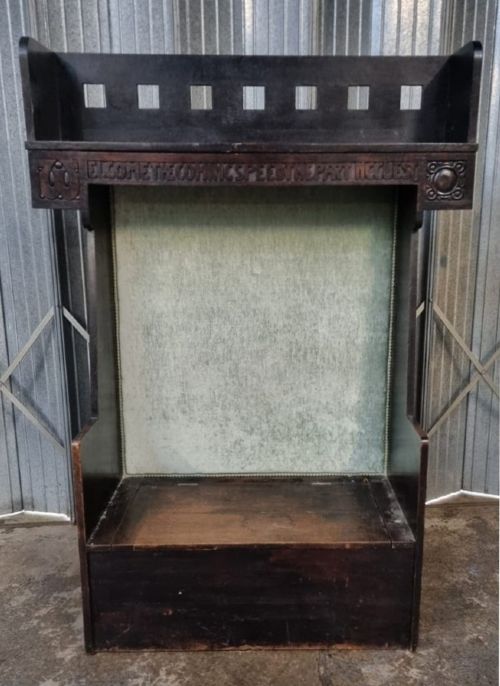
The versions you are most likely to meet on this page date from the late nineteenth century through to the mid-twentieth century. Alongside traditional coffers, the selection includes related forms such as oak chests, blanket boxes, hall seats and log bins.
Originating within the broader arts and crafts movement, these items often display regional variations, including Cotswold school influences or country house styles. They were built to be functional household objects, using honest construction methods that showcase the grain of the wood.
What varies in quality
The distinction between standard and superior pieces rests on the weight of the materials and the depth of the craftsmanship. Finer examples display thoughtful proportions, carefully selected timber boards, and hand-finished metal hardware rather than mass-produced fittings.
Carving and surface treatment also set pieces apart. Superior coffers feature crisp, deliberate hand-carving or well-executed limed finishes, whereas simpler items rely entirely on plain panels and basic construction.
Metal elements on these pieces incorporate iron, brass and copper, appearing as structural hinges, decorative straps and inset panels.
Shapland & Petter·Jack Grimble·Betty Joel
The Arts and Crafts Coffer Glossary
- Coffer
- A large wooden chest traditionally used for storing valuables or household goods. These pieces often feature hinged lids and sturdy panelled construction.
- Limed oak
- Timber treated with a specialised finish that leaves a whitish pigment in the grain. This technique highlights the natural texture of the oak.
- Cotswold school
- A regional design approach associated with twentieth-century woodworking. It emphasises simple forms, traditional hand tools and respect for the natural material.
- Coal box
- A domestic container designed for holding fuel near a fireplace. These utilitarian items often incorporate metal linings and decorative copper panels.
- Panelled
- A method of construction where thinner wood panels are fitted within a heavier wooden frame. This allows the wood to expand and contract with humidity changes without splitting.
Arts and Crafts Coffer: Frequently Asked Questions
How do I date an arts and crafts coffer?
Dating relies on examining the construction methods, wood types and hardware styles present on the piece. Pieces from the late nineteenth century often display heavier proportions and Gothic revival influences.
Later examples from the twentieth century frequently show cleaner lines, sometimes reflecting the influence of the Cotswold school or specific makers recorded in the period.
What is the difference between a coffer and a blanket box?
A coffer is traditionally a heavy wooden chest with a hinged lid, originally used for securing valuables and important household documents. They often feature robust panelled construction and iron reinforcements.
Blanket boxes serve a similar storage function but are typically lighter in build, designed specifically for linens and textiles within a bedroom setting.
Where should I place a coffer in my home?
These versatile chests suit hallways, living rooms and bedrooms alike, providing practical storage while serving as a focal point. Their flat lids allow them to function as surface display areas or impromptu seating when placed against a wall.
In living spaces, smaller variations like log bins or table cabinets integrate easily beside firesides or seating arrangements.
How do I care for solid oak furniture?
Solid oak benefits from a stable indoor environment away from direct heat sources and drastic humidity changes. Regular dusting with a soft, dry cloth preserves the natural finish without requiring heavy polishes.
Occasional application of appropriate wax helps nourish the timber and maintain the patina developed over decades of use.