


Fireside Leather Wingback
A fireside leather wingback offers deep comfort and draught-excluding wings, combining sturdy timber frames with rich hide upholstery.
Fireside Leather Wingback
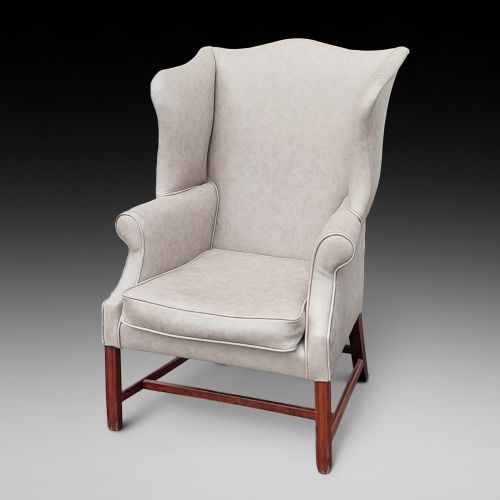
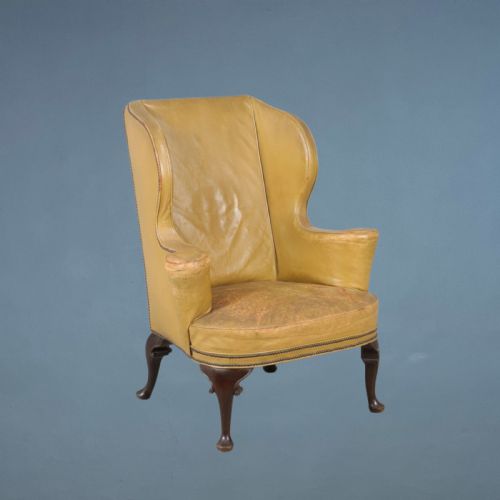
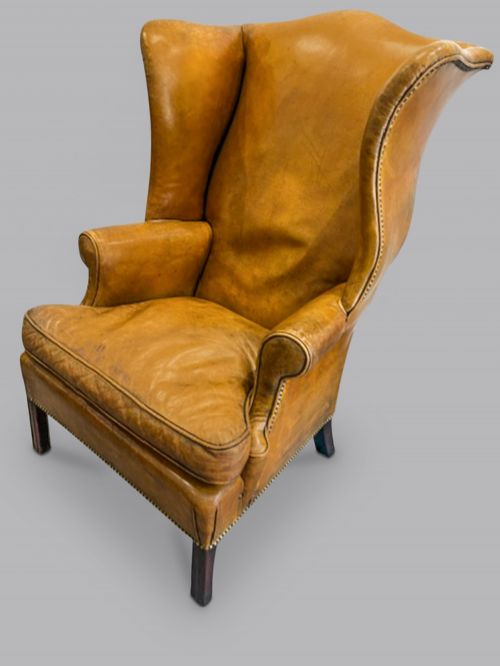
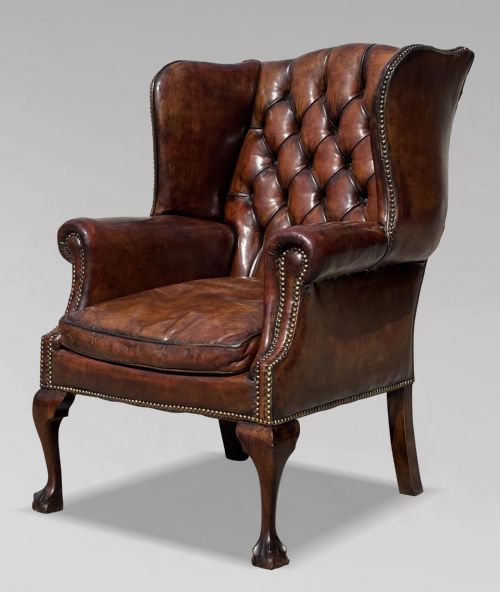
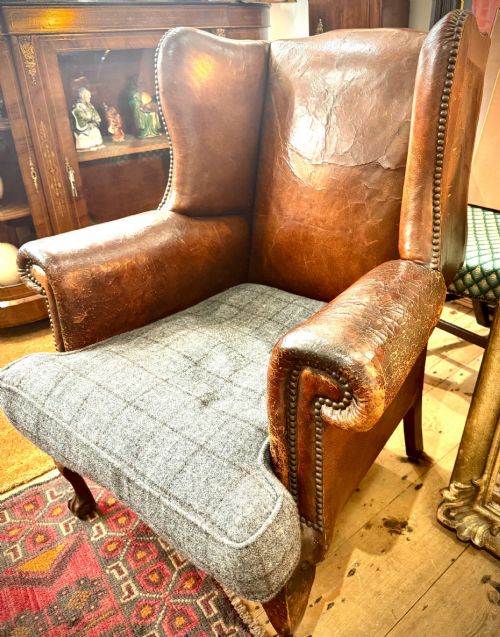
A fireside leather wingback provides a grand seating option designed to keep draughts away from the head and shoulders while seated near an open hearth. These armchairs span several distinct periods, stretching from the eighteenth century through the Victorian era and into the early twentieth century.
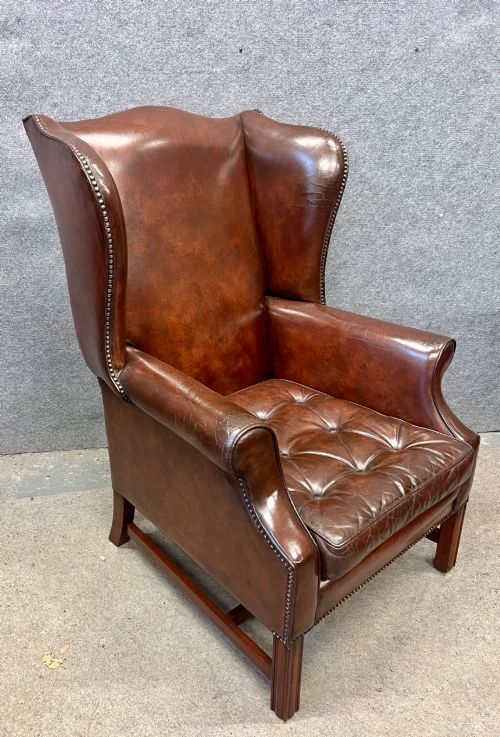
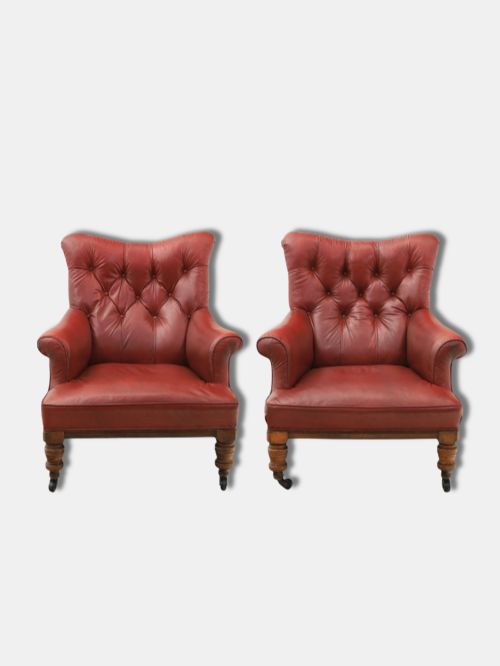
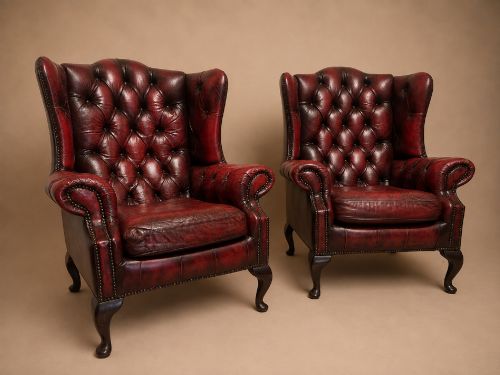
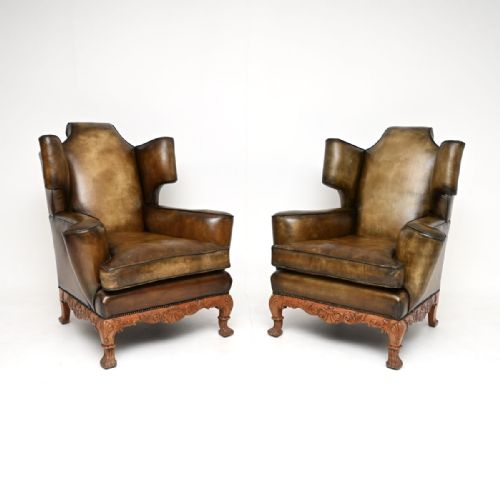
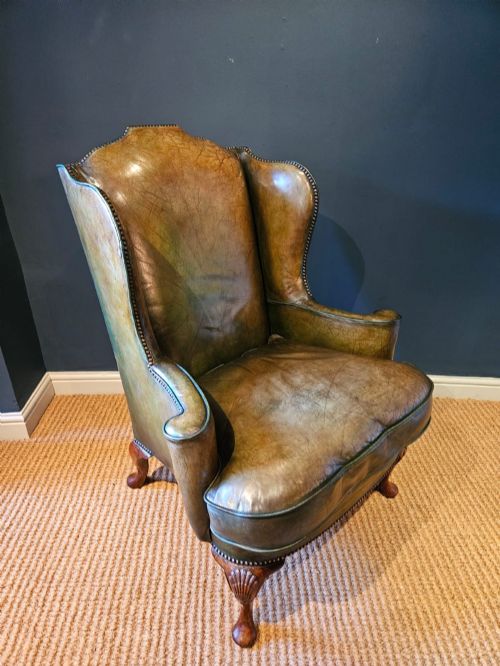
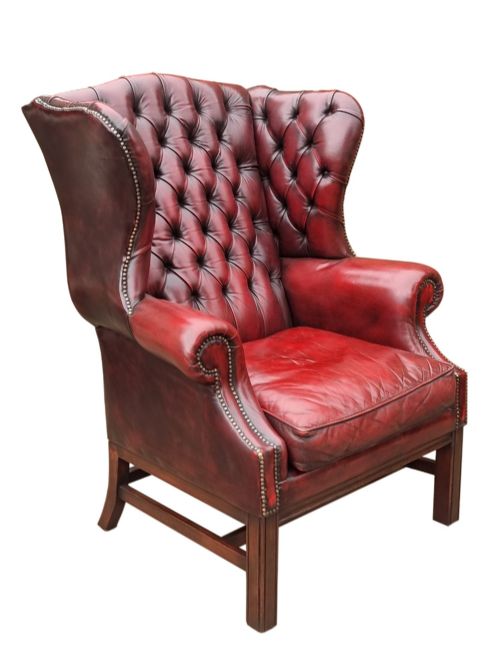
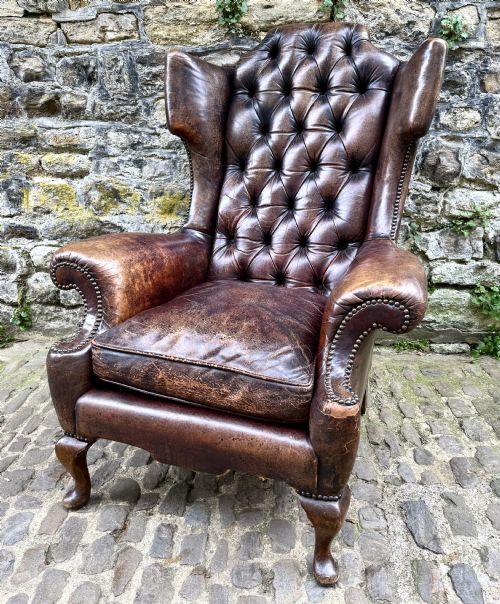
The version most commonly met on this page is the nineteenth-century or early twentieth-century leather-upholstered armchair, often styled after Georgian or Queen Anne models. These pieces frequently feature buttoned upholstery, substantial wooden frames, and supportive wings flanking the high back.
How they were made
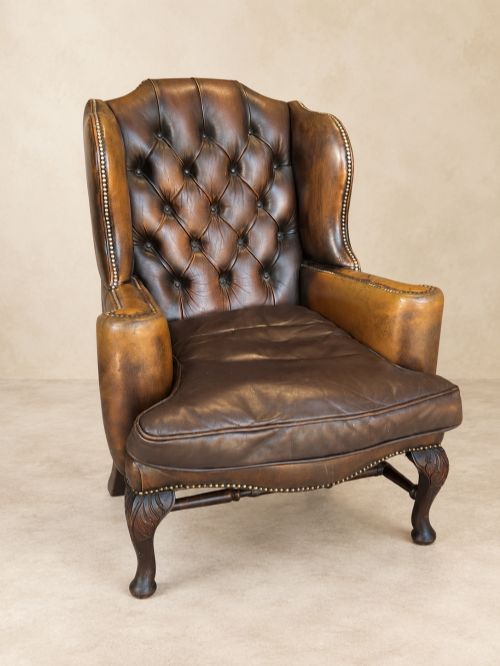
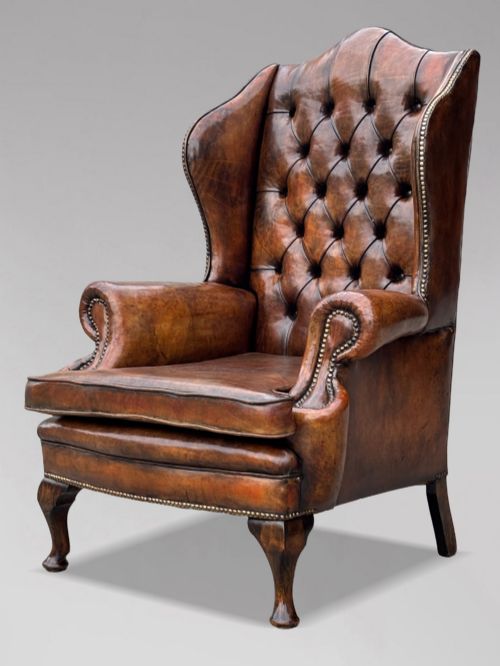
Upholstery involves stretching leather over stuffed padding, frequently secured with individual brass tacks and accented with deep buttoning. Hand-coloured or hand-dyed finishes give the hide its characteristic depth and surface texture.
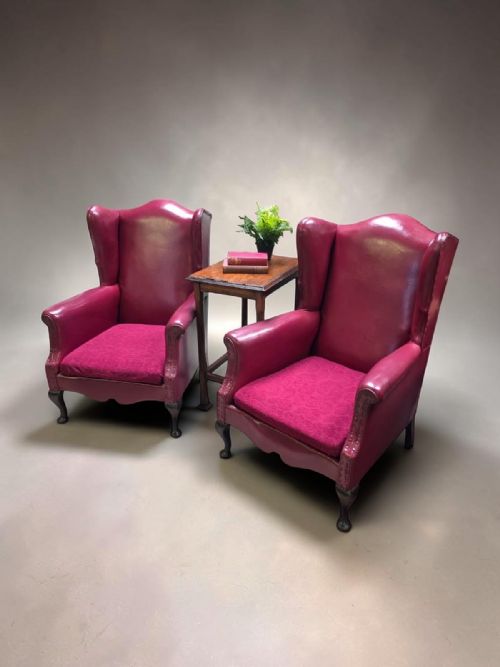
Certain stout Victorian armchairs bear carved lion details on their wooden frames, standing guard beside the hearth.
What varies in quality
The fineness of the carved woodwork distinguishes standard seating from exceptional examples, particularly on cabriole legs and frame mouldings. Timber selection plays a major part, with dense walnut and figured mahogany representing the upper tier of construction.
The quality of the hide and the precision of the buttoning dictate the visual appeal of the upholstery. Supple, hand-finished leather that retains a rich natural grain elevates a chair far above mass-produced or heavily corrected alternatives.
The Fireside Leather Wingback Glossary
- Wingback
- An armchair featuring projecting side panels designed to shield the occupant from drafts. These wings extend from the upper back down to the armrests.
- Cabriole leg
- A furniture leg that curves outward at the knee and tapers inward toward the ankle, ending in a pad or claw foot. This form is common on eighteenth-century and revival seating.
- Buttoning
- A method of upholstery where recessed buttons are pulled deep into the padding to create a diamond pattern. This technique secures the stuffing and adds structural tautness.
- Hide
- Animal skin prepared for upholstery use, valued for its durability and smooth texture. Leather hides on these chairs often show natural patination over time.
- Chesterfield
- A style of upholstered seating characterised by equal height arms and back, frequently featuring deep buttoning and leather upholstery.
Fireside Leather Wingback: Frequently Asked Questions
What is a fireside leather wingback?
A fireside leather wingback is a high-backed armchair featuring side panels designed to trap heat from a hearth and block draughts.
These chairs combine timber frames with leather upholstery, offering substantial support for long periods of sitting.
How do I care for leather upholstery?
Leather upholstery requires regular dusting and occasional conditioning to prevent the hide from drying out or cracking.
Keep these chairs away from direct sunlight and strong heat sources to preserve the natural finish of the leather.
How do I tell an original period chair from a revival piece?
Distinguishing original period pieces from later revivals involves examining the timber joinery, tool marks, and wear patterns on the frame.
Revival pieces often date from the Edwardian era or the 1930s, imitating earlier Georgian or Queen Anne aesthetic styles with machine-assisted precision.
Were these chairs used only by the fireplace?
While originally designed to protect occupants from cold drafts near open fires, these chairs also served as comfortable seating in libraries and studies.
Their imposing presence made them suitable for formal reception rooms and gentleman's clubs alike.