



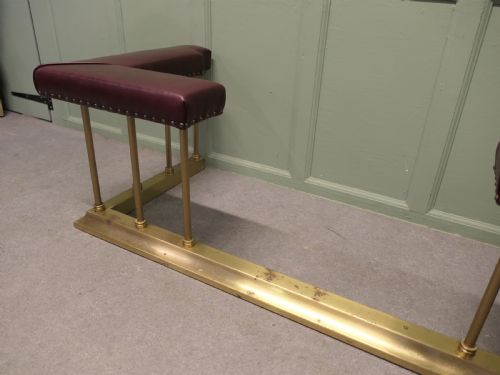


Fireplace Surround Bench
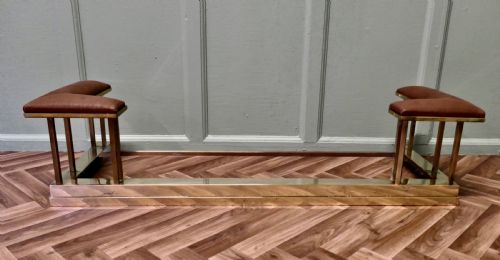
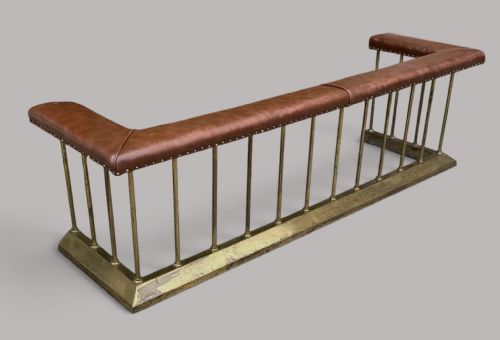
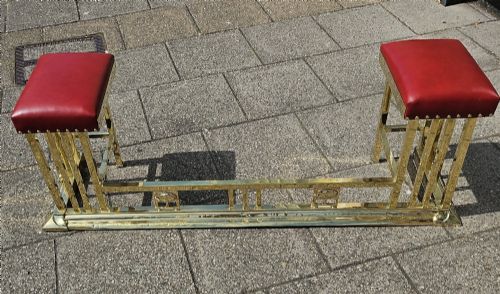
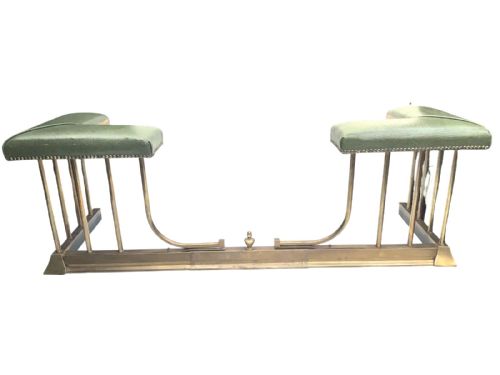
These fireplace surround bench designs, commonly called club fenders, provide fireside seating built directly around the hearth.
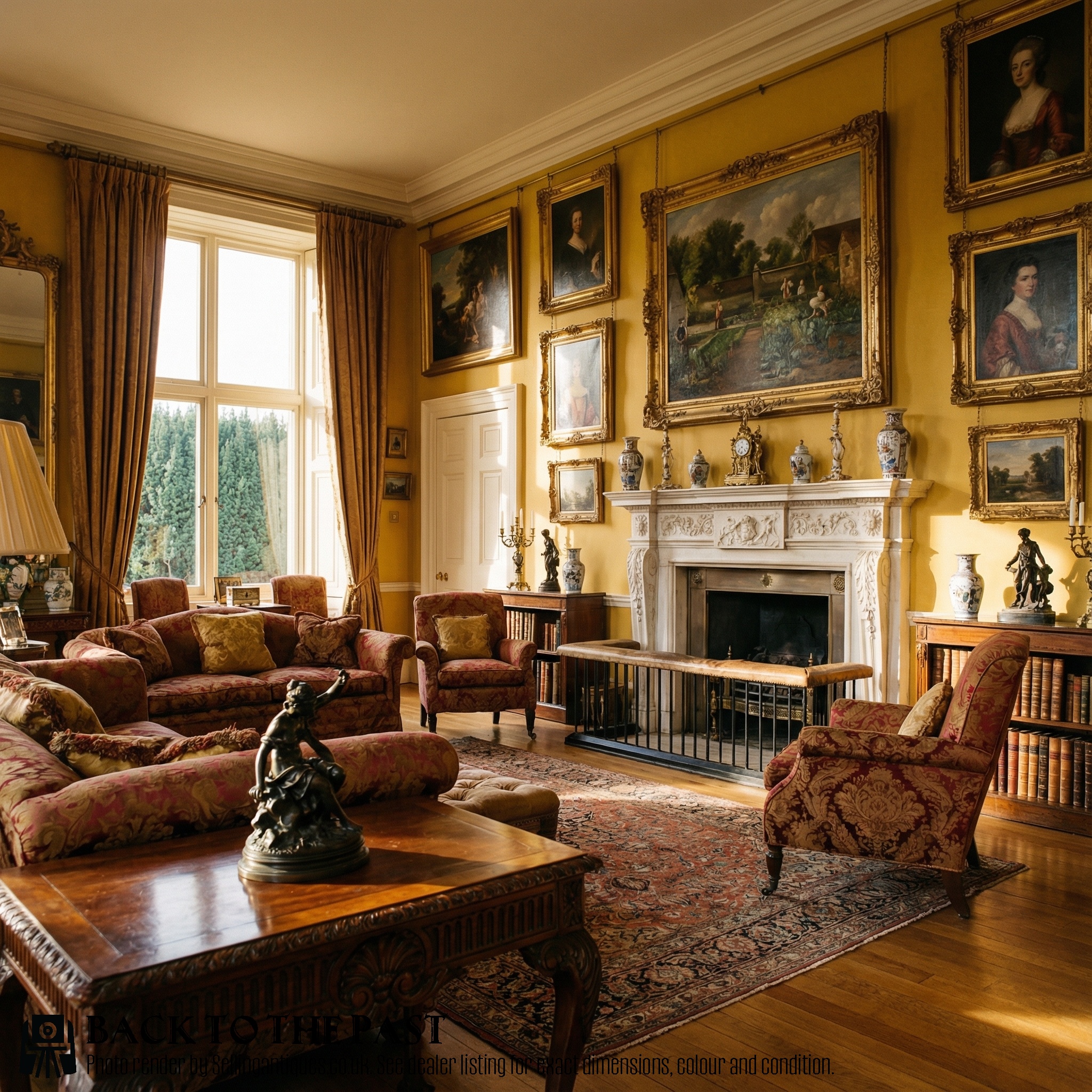
Fireplace Surround Bench
A fireplace surround bench sits directly on the hearth to frame the fire while offering integrated seating for warming oneself close to the grate. These low seats bring people into the immediate warmth of the chimney opening during colder months.
The versions most commonly met here span the Victorian, Edwardian, and Art Deco periods, drawing on English Country House and Arts and Crafts traditions. They take the form of club fenders built with robust metal frames and cushioned tops.
Materials and construction
Makers constructed the structural frames using polished brass, cast steel, wrought iron, and occasionally solid oak or mahogany. These durable metals and hardwoods support the daily weight and heat exposure of fireside use.
The top rails feature upholstered leather pads, frequently styled with Chesterfield buttoning in tan or green shades. This leather seating provides a comfortable contrast to the rigid metal and wood framework beneath.
Gentlemen once sat on these low hearth rails to get closer to the coal fire without scorching their shins.
Distinctions in quality
The substance of the metal framework separates standard pieces from more substantial examples, with heavier gauge brass, iron, and steel offering greater longevity and structural presence. Finishes range from simple polished surfaces to more complex silvered or combined brass and copper treatments.
Upholstery execution and leather selection dictate the finish of the seat, where mature hides with traditional buttoning show superior craftsmanship compared to simpler pads. The integration of decorative spindles, corner posts, and custom sizing also marks out finer workshops.
William Birch
The Fireplace Surround Bench Glossary
- Club fender
- A low fireside seat built around a fireplace opening with an open frame and upholstered top rails. These pieces originated in gentlemen's clubs to maximise warmth from the hearth.
- Chesterfield seat
- A padded top upholstered in deep-buttoned leather. This traditional finish offers firm support and distinctive visual depth.
- Spindle
- A turned metal or wooden upright forming part of the open framework. Spindles allow radiant heat to pass through the fender into the room.
- Extender
- An adjustable section allowing the fender to fit various hearth widths. These components enable custom placement against different fireplace dimensions.
Fireplace Surround Bench: Frequently Asked Questions
What is a fireplace surround bench used for?
These pieces serve as combined hearth guards and low seating benches placed directly around the fire. They allow people to sit immediately beside the warmth of the grate.
Historically, they kept people at a safe distance from open flames while making efficient use of the warm zone in larger rooms.
How do I style a club fender in a modern room?
Position the piece directly onto the hearth floor to frame the fireplace opening as a focal point. The low profile keeps sightlines open across the room.
Pair the metal frame with matching fireside accessories such as pokers and coal buckets to create a cohesive fireside arrangement.
How do I tell Victorian from Edwardian fenders?
Victorian examples often feature heavier brass constructions with ornate detailing and deep-buttoned leather. They reflect the substantial aesthetic of the nineteenth century.
Edwardian pieces tend toward lighter polished brass frames or early Art Deco influences, reflecting a shift towards more streamlined domestic interiors.
What metals were used to build these benches?
Makers relied primarily on polished brass, cast steel, and wrought iron for the structural framework. Some examples combine brass with copper or silvered finishes.
Wooden elements in oak or mahogany also appear on top rails and base plinths, complementing the primary metal structures.