


Fireplace Log Grate Basket
A fireplace log grate basket holds wood cleanly above the hearth while drawing air beneath the fuel for a steady burn.
Fireplace Log Grate Basket
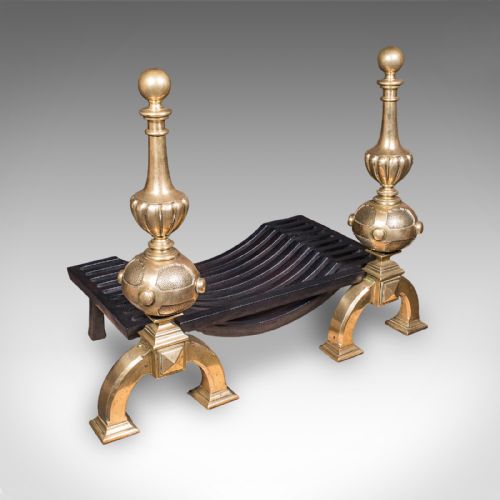
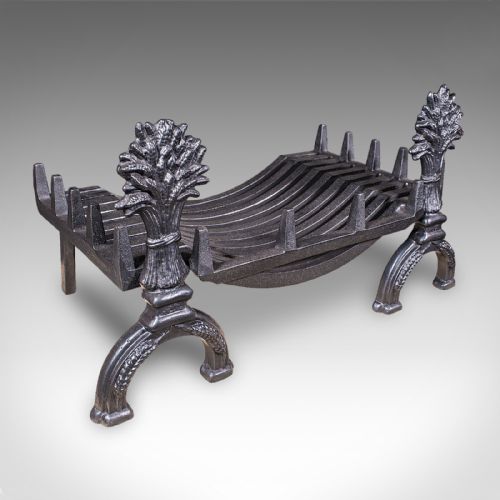
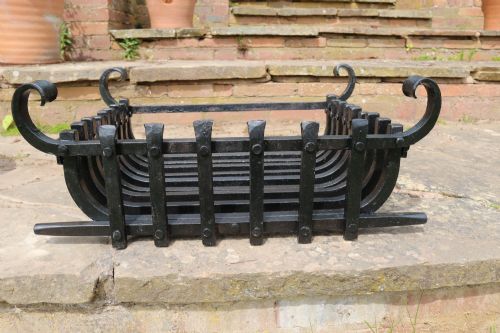
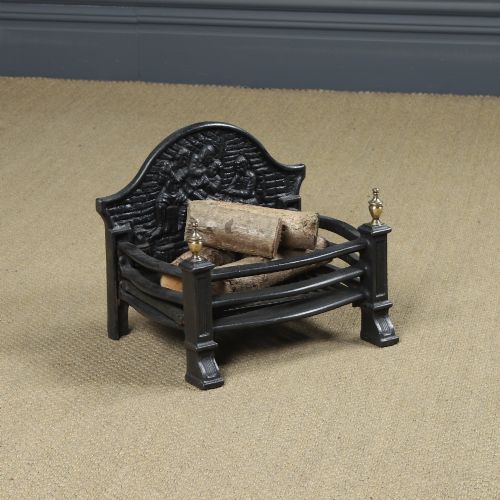
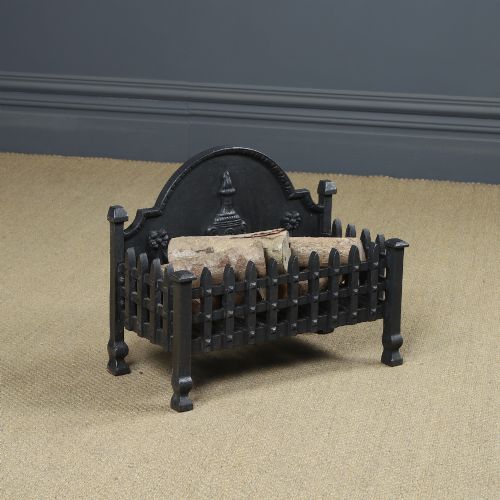
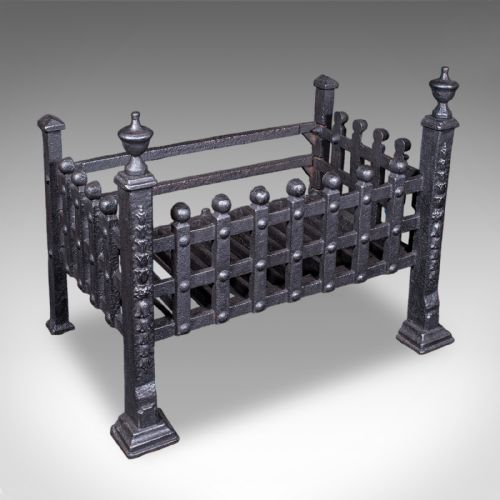
A fireplace log grate basket provides a sturdy iron container designed to hold firewood securely within an open hearth. When searching for a fireplace log grate basket, buyers encounter freestanding iron frames, inglenook models, and complete hearth sets paired with matching andirons.
The selection ranges from compact cast iron grates dating to the Victorian period and the nineteen-twenties to substantial nineteenth-century wrought iron baskets. Many pieces reflect revival styles, incorporating Neo Gothic, Neo Classical, and Arts and Crafts design motifs into everyday hearth equipment.
Materials and construction
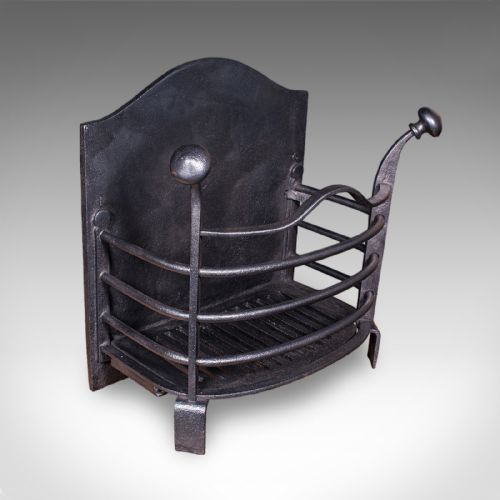
Makers relied primarily on cast iron and wrought iron to build these heavy grates, often combining them with polished brass details or firebrick linings. Cast iron allowed for sturdy moulded forms with decorative back plates, while wrought iron provided flexible strength for open bar baskets.
Many assemblies include integrated fire backs, fenders, and companion andirons designed to support the main basket off the hearth floor. This combination of cast and forged elements ensures the heavy metal withstands intense coal and wood fires.
Some heavy fire sets include mulling andirons equipped to warm ale by the hearth while the logs crackle.
Distinctions in quality
Quality rests upon the weight of the metal, the thickness of the castings, and the integrity of the structural joints. Superior examples feature heavy iron bars, substantial fire backs, and well-balanced frames that support large quantities of fuel without distortion.
Design execution separates standard utility grates from finer decorative pieces. The presence of crisp architectural detailing, refined brass work, and harmonious proportions across associated andirons marks the upper tier of production.
The Fireplace Log Grate Basket Glossary
- Fire basket
- An open metal container designed to hold logs or coal off the hearth floor to improve combustion. These units sit either on their own legs or upon paired andirons.
- Andiron
- One of a pair of horizontal metal supports placed in a fireplace to hold logs above the ash. They frequently accompany larger fire baskets in inglenook settings.
- Fire back
- A heavy cast iron plate placed against the rear wall of a fireplace to protect the masonry and reflect heat back into the room.
- Fender
- A low metal guard placed in front of the hearth to contain stray embers and ash from spilling onto the floor.
Fireplace Log Grate Basket: Frequently Asked Questions
How do I choose the right size?
Measure the width and depth of your fireplace opening carefully before selecting a basket. Ensure adequate clearance around the sides for proper airflow and safety.
Larger inglenook grates require substantial hearth space, whereas small cast iron grates suit shallower domestic fireplaces.
Can I burn real wood in these?
Most of these historic grates were built specifically for burning wood or coal in open hearths. The heavy iron construction is designed to withstand high temperatures.
Inspect the metal thickness and any firebrick linings to confirm the piece remains sound for active use.
Do andirons always come with the basket?
Some listings offer complete sets that include matching andirons and fire backs, while others provide the grate as a standalone piece. Check the individual description to see if supporting fire dogs are included.
Freestanding grates rest on their own integrated feet rather than requiring separate andirons.
How do I date a cast iron grate?
Dating relies upon stylistic clues such as Victorian Gothic Revival motifs or Arts and Crafts linear simplicity. Victorian and Edwardian examples often show distinct foundry marks or heavier decorative casting.
Later twentieth-century reproductions or period-style pieces from the nineteen-twenties frequently mirror eighteenth-century neoclassical designs.