




Fine Gold Necklet
A fine gold necklet offers an elegant circle of precious metal and stones around the collar, spanning Georgian, Victorian, and mid-century designs.
Fine Gold Necklet
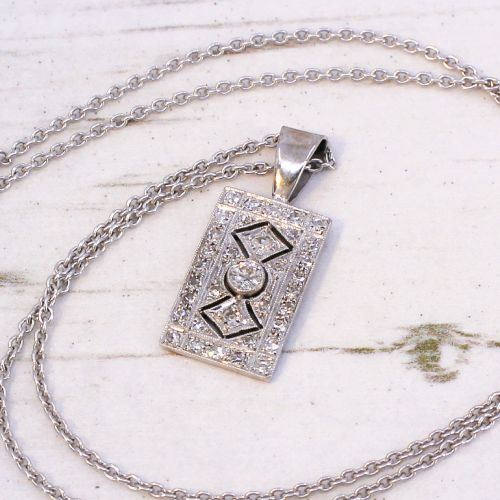
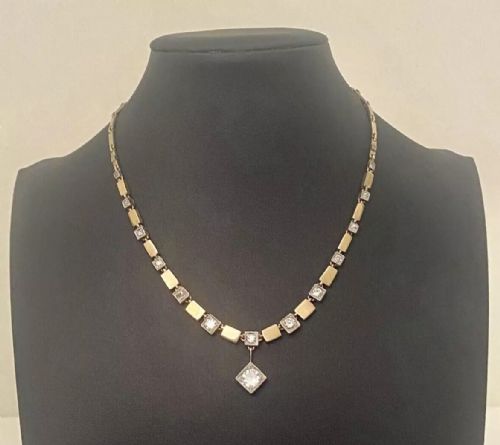
A fine gold necklet brings together delicate chains and suspended pendants, frequently featuring central gemstones set securely within precious frames. Buyers exploring this category encounter a diverse selection ranging from early nineteenth-century double-strand gold pieces to structured geometric creations from the Art Deco period.
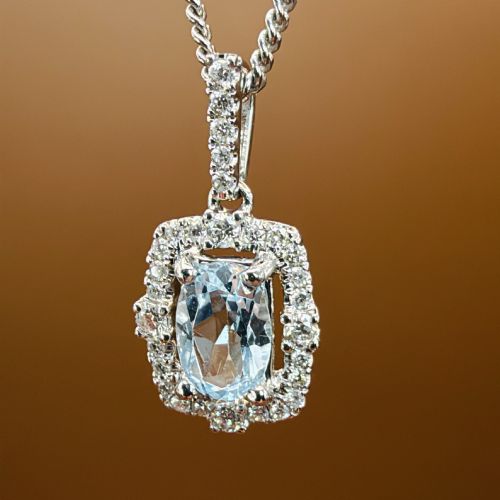
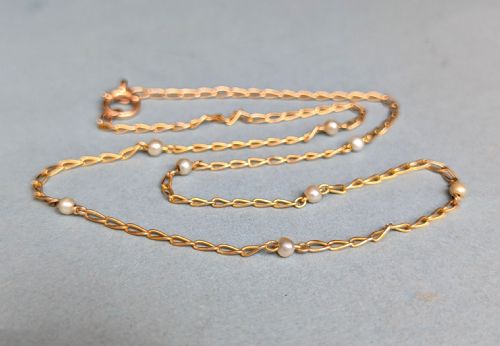
The assortment on this page highlights various configurations, including simple chains embellished with pearls alongside elaborate cluster pendants mounted with diamonds and aquamarines. Pieces originating from the Edwardian era and the nineteen-fifties appear regularly, demonstrating enduring craftsmanship across multiple decades of jewellery design.
Every fine gold necklet carries specific stylistic markers of its era, whether through the soft pastel tones typical of early twentieth-century work or the clean lines associated with mid-century modern aesthetics. These items function primarily as decorative neck adornments, designed to sit prominently against the collarbone.
How they were made
Makers fashioned these necklets using standard carats of yellow and white gold, often pairing the metalwork with platinum settings to secure brilliant-cut diamonds and coloured stones. Goldsmiths utilised traditional soldering and wire-drawing techniques to construct flexible chains that drape smoothly around the neck.
Gemstones such as aquamarine, topaz, and amethyst received precise cuts, including old cuts and oval cuts, before being mounted in claw or cluster settings. Pearls were meticulously drilled and strung onto silk or metal supports, sometimes integrated directly into the clasp mechanism of the necklace.
Current listings feature items from the Georgian, Victorian, Edwardian, and mid-century periods, utilising yellow gold, white gold, and platinum.
What varies in quality
The standard of a fine gold necklet depends largely on the purity of the metal employed and the precision of the stone setting. Heavier gold weights and higher carat specifications contribute significantly to a piece's structural integrity and overall tactile feel.
Artistic execution distinguishes exceptional examples from standard production, particularly in the symmetry of diamond clusters and the matching of coloured gems. The delicacy of the chain links and the reliability of integrated clasps further indicate the level of care invested by the original maker.
The Fine Gold Necklet Glossary
- Necklet
- A short necklace or chain designed to fit closely around the neck, often featuring a fixed pendant or decorative clasp. These items are distinct from longer sautoir chains.
- Cluster pendant
- A central gemstone surrounded by a ring of smaller stones, typically diamonds. This arrangement maximises the visual impact of the primary gem.
- Old cut diamond
- A precursor to the modern brilliant cut, characterised by a smaller table, higher crown, and open culet. These stones display a distinctive soft, warm brilliance under candlelight.
- Seed pearl
- A very small natural or cultured pearl, frequently pierced and threaded in historical jewellery. They add subtle texture to Edwardian and Victorian designs.
- Platinum
- A dense, silvery-white precious metal prized for its strength and durability. It provides a secure setting for fine gemstones without altering their perceived colour.
Fine Gold Necklet: Frequently Asked Questions
What periods do these necklets come from?
The selection includes pieces originating from the Georgian and Victorian eras, alongside Edwardian designs and mid-twentieth-century creations.
Each period imparts distinct stylistic characteristics, from intricate seed pearl arrangements to geometric Art Deco gemstone settings.
Which gold carats are common?
Listings feature items fashioned in nine-carat, fourteen-carat, and eighteen-carat yellow and white gold.
Platinum also appears as a primary mounting metal, particularly in pieces designed to hold diamonds securely.
What gemstones are set in these pieces?
Common stones include diamonds, aquamarines, pearls, amethysts, blue topaz, and emeralds.
These gems appear either as single focal points or arranged in multi-stone clusters.
How should an antique chain be stored?
Store each necklet flat in a lined jewellery box or wrapped in soft material to prevent delicate links from tangling.
Keeping pieces separate protects softer gems like pearls and opals from scratching against harder diamonds.