


Filigree Gold Pendant
A filigree gold pendant brings together delicate wirework and precious metal, offering an intricate design that draws the eye.
Filigree Gold Pendant
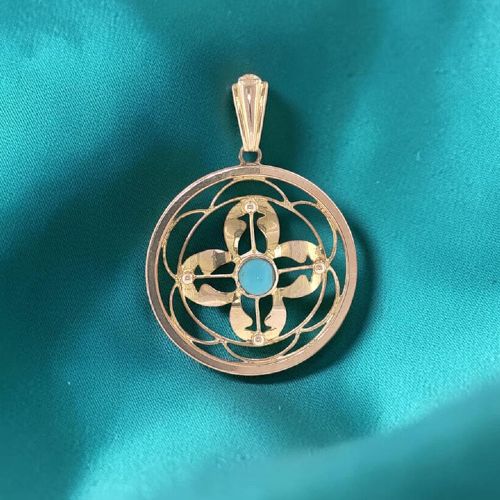
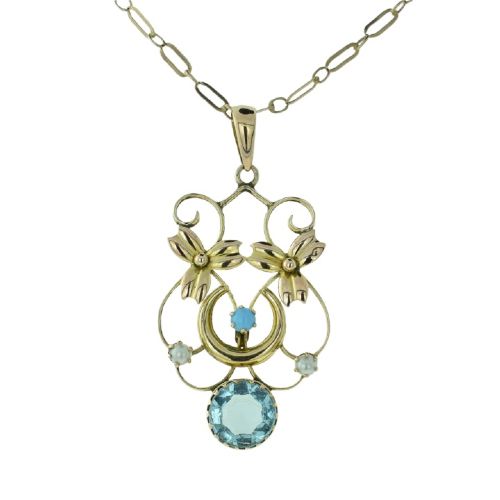
When you search for a filigree gold pendant, you encounter delicate openwork jewellery shaped from fine metal threads. The selection spans periods from the Victorian and Georgian eras through Edwardian, Art Nouveau, Art Deco, and mid-century designs. You meet pieces incorporating amethyst, turquoise, pearls, and diamonds set within elaborate gold frames.
The most common examples on this page date from the Victorian and Edwardian periods, often combining yellow or rose gold with seed pearls and amethysts. These items range from simple drops to elaborate lavalier necklaces and locket pendants. Each piece displays the fine metal manipulation characteristic of wire-work jewellery traditions.
How they were made
Goldsmiths constructed these pieces by twisting, curling, and soldering fine gold wire into open lace-like patterns. Artisans utilised yellow gold, rose gold, and white gold, often pairing the intricate wirework with bezel-set stones such as diamonds, amethysts, and turquoise. Cannetille techniques occasionally added tiny granules and raised wire decoration to the metal surface.
Makers combined soldered wire frames with structural sheet gold to secure central gemstones and seed pearls. Skilled hands shaped the metal manually, resulting in distinctive variations across individual items from the Georgian, Victorian, and later twentieth-century periods.
Listings feature yellow gold, white gold, and rose gold alongside materials like seed pearl, amethyst, turquoise, and diamond across Victorian and Edwardian periods.
What varies in quality
The standard of execution in the wirework distinguishes finer examples from simpler production. Superior pieces exhibit precise, tight soldering joints and balanced symmetry across the delicate open metal scrolls without excess solder visible to the eye.
Material selection and stone matching also determine the standing of a piece. High-grade items feature well-matched pearls, deeply coloured amethysts, or clean diamonds securely integrated into the gold structure rather than loosely mounted within heavy settings.
Carl Bucherer
The Filigree Gold Pendant Glossary
- Filigree
- Fine wirework soldered into open decorative patterns. This technique creates a lace-like effect using gold or silver threads.
- Cannetille
- A decorative goldwork technique involving tiny granules and twisted wire. It mimics nineteenth-century embroidery styles on metal.
- Lavalier
- A pendant necklace featuring a central drop stone or ornament. Popularised in the Edwardian era, it hangs loosely from a fine chain.
- Pinchbeck
- An alloy of copper and zinc developed to imitate gold. It appears in Georgian and early pieces.
- Seed pearl
- A very small natural or cultured pearl used in clusters or borders. These tiny pearls frequently accent Victorian and Edwardian jewellery.
Filigree Gold Pendant: Frequently Asked Questions
How do I date my pendant?
Dating relies on stylistic clues, materials, and manufacturing techniques characteristic of periods such as Victorian, Edwardian, or Art Deco.
Examining the type of gold, stone cuts, and clasp mechanisms helps narrow down the production era.
How were these pendants worn?
Original owners wore these pendants suspended from fine gold chains around the neck, often as centrepieces for daily attire or evening wear.
Some convertible pieces also functioned as brooches or attached to charm bracelets depending on the era.
Are these pieces fragile?
The delicate wire construction requires careful handling to prevent bending or crushing the fine metal threads.
Storing the pendant separately from other items protects the openwork design from snagging or pressure.