

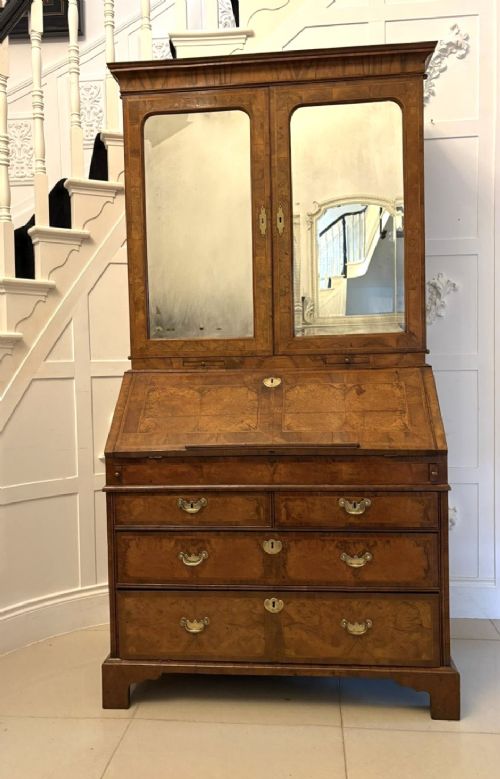
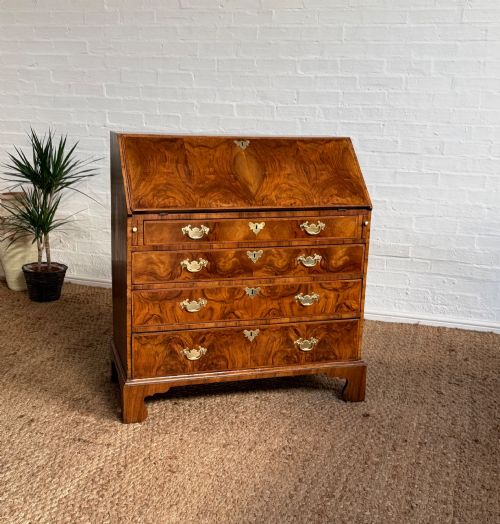
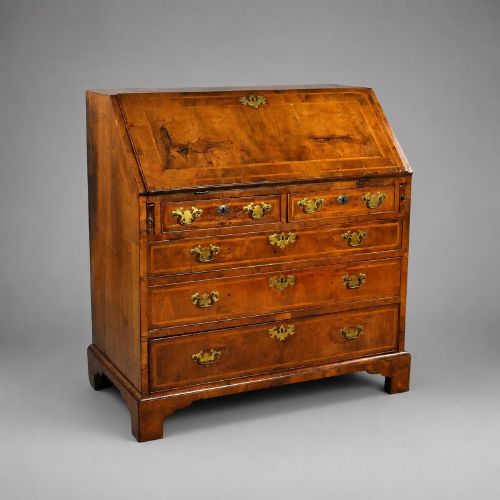
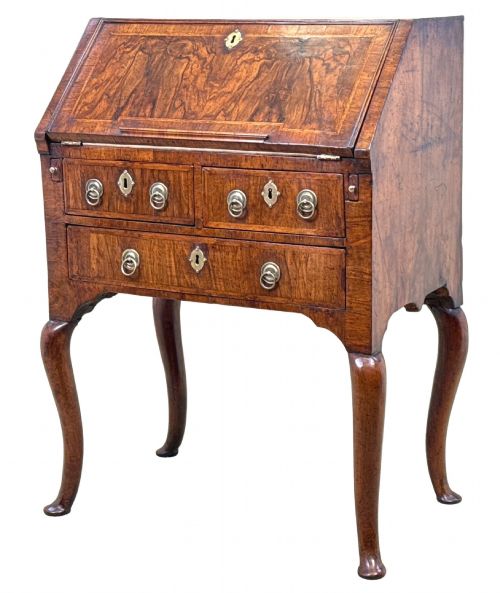


Figured Walnut Slant Front Desk
These figured walnut slant front desks combine fine veneers with practical writing slopes, offering collectors both exceptional timber figure and useful workspace.
Figured Walnut Slant Front Desk
A figured walnut slant front desk is a practical writing cabinet featuring a sloping lid that opens to reveal internal compartments and drawers. These pieces range from compact bureau cabinets to smaller writing desks on stands, originating primarily from the late seventeenth and eighteenth centuries.
The versions most commonly met on this page belong to the Georgian and Queen Anne periods, alongside later revival pieces. Craftsmanship from the George I era dominates the selection, often showcasing the characteristic rich figuring of walnut timber.
Makers utilised various forms, including bureau bookcases and desks on legs, satisfying both domestic and professional writing needs. Such diversity ensures buyers find examples suited to both period interiors and functional daily use.
How they were made
Cabinet makers selected highly figured walnut and burr walnut veneers, applying them over secondary timbers like oak. This method created striking grain patterns across the sloping fall fronts and drawer facades.
Brass hardware, including escutcheons and drop handles, was fitted to secure doors and drawers. Leather writing surfaces were also incorporated into later iterations to provide a durable writing plane.
Figured Walnut Slant Front Desk Retail Price Guide 2026
Typical asking prices for figured walnut slant front desk among the pieces listed under this phrase on Sellingantiques today, from the lower quarter to the upper quarter. They describe what is for sale here now, not the wider market.
Listings span the late 17th century through the Victorian era, utilising walnut, oak, brass, and leather.
What varies in quality
The visual appeal of the timber figure dictates much of the standing of an individual piece, with symmetrical burr patterns commanding particular attention. Skilled veneer matching across the fall front and drawer fronts marks out superior cabinet work.
Proportions and structural integrity also separate standard examples from finer ones. Retaining original feet, brasses and internal configurations elevates an object's historical standing.
The Figured Walnut Slant Front Desk Glossary
- Figured walnut
- Timber showing complex, decorative grain patterns such as ripples or swirls. This wood was highly prized by period cabinet makers for exterior surfaces.
- Slant front desk
- A form of writing furniture with an angled lid that drops down to form a writing surface. It typically conceals a fitted interior of pigeonholes and small drawers.
- Bureau bookcase
- A tall dual-purpose piece combining a sloping desk compartment below with shelving or cabinetry enclosed by doors above. These units served as both writing desks and libraries.
- Burr walnut
- Wood taken from a tree growth or excrescence, producing highly intricate, swirling patterns. It was frequently sliced into thin veneers for decorative furniture panels.
- George I
- A stylistic and historical period spanning the early eighteenth century, known for understated elegance and the prominence of walnut furniture. Pieces from this era often display clean lines and rich timber tones.
Figured Walnut Slant Front Desk: Frequently Asked Questions
What is a slant front desk?
A slant front desk is a piece of furniture featuring a hinged, sloping lid that opens downward to create a flat writing surface. Beneath this lid lies an arrangement of small drawers and pigeonholes for correspondence.
Such desks evolved from simpler box forms into sophisticated cabinetry during the late seventeenth and eighteenth centuries, serving both domestic and administrative purposes.
How do I date a walnut bureau?
Dating a walnut bureau involves examining construction methods, timber choices, and hardware styles. Pieces from the late seventeenth and early eighteenth centuries often display specific foot configurations, dovetailing techniques, and secondary woods like oak.
Later revival pieces from the Victorian and Edwardian eras mimic these earlier styles but typically reveal machine-cut elements or different internal construction methods upon close inspection.
Where were these desks used?
These desks were primarily utilised in the private studies, libraries, and withdrawing rooms of wealthy households. They provided a secure, private space for letter writing, keeping accounts, and storing personal documents.
Because of their compact vertical storage and fold-down writing flaps, they functioned well in both grand reception rooms and more intimate domestic spaces.
How do I care for figured walnut?
Caring for figured walnut requires maintaining stable room humidity and avoiding direct sunlight, which can fade the rich tones of the timber. Regular dusting with a soft, dry cloth preserves the polished surface without building up residue.
Applying occasional appropriate wax feeds the wood and protects the delicate veneers from drying out over time.