



Figured Walnut Secretary
A figured walnut secretary brings warmth and rich grain to any room, offering a private writing surface alongside concealed drawers.
Figured Walnut Secretary
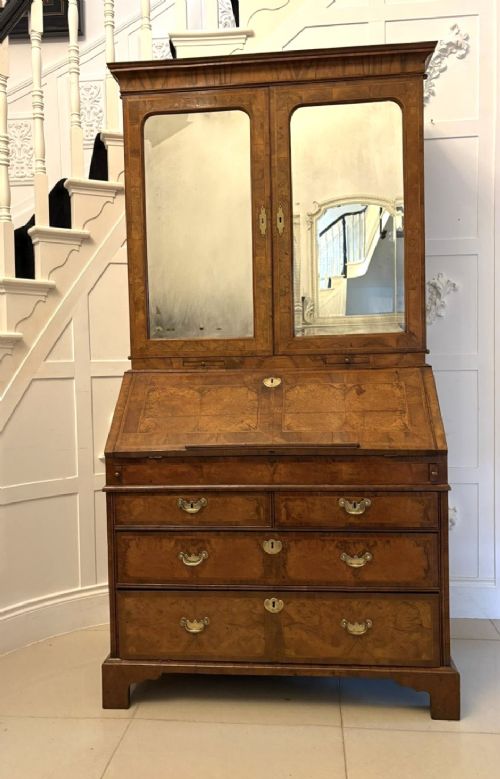
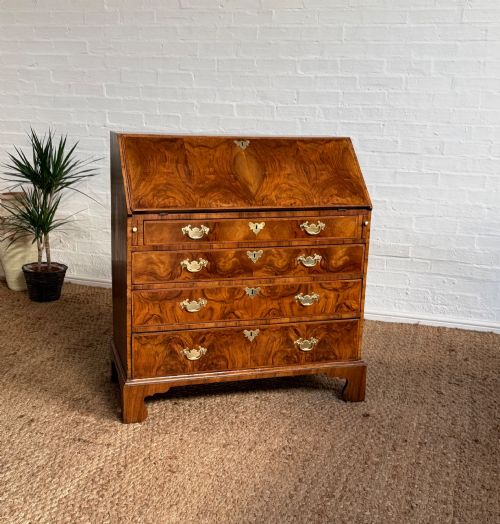
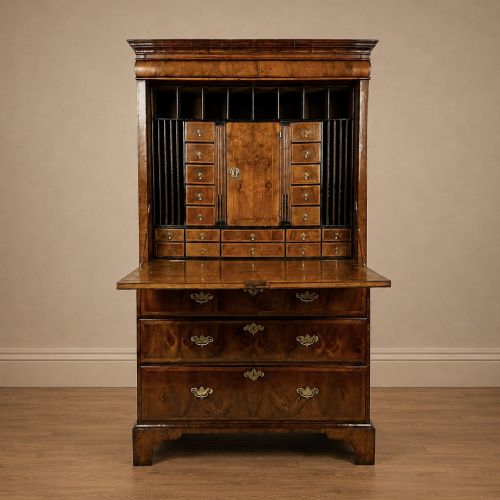
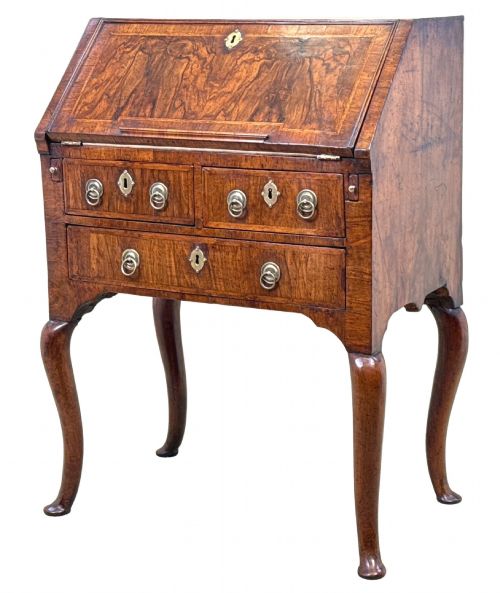
A figured walnut secretary combines a sloping desk or drop-front writing flap with internal compartments, often topped by a glazed or panelled bookcase cabinet. These pieces date principally from the late seventeenth and eighteenth centuries, spanning the William and Mary, Queen Anne, and George I periods up to the Georgian era. Buyers seeking this form will frequently encounter bureau bookcases and smaller slant-front writing desks.
The material character is defined by highly decorative walnut veneers chosen for their swirling grain patterns, sometimes enhanced by burr walnut sections. Examples range from compact provincial desks on legs to towering architectural cabinet pieces of South German Baroque or British origin. Each iteration serves the dual purpose of secure storage and dedicated writing space.
How they were made
Cabinet makers applied thin veneers of figured walnut and burr walnut onto stable secondary timbers such as oak, securing the decorative grain faces with animal glue. Crossbanding and string inlay often framed the drawer fronts and primary panels to contrast the rich figuring of the timber.
Hardware played an integral part in construction, utilising brass handles, escutcheons, and hinges that complemented the dark tones of the wood. Interiors frequently incorporated fitted compartments, pigeonholes, and sliding wells backed by secondary woods like oak or pine.
Figured Walnut Secretary Retail Price Guide 2026
Typical asking prices for figured walnut secretary among the pieces listed under this phrase on Sellingantiques today, from the lower quarter to the upper quarter. They describe what is for sale here now, not the wider market.
Listings feature periods spanning from the late seventeenth century through the Georgian era, including William and Mary, Queen Anne, and George I styles.
What varies in quality
The visual impact of a figured walnut secretary depends upon the selection and matching of the veneer timbers across the primary facade. Cabinet makers who mirrored grain patterns symmetrically achieved a balanced aesthetic that elevates an individual piece.
Structural refinement is evident in the execution of the interior fitments, the thickness and stability of the secondary timbers, and the retention of original brass hardware. Pieces demonstrating disciplined proportions and harmonious integration between the upper cabinet and lower desk sections represent the higher tier of craftsmanship.
The Figured Walnut Secretary Glossary
- Escritoire
- A writing cabinet featuring a drop-front flap that conceals small drawers and pigeonholes. This term often appears interchangeably with bureau and secretary.
- Bureau bookcase
- A dual-purpose furniture form combining a lower writing desk with an upper shelving or cabinet section enclosed by doors. The upper doors frequently incorporate glass panels.
- Burr walnut veneer
- Thin slices of timber cut from the abnormal growths of a walnut tree, yielding dense and swirling grain patterns. It was highly prized for decorative drawer fronts and panel surfaces.
- Crossbanding
- A narrow strip of veneer laid around the border of a panel or drawer front with the grain running perpendicular to the surrounding wood. This technique provides a neat visual frame.
- Secretaire
- A cabinet or desk designed for writing, typically housing a hinged writing surface or drop-front drawer. The term covers both standalone writing desks and tall cabinet combinations.
Figured Walnut Secretary: Frequently Asked Questions
What is a figured walnut secretary?
A figured walnut secretary is a historical writing desk featuring decorative wood veneers, often combined with an upper bookcase or cabinet section. These pieces provide both enclosed storage and a dedicated writing surface.
They emerged prominently during the late seventeenth and eighteenth centuries across British and continental workshops. The form encompasses compact slant-front desks as well as large architectural bureau bookcases.
How do I date a walnut secretary?
Dating relies on observing structural characteristics, hardware styles, and the secondary woods used inside the drawers. Specific reigns and periods like William and Mary, Queen Anne, and George I provide useful stylistic benchmarks.
Earlier pieces from the seventeenth century often feature different leg configurations and distinct carcass constructions compared to later Georgian examples. Examining the internal drawer dovetails and backboards further clarifies the period of manufacture.
Where were these secretaries made?
The pieces seen in these listings originate primarily from British workshops, though continental examples such as South German Baroque cabinets also appear. Each region applied distinct joinery methods and architectural proportions.
British makers utilised native oak and pine for secondary framing while applying imported or domestic walnut veneers. Continental pieces frequently display bolder architectural cornices and differing internal layouts.
How should I care for walnut veneer?
Walnut veneer requires stable environmental conditions away from direct sunlight and excessive heat sources to prevent timber movement. Maintaining consistent indoor humidity helps preserve the historical animal glue holding the veneers.
Routine dusting with a soft, dry cloth is sufficient for surface maintenance. Avoid modern chemical polishes and use traditional wax sparingly to protect the finish.