

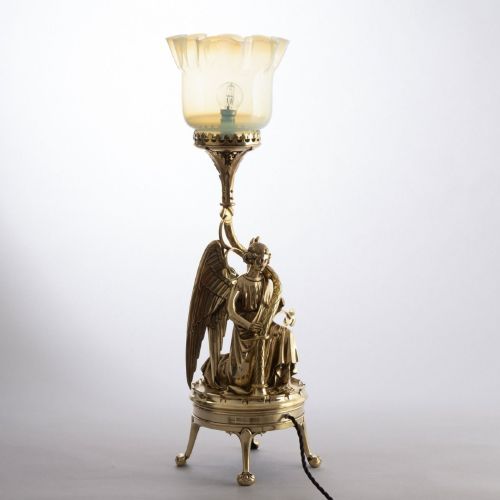
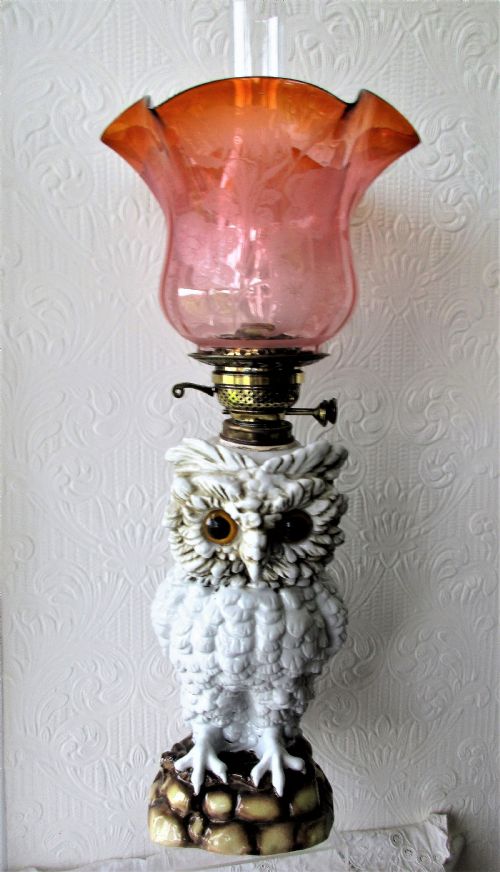


Figured Glass Shade
These figured glass shade pieces bring textured illumination and period character to a room.
Figured Glass Shade
A figured glass shade serves as an ornamental diffuser for lighting fixtures, softening the bulb while adding sculptural relief to the surface. When you search for figured glass shade, you encounter components from table lamps and oil lamps spanning the Victorian era through the Art Deco period.
The selections on this page draw from 19th-century designs, 1920s lighting, and later periods like 1930 and 1940. Forms range from frosted glass elements paired with brass, bronze, or spelter lampbases to specialised display domes.
How they were made
Glass production for these shades involved moulding or blowing techniques to create frosted, opaline, or vaseline finishes with raised patterns. Makers combined these glass elements with metal mounts in brass, bronze, chrome, or spelter.
Structural integrity relied on secure seating within metal galleries or frames, occasionally incorporating marble bases for stability.
Figured Glass Shade Retail Price Guide 2026
Typical asking prices for figured glass shade among the pieces listed under this phrase on Sellingantiques today, from the lower quarter to the upper quarter. They describe what is for sale here now, not the wider market.
The listings on this site incorporate materials like glass, brass, frosted glass, marble, bronze, chrome, spelter, and vaseline glass across multiple decades.
What varies in quality
Quality rests in the crispness of the glass moulding and the depth of the relief work across the surface. Finer examples display smooth, even distribution of frosted or opaline effects without distracting surface blemishes.
The supporting metalwork also dictates the overall standard, distinguishing mass-produced fittings from more robust cast bronze or brass mounts.
Auguste Moreau·Sitzendorf·Baccarat
The Figured Glass Shade Glossary
- Vaseline glass
- A type of glass containing uranium dioxide that produces a distinctive yellowish-green colour and glows under ultraviolet light. It appears frequently in 19th-century lighting components.
- Spelter
- An alloy of zinc and lead used as a cheaper alternative to bronze for sculptural lampbases. It was often electroplated or painted to simulate more expensive metals.
- Frosted glass
- Glass treated by acid-etching or sandblasting to create a textured, opaque surface that diffuses light evenly. This finish is typical in period shade design.
- Opaline glass
- A semi-opaque glass, usually pale in colour, valued for its milky appearance. It diffuses light with a soft, warm glow.
Figured Glass Shade: Frequently Asked Questions
What is a figured glass shade?
A figured glass shade is a moulded or textured glass cover designed to diffuse light on a lamp or lighting fixture. It combines practical illumination with decorative surface relief.
These pieces originate from various periods including the Victorian era and the 1920s, often integrated into table and oil lamps.
How do I clean a glass shade?
Cleaning requires gentle washing with lukewarm water and mild soap to avoid damaging the delicate frosted or opaline surface. A soft cloth prevents scratching the textured relief.
Harsh chemical cleaners should be avoided, particularly near antique metal mounts such as brass or spelter.
What materials accompany these shades?
Shades frequently pair with metal components such as brass, bronze, chrome, and spelter. Some assemblies also incorporate marble bases or glass domes.
These mixed-material constructions define the aesthetic of late 19th-century and early 20th-century lighting.
How are different periods identified?
Period identification relies on stylistic cues, such as the ornate Gothic Revival details of the 19th century versus the streamlined geometry of Art Deco pieces from the 1920s, 1930, and 1940.
Material choices like vaseline glass or opaline also point towards specific manufacturing eras.