
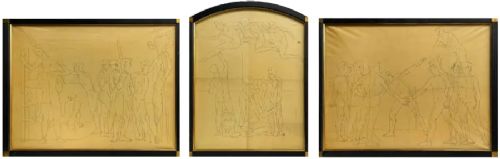
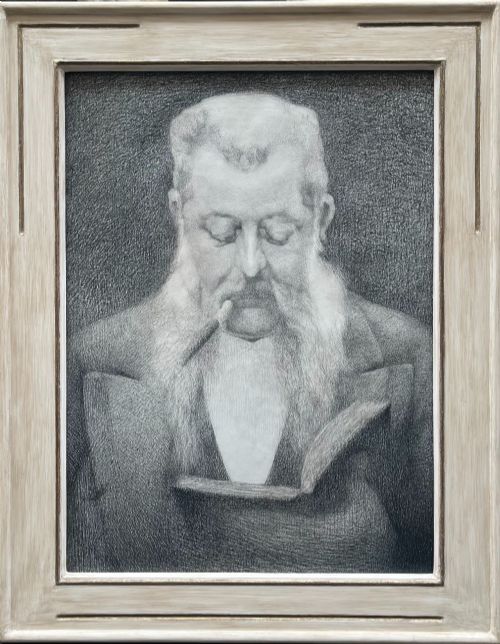
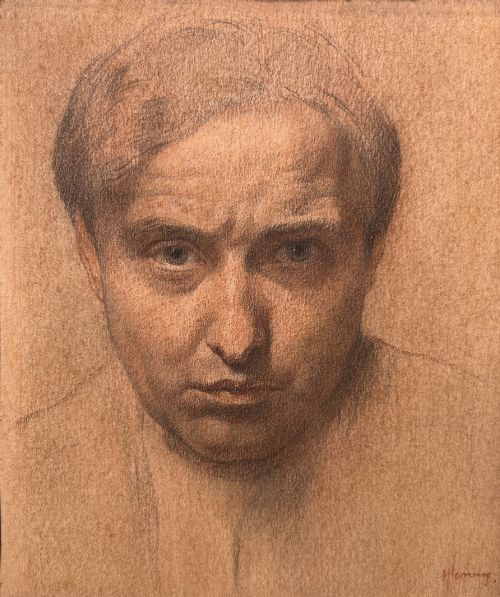


Figurative Pencil Sketch
A figurative pencil sketch captures the human form with immediate graphite lines on paper, offering direct insight into an artist's hand.
Figurative Pencil Sketch
A figurative pencil sketch is an original artwork centring on the human form, rendered through drawing on paper across periods such as the nineteenth century and the mid-twentieth century. Buyers seeking a figurative pencil sketch will encounter framed art and studio drawings ranging from academic realism to early twentieth-century modernism.
These pieces encompass intimate character studies and large-scale compositional works produced across diverse European and African schools. The selection highlights portraiture and figurative studies executed with graphite, charcoal, and mixed media on paper substrates.
Materials and execution
Artists draw primarily with graphite and charcoal on various grades of paper, sometimes combining watercolour, ink, or gold leaf to enhance specific compositions. Many examples are preserved behind glass within period wood frames that protect the delicate paper surfaces.
Techniques range from rapid academic pencil studies and deux crayon methods to avant-garde cubist approaches and detailed symbolist portraiture. The application demonstrates both spontaneous studio sketching and highly resolved preparatory work.
Materials commonly paired with graphite on paper include charcoal, watercolour, ink, and occasional touches of gold leaf.
Assessing quality
Quality rests upon the sureness of the draughtsmanship, where confident line work and tonal graduation reveal the artist's acute observation of the human subject. Superior works display expressive vitality and structural integrity within the anatomical rendering.
The historical significance of the sitter, the clarity of provenance, and the preservation of the original paper surface further distinguish exceptional drawings from standard studio exercises.
James Stroudley·Herbert Johnson Harvey·Demetrios Galanis·Augustus Edwin John·Raoul Millais·Theobald Chartran·Cecil CP Lawson
The Figurative Pencil Sketch Glossary
- Graphite
- A form of crystalline carbon used as a drawing medium in pencils, producing grey or black marks of varying hardness. Softer grades allow for deep, velvety shadows.
- Deux crayon
- A drawing technique utilising two distinct coloured chalks or pencils, typically black and red, on tinted paper. This method creates subtle tonal modelling.
- Charcoal
- Burnished vine or willow twigs used for drawing, yielding rich dark lines that smudge easily for shadow effects. It is frequently employed for rapid, expressive studies.
- Symbolist
- An artistic movement focusing on metaphorical images and inner emotional experiences rather than literal reality. Works in this style often use symbolic motifs.
- Provenance
- The documented history of ownership of an artwork, establishing its authenticity and chain of custody. A distinguished provenance adds considerable context to a drawing.
Figurative Pencil Sketch: Frequently Asked Questions
How should I frame an old sketch?
Protect the paper by using acid-free mounting materials and framing with UV-filtering glass to prevent fading from light exposure.
Keep the drawing away from direct sunlight and damp environments to ensure the graphite and paper remain stable over time.
Are these drawings original artworks?
Every piece is a unique, hand-drawn original work on paper rather than a reproduction or print.
Artists created these sketches directly, resulting in individual brush, pencil, or charcoal marks unique to each sheet.
How do I identify the period?
Examine the framing, the type of paper stock, and the stylistic conventions employed in the portraiture or figure study.
Signatures, inscriptions, and artist stamps often provide direct clues to the exact decade of creation.
What is a studio drawing?
A studio drawing is typically a preparatory study, life drawing, or experimental piece kept within an artist's personal archive.
These works offer unvarnished insight into the creator's working methods and daily practice without the pressure of a finished exhibition piece.