
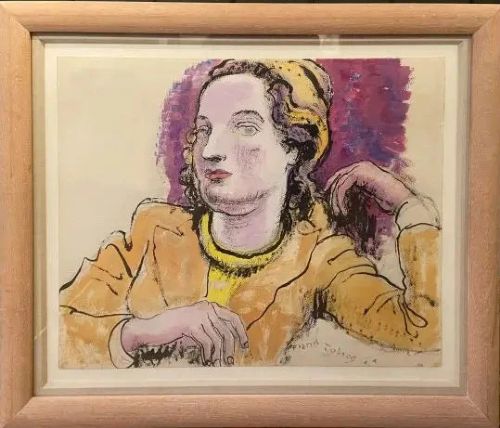
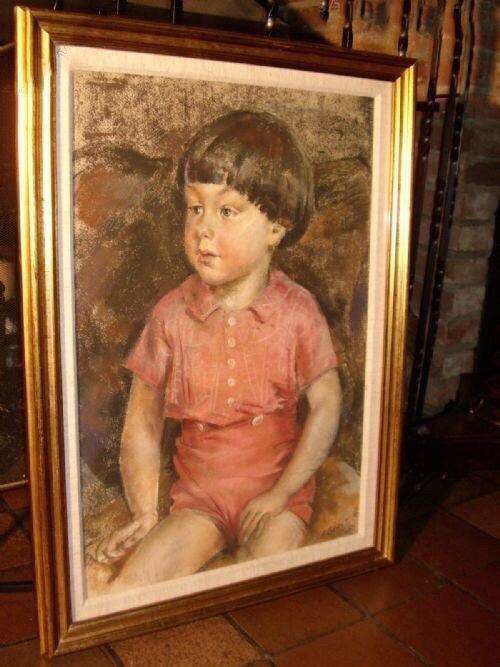


Figurative Pastel Drawing
These figurative pastel drawing examples capture human subjects with vibrant immediacy, offering buyers expressive portraiture and figure studies from the nineteenth and twentieth centuries.
Figurative Pastel Drawing
A figurative pastel drawing brings human subjects to life through soft, pigmented strokes on paper or board, ranging from intimate portraits to sweeping figure studies. When searching for a figurative pastel drawing, buyers encounter works spanning the nineteenth century through the 1950s and 1960s.
How they were made
Artists utilise dry pastel pigment applied directly to paper or board, often combining the medium with gouache, charcoal, ink, or lithograph overlays to build depth and contrast. These works rely on the powdery, tactile nature of pastel to create soft gradations of tone and form.
Finished pieces require careful framing behind glass within wood surrounds, sometimes accented with gold leaf, to protect the fragile pigment surface from disturbance and environmental moisture.
Several artists captured sleeping companions and fairground helter-skelters, proving that pastel portraits were not solely for sitting still.
What varies in quality
Quality in these works rests upon the surety of the draughtsmanship and the artist's ability to render human anatomy and expression with economy of line. Stronger pieces demonstrate confident handling where pastel, charcoal, or gouache work in harmony rather than muddying the paper surface.
The distinction between standard decorative pieces and superior works lies in the provenance, the framing integrity, and the expressive weight of the subject captured by listed artists of the period.
Frank Dobson·J.A.Grant·Denis William Reed·Gaston Bouy·Sonia Lawson R.A.
The Figurative Pastel Drawing Glossary
- Pastel
- A dry painting medium consisting of pure powdered pigment and a binder, rolled into sticks for direct application to paper.
- Gouache
- An opaque water-based paint often used alongside pastel to add highlights and solid areas of colour to a drawing.
- Post-Impressionism
- An art movement extending French painting beyond Impressionist constraints, focusing on symbolic content and expressive use of colour.
- Art Deco
- A design style characterised by sleek geometric lines and streamlined forms, prominent during the 1920s and 1930s.
- Lithograph
- A printmaking process where an image is drawn onto stone or metal plate and inked for transfer to paper.
Figurative Pastel Drawing: Frequently Asked Questions
What is the difference between pastel and gouache?
Pastel is a dry medium applied in stick form, relying on the tooth of the paper to hold the pigment in place. Gouache is a wet, water-based paint that dries to an opaque, matte finish.
Artists frequently combine both mediums on a single sheet to create varied textures and sharp highlights.
How can I tell a 1930s piece from a 1950s piece?
Works from the 1930s often reflect Art Deco aesthetics and softer, romantic palettes typical of Belle Epoque survivals or early twentieth-century modernism. Pieces from the 1950s lean into mid-century British school experimentation and bolder figurative abstraction.
Examining the framing materials, paper stock, and artist signatures helps anchor the piece within its specific decade.
Are these works original or prints?
The pieces listed are original handmade artworks executed directly on paper or board using pastel, charcoal, and gouache. Some examples incorporate mixed media techniques, such as pastel applied over a lithograph base.
Every individual drawing represents a unique hand-rendered study rather than a mass-produced reproduction.