


Figurative Genre Scene Artwork
Figurative genre scene artwork captures everyday human moments in framed oil paintings, watercolours and panels spanning the Victorian era to the mid-twentieth century.
Figurative Genre Scene Artwork
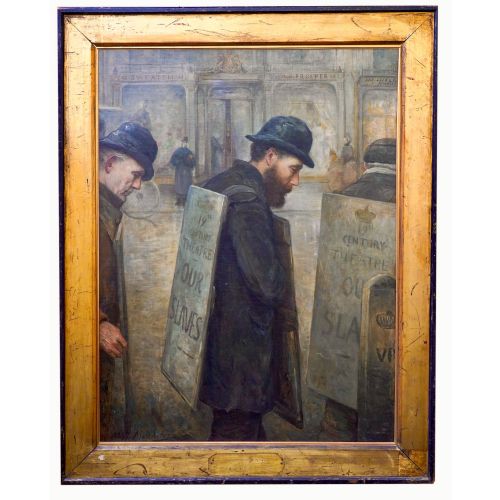
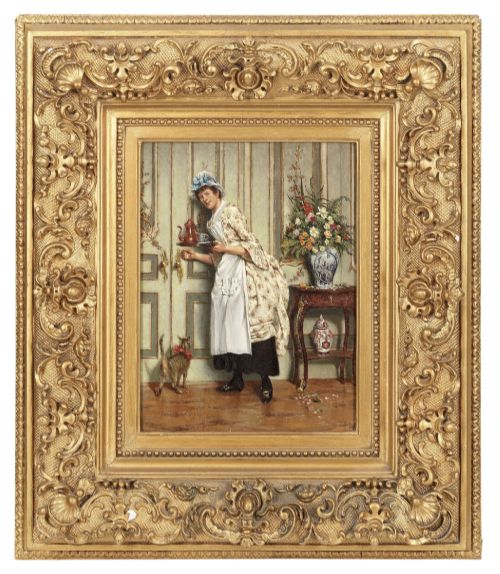
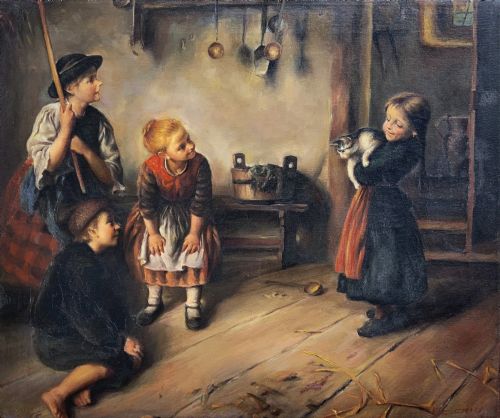
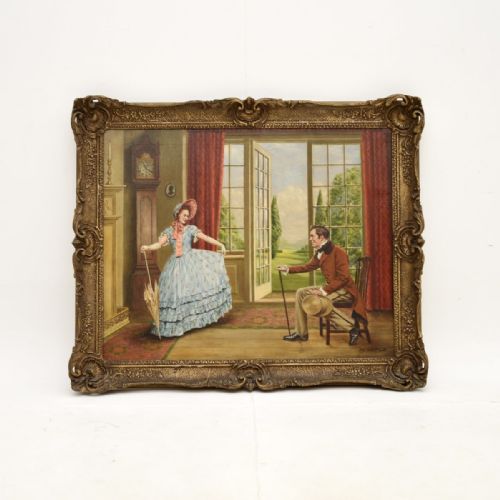
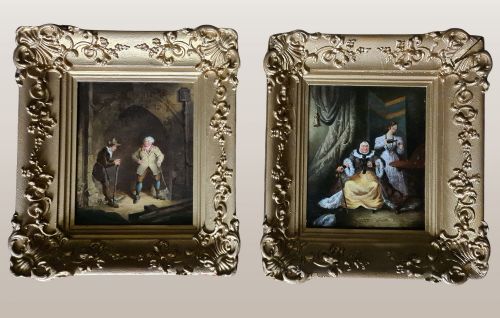
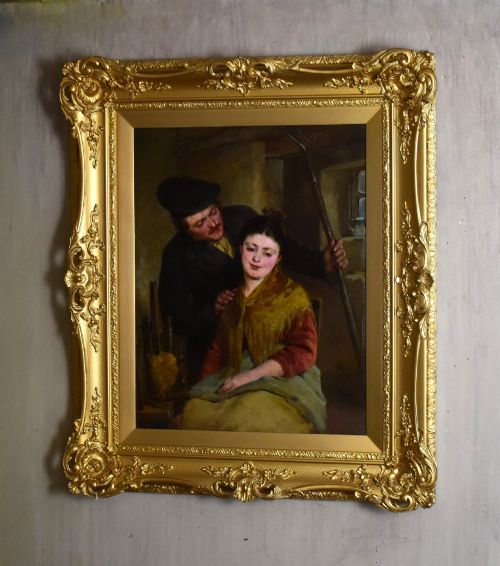
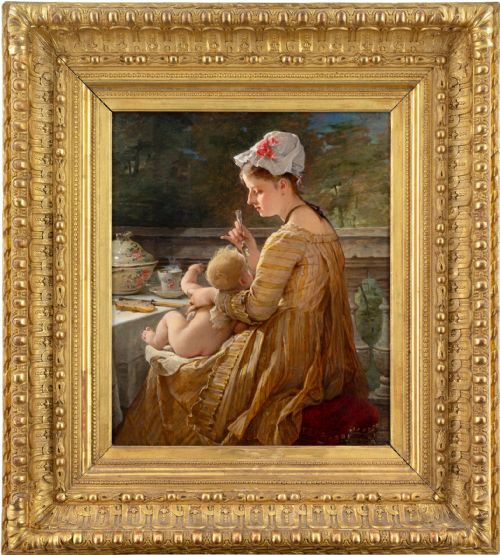
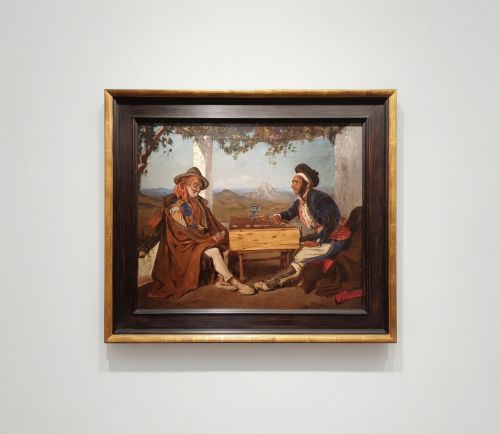
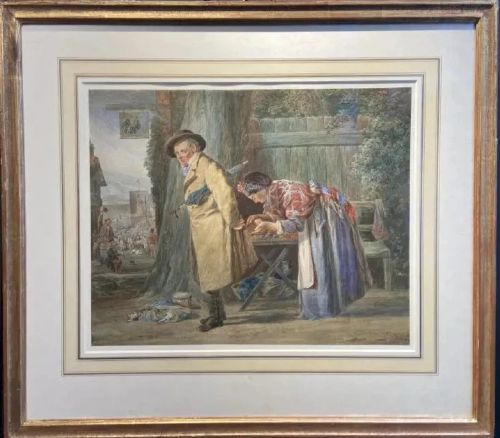
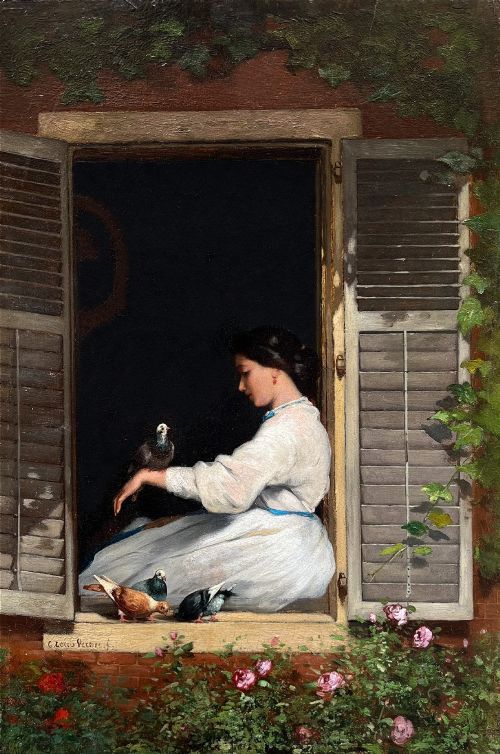
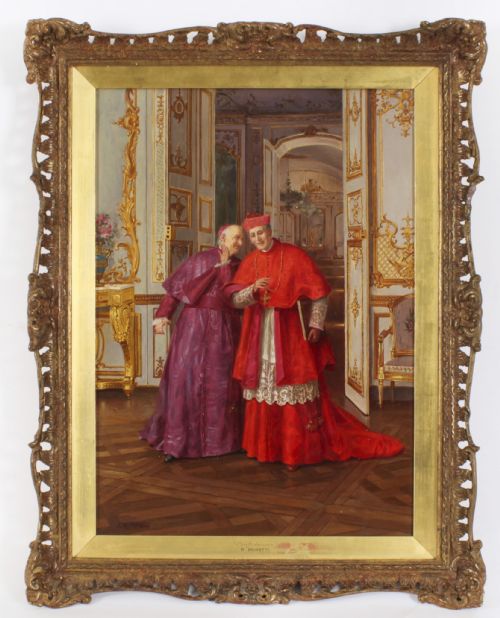
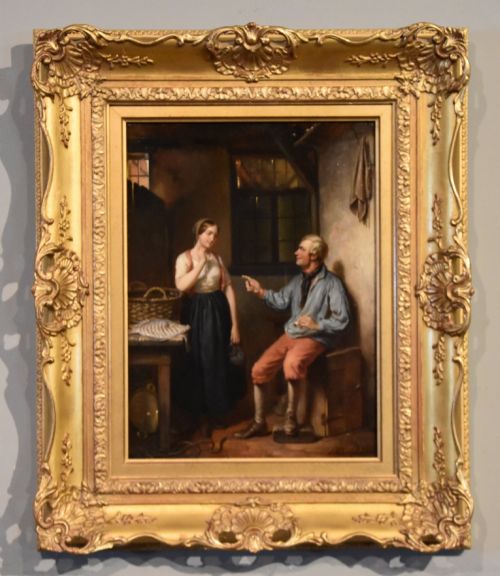
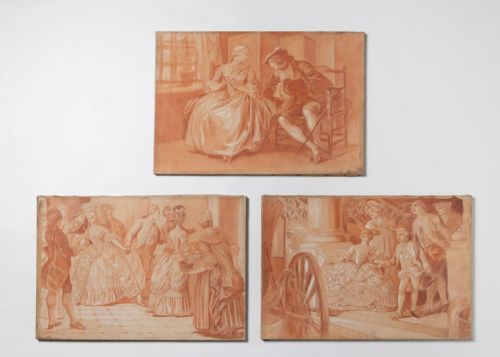
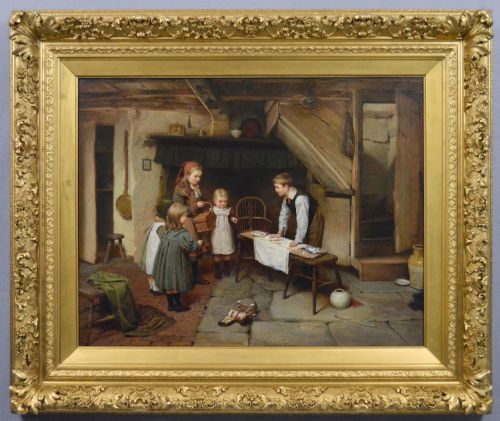
A figurative genre scene artwork portrays people in daily domestic, social or outdoor activities rather than formal portraits or grand historical events. When you explore this selection, you encounter framed compositions depicting cottage interiors, street sellers, country houses and ballroom gatherings.
The pieces on this page span from the nineteenth century into the mid-twentieth century, with Victorian works and academic or realist treatments forming the core of the group. Painters recorded rural life, children playing, card players and tea times across canvas, wood panel and paper.
Subjects range from Dutch interiors and Highland cottages to French palace scenes and Japanese triptych portraits. You meet both intimate individual studies and multi-figure narratives set within detailed architectural or natural backgrounds.
Materials and techniques
Oil paint applied to canvas or wood panel dominates the physical evidence, accompanied by watercolours and mezzotints on paper, alongside glass for crystoleoms. Artists utilised oil pigments to build layered textures on stretched canvas or rigid wooden supports, capturing light within interiors and landscape settings.
Framing plays an integral structural and aesthetic role, with gilt wood and giltwood frames enclosing many of the paintings. Works on paper often feature protective glass glazing alongside traditional watercolour techniques.
Several centuries of domestic life are captured here, proving that past generations spent plenty of time arguing over card games and drinking tea.
Distinctions in quality
Quality in these figurative compositions rests upon the artist's command of human anatomy, expression and narrative interaction within the scene. Superior works display confident brushwork and subtle handling of light, particularly in complex interior lighting and facial details.
The cohesion of the composition and the preservation of the original support material, whether canvas, panel or paper, distinguish finer examples. Original framing and documented artist attribution further elevate the standing of a piece within the genre.
Felix Stone Moscheles·Stephen Samuel Lewin·Alfred Lyndon Grace·Howard Helmick·Adelaïde Salles-Wagner·Joseph H Barnes·Louis Charles Verwee·Renato Moretti·Jacob Akkersdijk·Harry Brooker·A McDonald·Alexander Rosell·Charles Zacharie Landelle·Haynes King·John Sanderson Wells·James Kyd·David Teniers II·Edward Stodart·Arthur Hopkins·Robert Alexander Hillingford·George Smith·Alfred Holst Tourrier·Martinetti·Robert Richard Scanlan·Andrew Young
The Figurative Genre Scene Artwork Glossary
- Genre painting
- A style of art depicting scenes from everyday life, typically involving ordinary people engaged in common activities. These works focus on domestic interiors, street scenes and social gatherings rather than mythology or royalty.
- Oil on canvas
- A painting medium where pigments are suspended in a drying oil and applied to a woven fabric support stretched across a wooden frame. This combination allows for rich colour blending and textured brushwork.
- Oil on panel
- A painting executed on a rigid wooden board rather than flexible canvas. Panels provide a smooth, stable surface favoured by artists for detailed interior scenes.
- Watercolour
- A painting method where fine pigment powders are mixed with water-soluble binders and applied to paper. This technique produces transparent washes and delicate tonal gradations.
- Crystoleom
- A specialised Victorian method of applying a transparent oil painting to the reverse of a convex glass pane. The paper backing was removed, leaving the pigment sealed beneath the glass for a glossy finish.
Figurative Genre Scene Artwork: Frequently Asked Questions
What is a genre scene in art?
A genre scene represents ordinary people during everyday activities, such as working, dining or gathering in domestic interiors. Unlike formal portraits, the focus rests on human interaction and narrative rather than a specific individual's likeness.
These artworks provide a visual record of historical dress, domestic architecture and social customs across different nineteenth and twentieth-century communities.
How do I care for antique oil paintings?
Protect oil paintings from direct sunlight, extreme temperature fluctuations and high humidity to prevent canvas slackening and pigment cracking. Dust the surface gently with a soft, dry brush without applying pressure.
Avoid using chemical cleaners or water on the painted surface or gilt frame, and consult a professional restorer for cleaning or repair work.
How can I tell oil on canvas from oil on panel?
Oil on canvas exhibits a woven fabric texture when examined closely, and the surface yields slightly to gentle pressure between the stretcher bars. Panels provide a completely rigid, unyielding surface made of wood.
Panel paintings often display the grain of the wood on the reverse side, whereas canvases show stretched fabric and wooden wedges at the corners.
What subjects are common in Victorian genre art?
Victorian genre paintings frequently depict domestic life, children playing, cottage interiors, street vendors and social realism themes. Artists captured both the warmth of family gatherings and the struggles of everyday working people.
Scenes set in rectory gardens, dining rooms and rural landscapes reflect the Victorian interest in moral narratives and domestic comfort.