

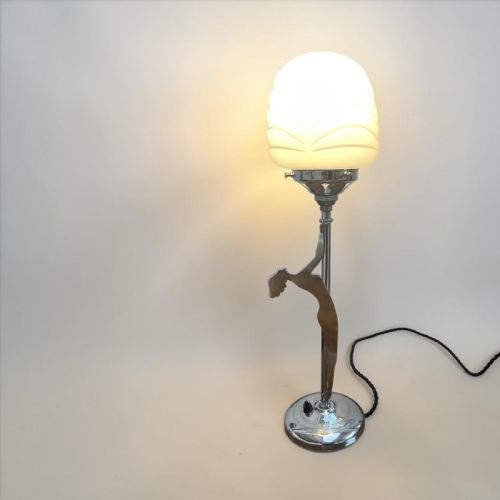




Figural Accent Light
These figural accent light pieces bring human and figurative form directly into illumination, offering collectors striking sculptural presence alongside functional table lighting.
Figural Accent Light
When searching for a figural accent light, collectors encounter table lamps that incorporate human and figurative subjects into their structural design. These pieces combine sculptural art with functional illumination, serving as both lighting and decorative centrepieces within a room.
The selections span multiple decades and stylistic movements, with the Art Deco period heavily represented alongside earlier nineteenth-century examples and turn-of-the-century works. Common formats include table lamps depicting female figures, nudes, cherubs, and classical subjects such as Cleopatra.
Origins stretch across Britain, France, and Italy, reflecting distinct regional approaches to sculpture and domestic lighting during the early twentieth century. Buyers most frequently meet pieces fashioned as lady lamps or dancer figures standing upon marble bases or metallic mounts.
How they were made
Glass elements such as frosted glass and Baccarat shades were integrated to soften the output of the bulb and complement the metallic or stone supports. Bases frequently incorporated heavy materials like marble and alabaster to anchor the weight of the sculptural figures above.
Figural Accent Light Retail Price Guide 2026
Typical asking prices for figural accent light among the pieces listed under this phrase on Sellingantiques today, from the lower quarter to the upper quarter. They describe what is for sale here now, not the wider market.
Listings feature table lamps spanning the nineteenth century through the 1940s, with a strong concentration of Art Deco examples from the 1920s and 1930s.
What varies in quality
The definition and clarity of the cast figural work separate standard examples from finer studio pieces, particularly in the rendering of hands, facial expressions, and drapery. Superior items retain crisp chased details and original patination rather than later refinishing.
The quality of the supporting base materials, such as genuine carved marble or heavy cast bronze versus lighter spelter and plated alternatives, determines the overall solidity and period integrity of the lamp.
Ivan Zaiec·Bruno Zach
The Figural Accent Light Glossary
- Spelter
- A zinc alloy commonly utilised as a substitute for bronze in the manufacture of decorative figures and lamp bases during the early twentieth century. It accepts metallic finishes well but possesses a lighter weight and softer composition than true bronze.
- Patinated Metal
- Metal surfaces treated with chemical solutions or heat to produce a specific colouration, aged appearance, or protective layer. This finish highlights the sculptural contours of the figural subject.
- Frosted Glass
- Glass treated by acid-etching or sandblasting to create a diffusing, opaque surface that softens direct light bulbs. It is frequently seen in period shades paired with figural metal bases.
- Art Deco
- A design movement spanning the 1920s and 1930s characterised by stylised geometric forms, streamlined silhouettes, and depictions of dancers, athletes, and modern figures. Pieces from this era often employ chrome, brass, and frosted glass.
- Baccarat
- A French manufacturer renowned for high-grade crystal and glass production, occasionally contributing decorative components to period lighting fixtures. Their glasswork is noted for clarity and substantial weight.
Figural Accent Light: Frequently Asked Questions
What periods do these lamps date from?
The available pieces originate primarily from the early twentieth century, spanning the 1910s, 1920s, and 1930s Art Deco eras. Some earlier nineteenth-century French and Italian examples also appear.
Stylistic markers such as neoclassical motifs or geometric Art Deco lines help identify the distinct decade of manufacture.
What materials were used for the figures?
Makers constructed the figural elements from cast bronze, brass, spelter, and cold-painted metals. Some figures incorporate carved stone or sit atop heavy marble and alabaster bases.
Shades and decorative panels frequently utilise frosted glass to complement the metallic bodies.
How do I place them in a room?
These lamps function effectively as accent lighting on side tables, desks, or mantelpieces where their sculptural form can be viewed closely. They serve as focal points that combine subdued illumination with figurative art.
Positioning them away from direct foot traffic protects the protruding metallic or glass components.
How do I distinguish Art Deco from earlier styles?
Art Deco pieces display stylised representations of the human form, such as dancers, athletes, and nudes, often paired with chrome, silver plate, or geometric bases. Earlier nineteenth-century works lean towards classical subjects, cherubs, and traditional bronze casting.
Examining the treatment of hair, clothing, and base materials clarifies the transition from nineteenth-century revival styles to twentieth-century modernism.